
24/7 Customer Support

Free returns

Same-day & Next-day Delivery

Quality Guaranteed

Unlock Your Welcome Offers: FREE Delivery | Up to 80% OFF | Free 30-day JoyPlus trial
Download the APP
Choosing dog bones and treats can seem straightforward until you compare ingredients, sizes, textures and feeding instructions. A small training biscuit, a dental chew and a long-lasting bone serve very different purposes. The wrong choice may create waste, stomach upset or a choking risk, particularly if a dog swallows chews quickly.
This guide explains the practical details to check before buying, then matches several options to different UK households and dog types.
Terms such as natural, meaty or long-lasting describe a product’s positioning rather than guaranteeing that it suits every dog. A 100% pork bone, for example, may offer a firm chewing experience but can also be unsuitable for dogs that gulp food, puppies below the stated age or dogs with sensitive digestion.
Always check the composition, recommended age, dog size and feeding frequency. Rawhide dog bones and animal bones should only be offered with close supervision, and any sharp or small fragments should be removed.
Chewing may provide mechanical friction against some tooth surfaces, but dental dog treats should not be presented as a replacement for a complete oral-care routine. Products vary considerably in shape, hardness and suitability. A chew that is too small can be swallowed, while one that is too hard may not suit every dog.
Look for clear directions, appropriate sizing and warnings about wear. Remove a chew once it becomes small enough to swallow.
A large multipack can look economical, but treats still contribute calories to the daily diet. Fat levels also vary widely. For example, the supplied nutritional information lists 1% fat for Good Boy Duck and Calcium Bones, 4% for Wagg Tasty Bones Dog Treats with Chicken & Liver and 26% for one Webbox Serrano ham bone product.
Use treats as complementary food, reduce the main meal when appropriate and follow the packaging guidance. A larger bag is only good value if it can be used before the treats lose freshness.
Age guidance is not interchangeable. Some dog treats are suitable from 8 weeks, while others are labelled for dogs over 4 months or adult dogs over 9 months. Puppies may need softer, appropriately sized rewards rather than dense dog chew bones.
Check the expected adult size as well as the dog’s current weight. The Rosewood Magic Bone Filled Twists are specifically listed for adult dogs aged over 9 months weighing 7–12 kg, whereas large knotted bones and Serrano ham bones are aimed at medium or large dogs.
Decide whether you need a quick reward or an extended chewing activity:
No long-lasting dog chews should be left unattended. Inspect them regularly and discard damaged pieces, sharp fragments or anything small enough to swallow whole.
Read beyond the front-of-pack flavour description. Compare the ingredient order, crude protein, fat, moisture and additives. Dogs with known allergies may need to avoid specific ingredients such as chicken, wheat or peanuts.
For example, Good Boy Duck and Calcium Bones contain 55% duck breast, 7.7% calcium carbonate, 28% crude protein and 1% fat, and are described as wheat-free with no artificial colours, flavours or preservatives. Wagg Tasty Bones with Chicken & Liver contain wheat, turkey meal, 4% chicken meal and 4% liver meal, with 16% crude protein and 4% fat.
Calcium dog treats should still be fed as a supplementary food rather than used to replace a complete, balanced diet. Follow the label and provide fresh drinking water.
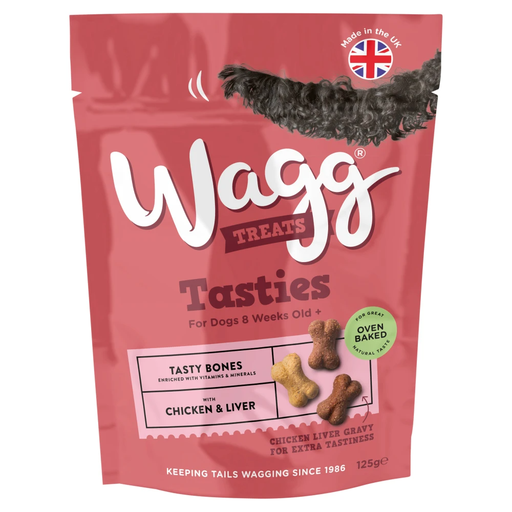
Why This Fits Their Persona: A practical everyday option for new owners who need versatile rewards for snacks, basic training and positive reinforcement.
The listing states an age suitability of 8 weeks and above and provides a full ingredient and analytical-constituent list, making comparison easier.
Contains 18% chicken meal and 5% chicken liver digest, with no added sugar and a 125g pack size.
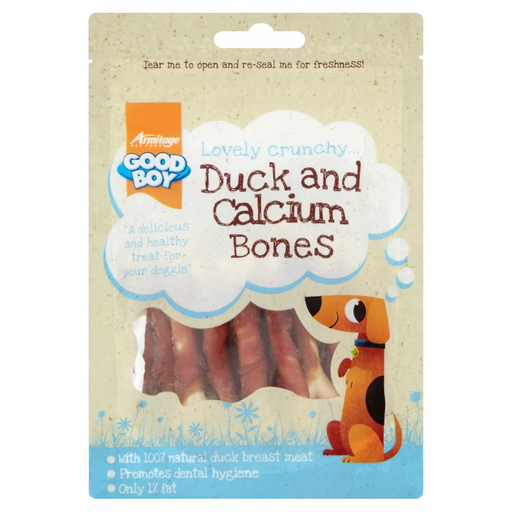
Why This Fits Their Persona: Suitable for owners who prioritise a clearly defined recipe, a leaner treat profile and a duck-flavoured reward for dogs over 4 months.
The product details specify its age restriction, composition, 90g quantity and feeding warnings rather than relying only on broad front-of-pack language.
Made with 55% duck breast, lists 28% crude protein and 1% fat, and contains no wheat or artificial colours, flavours or preservatives.
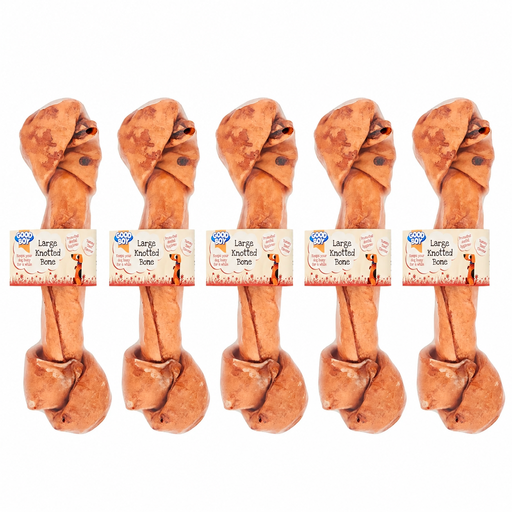
Why This Fits Their Persona: A multipack format for households with medium-to-large dogs that use chews for enrichment, quiet time or regular rewards.
The pack contains five individually sized 100g knotted bones, while the listing clearly advises supervision and removal of large broken pieces.
The bundle totals 500g, uses a knotted rawhide design and lists 80% crude protein with 2% fat.
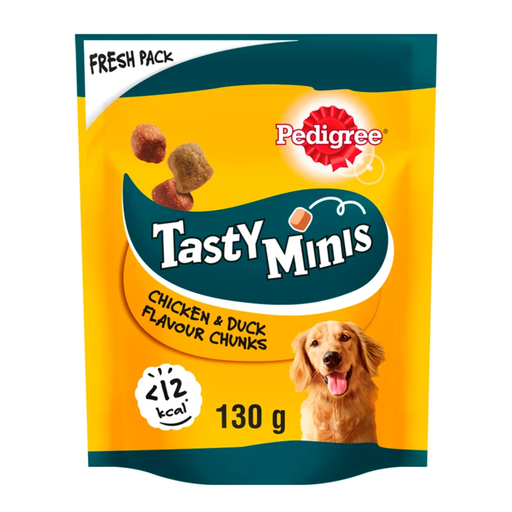
Why This Fits Their Persona: Bite-sized cubes are convenient for short training sessions, walks and frequent reinforcement with dogs of different sizes.
The product provides a 130g quantity, feeding guidance and an analytical profile, so portioning can be planned rather than guessed.
The cubes contain 4% chicken in meat and animal derivatives, with 21% crude protein and 11% fat; they are listed for dogs of all sizes.
We have compiled a complete, real-time list of products that fully satisfy these strict selection criteria and UK safety regulations.
Before offering dog bones and treats, use this checklist:
No. Suitability depends on age, size, chewing style and digestion. Dogs that swallow large pieces may not be suitable candidates. Supervise chewing and remove fragments as the product wears down. If your dog has dietary or digestive concerns, ask a veterinary professional for individual guidance.
Small, easily handled pieces are generally more practical for training than large long-lasting chews. Chicken dog treats, bite-sized cubes and small bones can be portioned across a session. Check the feeding instructions and account for treats within the dog’s daily food intake.
There is no fixed lifespan. Durability depends on the chew’s material, size and the dog’s jaw strength and chewing habits. A large knotted rawhide bone may last longer than a soft treat, but it should still be inspected during use and discarded when damaged or reduced to a swallowable size.