
24/7 Customer Support

Free returns

Same-day & Next-day Delivery

Quality Guaranteed

Unlock Your Welcome Offers: FREE Delivery | Up to 80% OFF | Free 30-day JoyPlus trial
Download the APP
Choosing dog bowls is not simply a matter of picking a colour that matches your kitchen. The wrong size can make eating awkward, a lightweight base may slide across the floor, and difficult-to-clean surfaces can allow food residue to build up. UK households also need to consider limited cupboard space, dishwasher compatibility and whether one bowl is enough for both food and water.
The following guide explains the practical specifications worth checking before you buy, followed by our top recommendations for different types of dog owner.
A bowl may look large but still have limited depth or capacity. Check the stated volume in millilitres or litres, along with the diameter and height. A bowl that is too small may cause food to spill over the edge, while an oversized bowl can be awkward for a small dog to reach.
For reference, a 500ml bowl may suit a small to medium-sized dog, while a 1.6-litre or 1.89-litre bowl is more appropriate for large breeds or households where a bowl is used for water.
A non-slip dog bowl can reduce sliding, but its performance depends on the floor surface, the dog’s eating style and the condition of the rubber or silicone base. Check that the base ring is securely fitted and inspect it regularly for wear. Heavy ceramic and stoneware bowls can also offer stability, although they may crack if dropped.
An elevated dog bowl or raised dog bowl can be convenient for some large dogs, but height should be matched to the individual animal. A fixed stand may become unsuitable as a young dog grows, while an incorrectly adjusted feeder can make eating uncomfortable. Adjustable dog bowl stands offer more flexibility, but the frame still needs to remain stable on a flat surface.
Raised feeding should not be presented as a universal health solution. If your dog has a specific condition or feeding difficulty, ask a qualified veterinary professional for individual guidance.
A stainless steel dog bowl is usually straightforward to rinse and is less likely to retain odours than some porous materials. Look for clearly stated material information, such as 304 stainless steel or 201 stainless steel, and check whether the bowl is dishwasher safe.
A ceramic dog bowl or stoneware bowl is heavier and may be less likely to move during feeding. However, inspect it for chips and cracks, as damaged glaze or ceramic can make the bowl unsuitable for continued use. Food-safe glaze and smooth interiors are practical features for daily cleaning.
Plastic and melamine bowls can be lightweight and convenient, but always follow the manufacturer’s instructions. Do not use products in a microwave unless the product description specifically allows it.
Measure your dog’s shoulder height, muzzle size and usual meal volume rather than relying only on breed labels. Small bowls around 14–15cm in diameter can suit smaller dogs, while 20–21cm options may provide more room for larger pets.
For dog food and water bowls, buying two separate bowls helps you maintain a fresh water supply without disturbing the food. Combination sets can be useful in smaller homes or for travel, but check the capacity of each bowl individually.
A non-slip dog bowl should have a rubber or silicone base that sits evenly on the floor. For raised designs, assess the width of the stand, the quality of the feet and whether the adjustment mechanism locks securely.
A dishwasher-safe dog bowl can reduce daily cleaning effort, but check whether this applies to the bowl only or to the entire set. Wooden bases, metal frames and silicone mats may require hand washing or wiping. Allow every component to dry fully before reassembly.
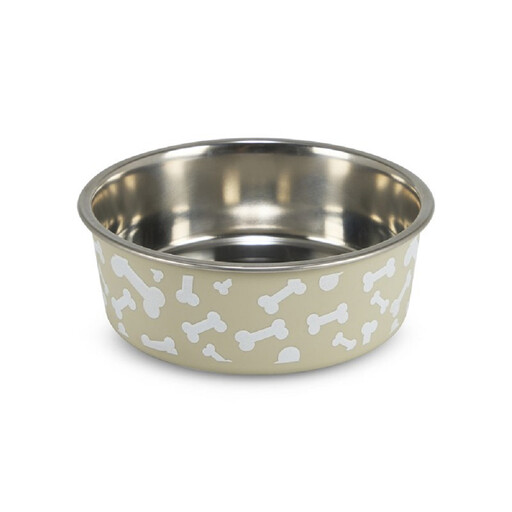
Why This Fits Their Persona: A practical single bowl for a small dog, puppy or cat household that needs a food or water bowl for everyday use and travel.
The 14cm size makes capacity clearer than choosing by appearance alone, while the rubber base ring addresses sliding on smooth kitchen floors.
Polished stainless steel interior, non-slip rubber ring and dishwasher-safe construction.
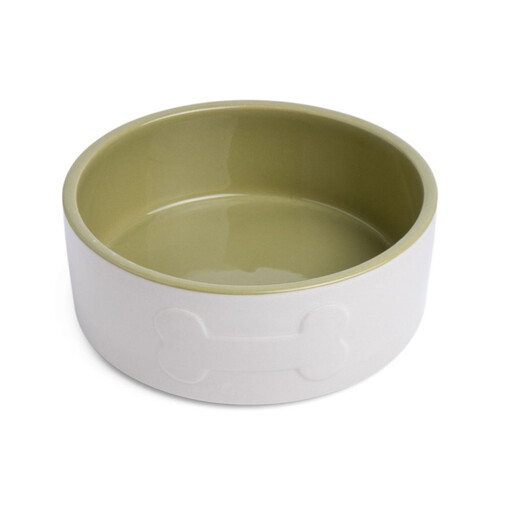
Why This Fits Their Persona: Suitable for owners who prefer a heavier feeding station with two matching bowls for food and fresh water.
Its heavyweight ceramic construction addresses the problem of lightweight bowls moving during enthusiastic meals, while regular inspection helps identify damage.
Two 20cm bowls, dishwasher-safe ceramic and a weighted design intended to reduce tipping.
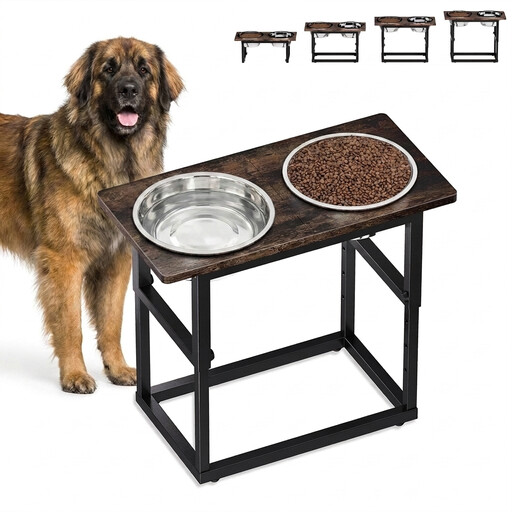
Why This Fits Their Persona: Designed for large and extra-large dogs, particularly owners who want adjustable feeding and substantial capacity.
Five height settings, from approximately 21cm to 44cm, make it less restrictive than a fixed raised dog bowl. The frame and feet should still be checked before each use.
Two 1,600ml 304 stainless steel bowls, adjustable heights and non-slip feet.
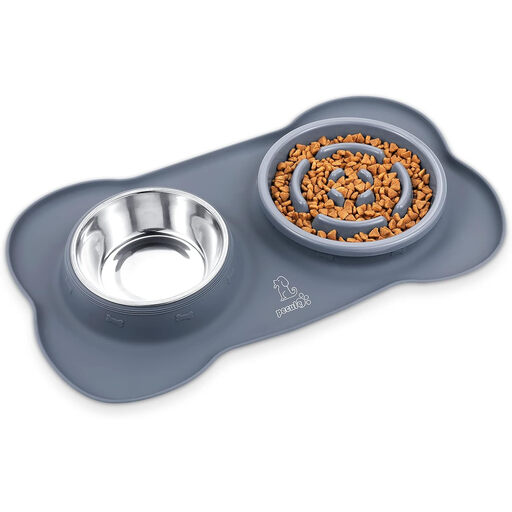
Why This Fits Their Persona: A useful option for small dogs and cats that gulp food, or for owners who need a compact feeding set for holidays and visits.
The textured slow feeder should make food harder to gulp, while the integrated mat helps address sliding and scattered food. Supervise initial use.
400ml slow feeder, separate stainless steel water bowl, foldable silicone mat and dishwasher-safe bowls.
We have compiled a complete, real-time list of products that fully meet these strict selection criteria and UK safety regulations.
No. An elevated dog bowl may suit some large dogs or households that prefer a raised feeding position, but the correct height varies. Adjust the bowl so your dog can eat comfortably without excessive bending or stretching, and seek veterinary advice if your dog has a medical feeding requirement.
Lifespan depends on material, cleaning routine and how your dog uses the bowl. Stainless steel can remain serviceable for a long time when undamaged. Ceramic and stoneware should be replaced if chipped or cracked, while rubber and silicone bases may need replacing when they lose grip.
A slow feeder dog bowl can make food harder to gulp by introducing raised sections or maze-like textures. It is most relevant for dogs that eat quickly, but introduce it gradually and supervise your pet. A slow feeder is not a substitute for veterinary advice about digestion or eating problems.