
24/7 Customer Support

Free returns

Same-day & Next-day Delivery

Quality Guaranteed

Unlock Your Welcome Offers: FREE Delivery | Up to 80% OFF | Free 30-day JoyPlus trial
Download the APP
As a dog owner in the UK, you know that a good chew toy is more than just a plaything. It’s a tool for training, a comfort during anxious moments and a crucial aid for dental health. Yet, the market is flooded with options, and it's frustrating to spend money on a toy that’s shredded in minutes or, worse, completely ignored by your canine companion.
Many of us have fallen into common purchasing traps. Before you add another toy to your basket, let’s look at the pitfalls that lead to wasted money and disappointment.
By understanding a few core principles, you can confidently select a toy that offers genuine value, safety and engagement for your dog.
Instead of relying on marketing buzzwords, focus on these three practical factors. They are the key to finding a toy that is both safe and satisfying for your dog.
The material is the single most important factor in a chew toy's success. Each type serves a different purpose and is suited to a different kind of chewer.
A toy's design dictates how your dog will interact with it. Consider what problem you are trying to solve.
No toy lasts forever. Part of responsible ownership is regularly inspecting your dog's toys for signs of wear. Look for cracks, splintering or parts that have been chewed off. A worn-down toy can become a choking hazard and should be replaced immediately.
Based on these practical criteria, here are a few recommendations matched to specific needs of UK dog owners.
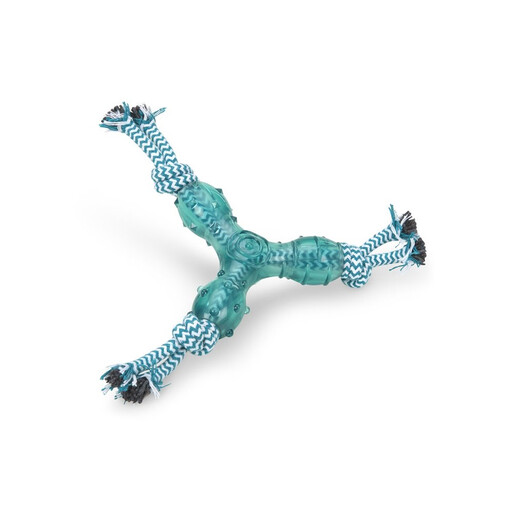
Why This Fits Their Persona: This toy is specifically designed for puppies. The combination of soft rubber and rope provides different textures to soothe sore gums and satisfy the urge to chew without being too harsh on developing teeth.
It avoids the 'one-size-fits-all' material trap by using TPR rubber, which is gentle enough for a puppy's mouth, unlike hard nylon toys intended for adult dogs.
The stable tripod shape is easy for small paws to hold, and the dual materials (rubber and polyester rope) keep puppies engaged.
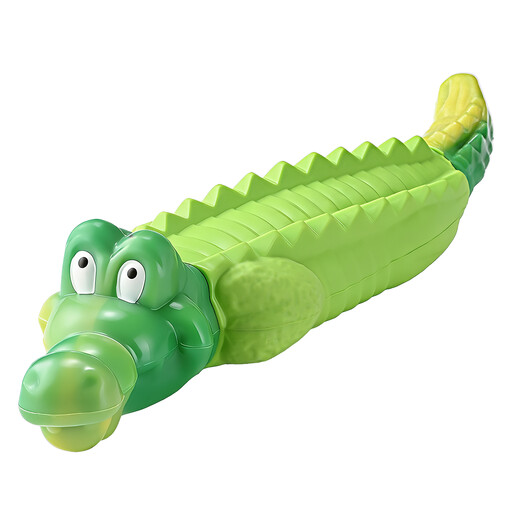
Why This Fits Their Persona: For owners of medium to large dogs with serious chewing power, this toy offers a robust solution. It's designed to withstand strong jaws, making it a suitable choice for breeds known for being aggressive chewers.
It counters the "indestructible" myth with a realistic, durable design: a hard nylon core for strength combined with a natural rubber exterior that is less harsh on gums.
The dual-layer construction provides enhanced durability, while the textured 3D shape is easy for dogs to grip and hold during long chewing sessions.
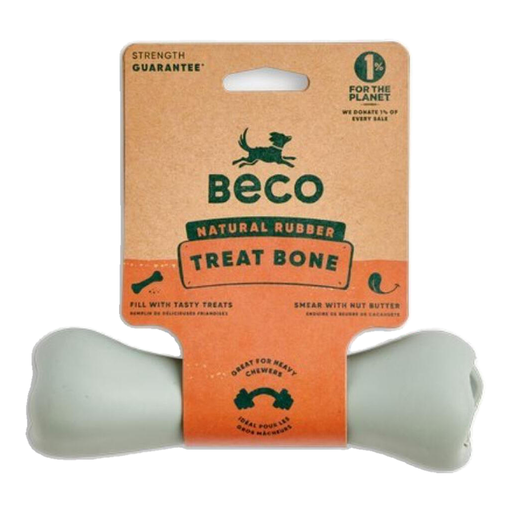
Why This Fits Their Persona: For owners who need to keep their dog occupied and mentally stimulated, this treat bone is an ideal solution. It turns a simple chew session into an engaging puzzle, helping to alleviate boredom and separation anxiety.
Instead of being just a passive chew object, its design is purposeful. The fillable ends make it a valuable interactive dog toy, providing a clear function beyond just chewing.
It's a dual-purpose toy: a durable chew bone and a treat dispenser. Made from thick natural rubber, it's also quiet for indoor play.
We have compiled a complete, real-time list of products that fully satisfy these strict selection criteria and UK safety regulations.
There is no fixed timeline; replacement depends entirely on wear and tear. You should inspect your dog's toys daily. Look for cracks, deep grooves, loose parts or if the toy has been worn down to a size that could be accidentally swallowed. If you notice any of these signs, discard the toy immediately to prevent a choking or ingestion hazard.
Squeaky toys can be safe when used with supervision. The primary risk is that a dog may tear the toy open to get to the plastic squeaker inside, which can then be swallowed. To minimise risk, choose squeaky toys made from reinforced fabric and always supervise play. If the toy becomes damaged and the squeaker is exposed, it should be taken away immediately.
The main difference is the material's hardness. Puppy teething toys are made from softer, more flexible materials like TPR or gentle rubber. These are designed to soothe a puppy's sore gums and satisfy their need to chew without being too hard on their developing teeth. Chew toys for adult dogs, particularly durable dog toys for power chewers, are often made from very hard materials like nylon, which could be too abrasive for a puppy's mouth.