
24/7 Customer Support

Free returns

Same-day & Next-day Delivery

Quality Guaranteed

Unlock Your Welcome Offers: FREE Delivery | Up to 80% OFF | Free 30-day JoyPlus trial
Download the APP
A suitable chew toy can give your dog a constructive outlet for natural chewing, provide boredom relief and add variety to daily play. However, choosing dog chew toys by appearance alone can lead to wasted money—or an unsuitable toy for your pet’s size and chewing style.
The most useful approach is to look beyond phrases such as “indestructible dog toys” or “long-lasting”. No chew toy is indestructible, and durability depends on the dog’s bite strength, play habits and how often the toy is used. Before buying, check the material, dimensions, intended dog size and safety instructions.
A very hard nylon bone may last longer than a soft rubber toy, but it is not automatically suitable for every dog. Some dogs may chew aggressively, while others prefer carrying, shaking or gently gnawing. A toy that is too hard, too small or poorly shaped may be uncomfortable or create a risk if it cracks.
Look for clear size guidance and inspect the toy regularly. A product described as suitable for large dogs should still be checked against your dog’s individual bite strength.
Textured surfaces, raised nubs and ridges may help rub against the tooth surface during chewing. However, dental chew toys for dogs should not be treated as a replacement for brushing, professional checks or veterinary advice. Marketing language such as “plaque control” should be understood as a product feature, not a guaranteed health outcome.
For everyday use, choose a design that your dog will actually chew. A neglected dental toy cannot provide meaningful play value.
A quiet rubber toy may be useful in a flat, while a squeaky or rattling toy may be more engaging for a dog that enjoys sound and movement. Likewise, a treat-filled toy can keep a food-motivated dog occupied, but may not appeal to a dog that prefers tugging or chasing.
Consider where the toy will be used, whether your dog swallows fragments and how much supervision you can provide.
Rubber dog chew toys are often flexible, relatively quiet and suitable for treat-filling or indoor play. Natural rubber can offer a softer chewing feel, although regular checks are still necessary.
Nylon dog bones and nylon-based toys are generally firmer and may suit dogs that enjoy sustained chewing. Combination designs using nylon with rubber, TPR or cowhide can offer different textures, but every layer must be checked for separation or wear.
Puppy teething toys should provide an appropriate balance of flexibility and durability. Avoid giving a puppy a toy designed for a much larger dog, or one that can be broken into swallowable pieces.
The toy should be large enough that your dog cannot fit the whole item in its mouth. At the same time, it should be easy to grip and carry. Curved bones, branch shapes and T-bone designs can make handling easier, while wide wheels and textured toys may suit dogs that enjoy pushing or shaking.
Always follow the manufacturer’s size recommendation. For example, the 15 × 8 × 3 cm chicken wing design listed below is intended for small and medium dogs, not large breeds.
Choose according to the type of engagement you want:
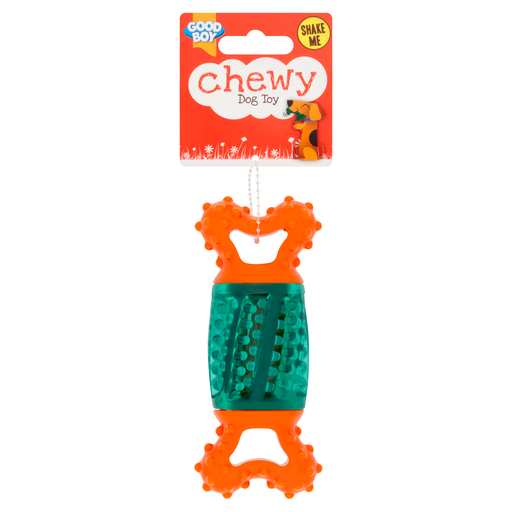
Why This Fits Their Persona: A straightforward option for owners introducing their dog to interactive chewing and movement-based play at home.
The description clearly states that it is sturdy but not indestructible, helping set realistic expectations before purchase.
Shakeable design; supports solo or supervised interactive play; suitable for various play styles.
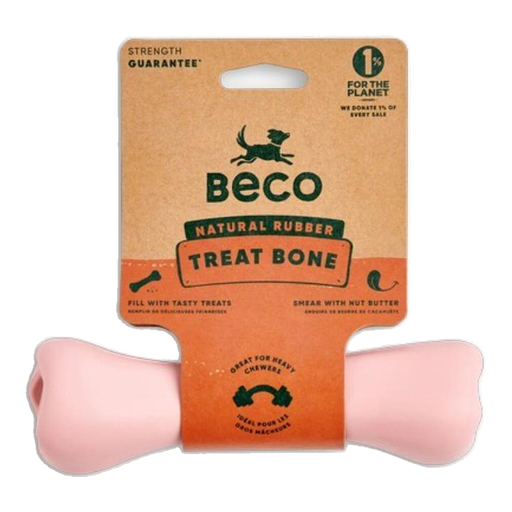
Why This Fits Their Persona: A practical choice for UK homes where quiet indoor play and treat-based engagement matter.
Its 17.5 × 4.9 × 5.4 cm dimensions and natural rubber construction are specified, rather than relying only on vague durability language.
Fillable ends for pastes and dry treats; soft rubber is designed for quieter indoor use.

Why This Fits Their Persona: Designed for owners seeking a large-format nylon option for a bigger dog with a strong chewing habit.
It is identified as a large-size toy and includes a warning that it is not intended for dogs with bite strength beyond its capacity.
Durable nylon material; large chicken-bone shape; washable with water.
We have compiled a complete, real-time list of products that fully satisfy these strict selection criteria and UK safety regulations.
There is no fixed lifespan. A toy may last weeks or months depending on material, size, bite strength and frequency of use. Rotate several suitable toys and replace any item showing damage rather than waiting for complete failure.
No. Textured toys may support mechanical rubbing during chewing, but they do not replace regular brushing, appropriate dental products or veterinary care. Choose a toy your dog can safely grip and use it only as directed.
Look for large, robust designs made from materials such as nylon or reinforced rubber, with clear size guidance. Avoid toys that are too small or contain detachable sections. Even durable dog chew toys require supervision and regular inspection, as no product is guaranteed to withstand every dog.