
24/7 Customer Support

Free returns

Same-day & Next-day Delivery

Quality Guaranteed

Unlock Your Welcome Offers: FREE Delivery | Up to 80% OFF | Free 30-day JoyPlus trial
Download the APP
A suitable toy can make daily play more rewarding, but choosing among hundreds of dog chew toys is not always straightforward. Marketing phrases such as “indestructible”, “dental care” and “suitable for all breeds” can hide important limitations.
Three common buying traps are worth checking before you order:
The right choice depends on your dog’s size, age, bite strength and preferred activity. Use the guide below to compare interactive dog toys, durable dog toys and specialised options more practically.
Check the product dimensions rather than relying only on breed labels. Dog toys for small dogs should be light enough to carry but large enough not to fit completely inside the mouth. Puppies also need appropriately sized puppy teething toys, especially while their chewing habits are developing.
For medium and large dogs, look for a larger grip area and a construction that will not split easily under pulling. A 15 cm football, for example, offers a different play experience from a 24 cm rubber-and-nylon toy. Avoid giving small-dog toys to large breeds or using large-dog toys with puppies that cannot handle them comfortably.
Material affects how a toy should be used:
A reinforced seam, double-layer structure or woven outer layer may improve practical durability, but no toy should be described as suitable for every chewing style without supervision.
Match the product to the way your dog plays. Dog tug toys are designed for owner-led interaction, while fetch toys for dogs need to be easy to throw, retrieve and clean. Squeaky dog toys can encourage interest, although the squeaker should be protected from dogs that dismantle toys.
For dental-style toys, raised textures may give the teeth and gums more contact during chewing. However, these products should be treated as play accessories, not edible treats or medical products. Always follow the manufacturer’s instructions, supervise initial use and replace a toy when it becomes damaged.
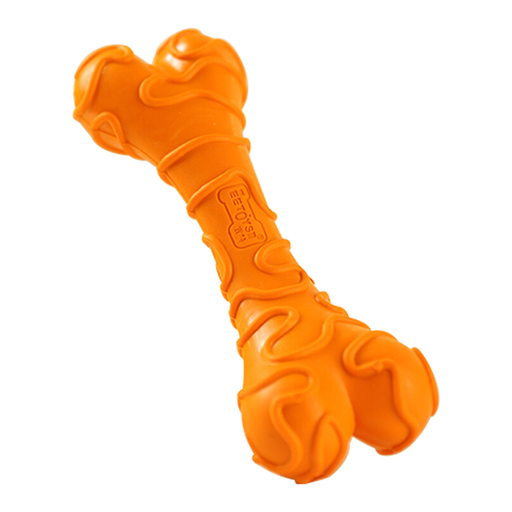
Why This Fits Their Persona: Its compact 10.7 × 4 cm format and approximately 40 g weight are practical for small dogs and puppies in flats or smaller UK homes.
The stated small-dog suitability is more useful than a broad all-breed claim. Initial supervision remains important, particularly for puppies.
Rubber construction; lightweight cheese-bone shape for carrying, chewing and interactive play.

Why This Fits Their Persona: Large-dog owners wanting a dedicated chew format may prefer its nylon construction and larger chicken-bone design.
The product is described specifically for large dogs and warns against use by extra-large dogs with bite strength beyond its capacity.
Nylon material; large bone profile; washable with water and intended for repeated chewing sessions.
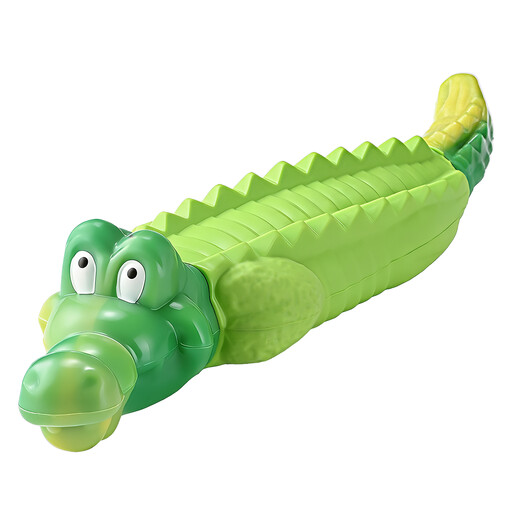
Why This Fits Their Persona: The 24 × 6 cm format and multi-purpose design suit medium and large dogs that alternate between chewing, fetching and outdoor play.
Its specified medium-to-large-dog use is clearer than a generic “aggressive chewers” label. Inspect the rubber and nylon layers after every session.
Natural rubber exterior with nylon core; textured crocodile shape for gripping, chewing and retrieval games.
We have compiled a complete, real-time list of products that fully satisfy these strict selection criteria and UK safety regulations.
There is no fixed lifespan. A moderate chewer may use a durable rubber or nylon toy for much longer than a dog that bites and dismantles objects quickly. Inspect toys before and after use, and replace them at the first sign of damage rather than waiting for a set number of months.
They can be suitable when correctly sized and supervised. Puppies may find the sound engaging, but a squeaker can become dangerous if exposed or swallowed. Choose a product labelled for your puppy’s size and remove it when the outer material starts to split.
No. Textured dental chew toys for dogs may make chewing more engaging and provide contact with the teeth and gums, but they do not replace brushing, professional advice or a suitable oral-care routine. Select a toy for safe size and material first, then treat dental texture as an additional feature.