
24/7 Customer Support

Free returns

Same-day & Next-day Delivery

Quality Guaranteed

Unlock Your Welcome Offers: FREE Delivery | Up to 80% OFF | Free 30-day JoyPlus trial
Download the APP
A good chew toy can give your dog an appropriate outlet for chewing, encourage play and make quiet time more manageable. However, choosing dog chew toys based only on attractive shapes or phrases such as “indestructible” can lead to wasted money and avoidable safety risks.
The right choice depends on your dog’s size, age, bite strength and chewing habits. A toy that suits a small puppy may split quickly in the jaws of a large breed, while an oversized nylon toy may be difficult for a small dog to carry.
Marketing descriptions often use terms such as durable, tough or bite-resistant. These describe the intended construction, not a guarantee that a toy cannot break. Even tough dog toys for aggressive chewers can develop sharp edges, cracks or loose sections.
Always check the product’s recommended dog size and chewing level. Remove the toy when it becomes small enough to swallow or when pieces begin to detach.
Textured surfaces, raised nubs and ridges may help rub against teeth and gums during chewing. However, dog toys for teeth cleaning should not be presented as a replacement for brushing or professional veterinary care. Treat dental chew toys for dogs as part of a wider oral-care routine rather than a complete solution.
A dog chew toy set can offer useful variety, but a multi-piece pack may contain toys unsuitable for your dog’s chewing strength. For example, a set intended for small to medium dogs may not be appropriate for a powerful large-breed chewer. Compare the dimensions and materials of each item rather than judging value by the number of pieces alone.
Nylon dog chew toys are generally firm and shaped for extended chewing, while rubber dog toys tend to offer more flexibility. TPR, latex and fabric rope toys can be useful for interactive play, but they may not suit dogs that try to pull off and swallow fibres or fragments.
Dual-layer designs, such as nylon with a natural rubber outer layer, combine a firm core with a more flexible surface. Leather or cowhide sections may add texture and interest, but inspect them frequently as they wear.
Look for clear information about:
The toy should be large enough that your dog cannot swallow it whole, while still being comfortable to hold. Dimensions matter more than a generic “small”, “medium” or “large” label.
For example, a 10.7 × 4 cm toy may be easier for a puppy or small dog to carry, whereas a 24 × 6 cm design is made with medium and large dogs in mind. Avoid toys that are too small, especially for dogs that gulp objects rather than chew them gradually.
Choose according to the behaviour you want to support:
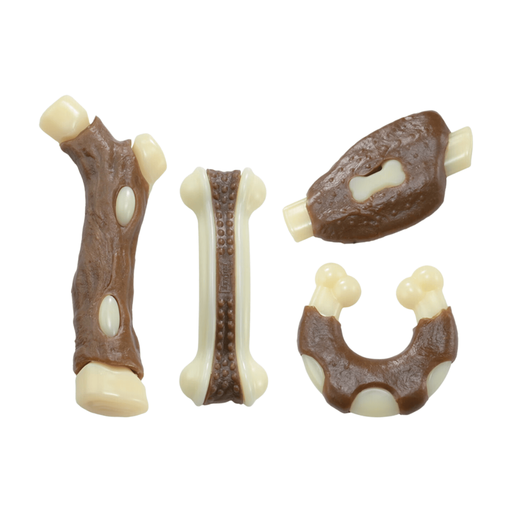
Why This Fits Their Persona: A four-piece selection can suit UK households wanting to rotate toys between indoor play, quiet chewing and supervised sessions.
The listing states that it is for small to medium dogs and moderate chewers, making its limits clearer than a general indestructible claim.
Four shapes and textures; TPR construction; suitable for puppies over 12 weeks and adult dogs within the stated weight range.
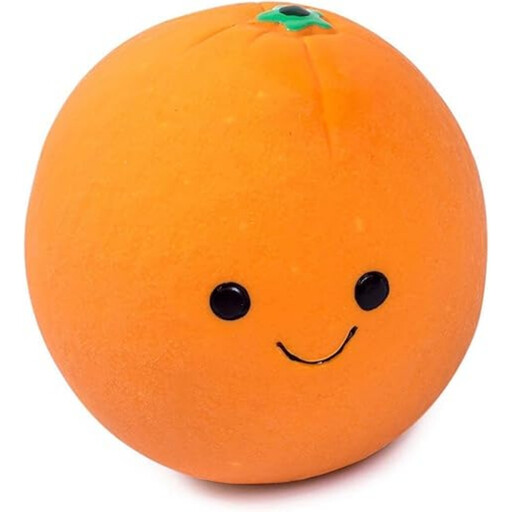
Why This Fits Their Persona: Useful for owners who want a multi-toy option for supervised fetch, squeaky play and gentle chewing at home or in the park.
The product information clearly states that the toys are durable but not indestructible, so regular inspection remains part of ownership.
Set of three large latex toys; built-in squeakers; lightweight design for fetch and supervised play.
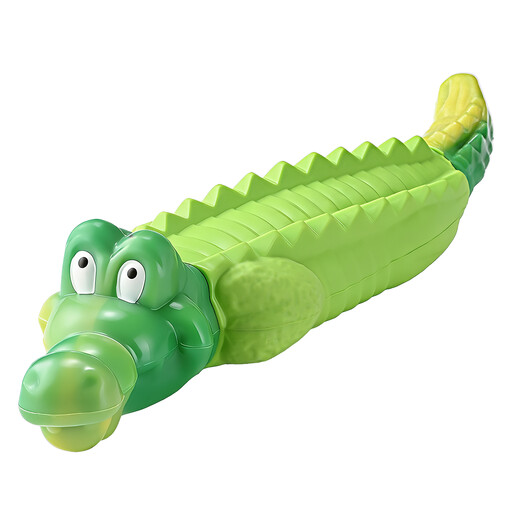
Why This Fits Their Persona: Its 24 × 6 cm format is intended for medium and large dogs that need a larger toy for chewing, fetch or outdoor interaction.
The stated size and target group help prevent the common mistake of giving a small toy to a powerful chewer.
Natural rubber outer layer; nylon core; textured crocodile shape for gripping and interactive play.
Supervise your dog when introducing new dog chew toys, particularly puppies, strong chewers and dogs that swallow fragments. Inspect the toy before and after use for:
Follow the product’s cleaning instructions. Many rubber toys can be rinsed, while some nylon, leather or edible-centre designs should be wiped rather than immersed. Dry toys thoroughly and store them in a cool, dry place. Rotate clean, intact toys to maintain interest, but never keep a damaged toy in circulation.
For a small dog or puppy, consider the compact Blinkit Cheese Bone Chew Toy. Owners of larger dogs may also wish to compare a dedicated Rosewood Large Nylon Chicken Bone.
We have compiled a complete, real-time list of products that fully satisfy these strict selection criteria and UK safety regulations.
There is no fixed lifespan. A toy’s useful life depends on material, size and your dog’s chewing intensity. Check it regularly rather than relying on a time limit, and replace it at the first sign of damage.
Some are designed for puppies, but firm nylon may not suit every growing dog. Check the age and size guidance, supervise the first sessions and stop use if sharp edges or large fragments appear.
Textured toys may rub against parts of the teeth and gums during chewing, but they do not replace brushing or veterinary dental advice. Use them as an additional chewing and enrichment option, not as the only form of oral care.