
24/7 Customer Support

Free returns

Same-day & Next-day Delivery

Quality Guaranteed

Unlock Your Welcome Offers: FREE Delivery | Up to 80% OFF | Free 30-day JoyPlus trial
Download the APP
A suitable chew toy can give a dog an outlet for natural chewing, indoor entertainment and interactive play. The wrong one, however, may be ignored, damaged quickly or become unsafe after pieces break away. For UK dog owners, choosing dog chew toys should involve more than colour, flavour or a label promising “tough” performance.
This guide explains the buying pitfalls to avoid, the specifications worth checking and which designs may suit different dogs.
No pet toy is genuinely indestructible. A toy that lasts well for a gentle chewer may be unsuitable for a dog that routinely crushes nylon, rubber or other materials. Marketing terms such as “heavy-duty” or “bite-resistant” should therefore be treated as descriptions, not guarantees.
Check the recommended dog size, dimensions and material. A large dog may be able to swallow or destroy a toy designed for smaller breeds, while an extremely hard toy may be uncomfortable for some dogs.
Bone and branch shapes may look appealing, but the important details are length, width and grip. A small toy can present a swallowing risk, while an oversized design may be too difficult for a puppy or small dog to carry.
Always compare the product dimensions with your dog’s mouth size and chewing style. Supervise first use and remove any toy that develops cracks, sharp edges, loose parts or a small detachable section.
Textured surfaces and raised sections may rub against tooth surfaces during chewing, but dental chew toys for dogs are not a substitute for brushing or professional veterinary care. Avoid treating phrases such as “plaque control” or “teeth cleaning” as guaranteed health outcomes.
Edible centres also need careful management. Once a chew becomes small enough to swallow, it should be replaced according to the product instructions.
Rubber dog chew toys are often flexible and quieter on indoor floors. They may suit puppies, moderate chewers and dogs that enjoy fetch or treat-based play. Look for a clearly stated material and inspect the surface regularly for tearing.
Nylon dog chew toys are generally firmer and may appeal to dogs with a stronger chewing instinct. The correct size is particularly important because hard, damaged fragments should not be ingested. Combination designs, such as nylon with a rubber exterior, offer a different balance of firmness and flexibility.
Cowhide or collagen components may add flavour and interest, but they are not risk-free. Supervise use and remove the toy when the edible section becomes small or the outer shell is excessively worn.
Do not rely only on labels such as “for all breeds”. Compare measurements in centimetres and consider whether your dog is a puppy, small, medium or large adult.
For example, a compact 10.7 × 4 cm toy may be easier for a small dog to carry than a 24 × 6 cm interactive design intended for medium and large dogs. Teething toys for puppies should be easy to grip, appropriately sized and used under supervision.
A chew toy for quiet solo use is different from an interactive dog toy for tugging, fetch or training. Treat-fillable rubber toys can make meals or indoor play more engaging, while shaped nylon and cowhide designs are aimed more directly at sustained chewing.
Consider your routine in the UK: a compact toy may be useful in a flat or during wet-weather indoor play, while a larger fetch-and-chew design may suit outdoor exercise. Clean each product according to its instructions and allow washable toys to dry fully before use.
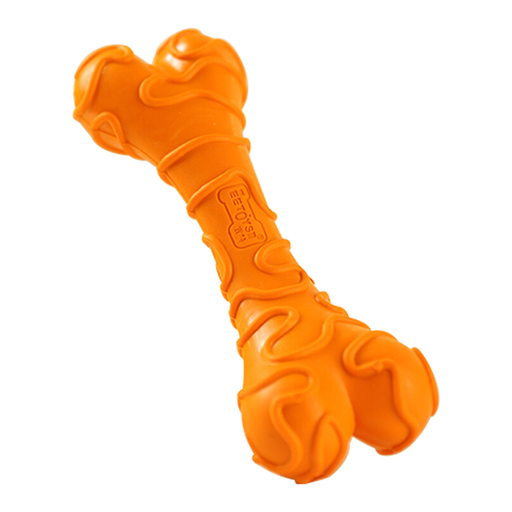
Why This Fits Their Persona: Its compact 10.7 × 4 cm format and approximate 40 g weight make it a practical starting point for small dogs and puppies, particularly for indoor play and short training sessions.
The stated small-dog suitability and dimensions are clearer than choosing a toy based only on a generic “for all dogs” label.
Rubber construction, lightweight design and a cheese-bone shape for chewing or owner-led interaction.
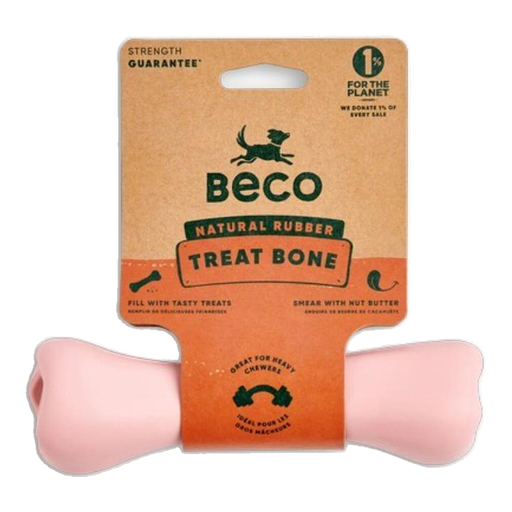
Why This Fits Their Persona: The 17.5 × 4.9 × 5.4 cm natural rubber design suits owners wanting a quieter indoor toy that can also be used during fetch and treat-based enrichment.
Its warning clearly states that no toy is indestructible, encouraging regular inspection rather than relying on a durability promise.
Thick natural rubber with two fillable ends for pastes or dry treats; warm-water cleaning is specified.

Why This Fits Their Persona: The 17.7 × 7.3 × 3.3 cm cowhide-and-nylon design is specified for medium-sized dogs that need a substantial chew and occasional tug interaction.
It states a medium-dog size rather than suggesting that one chew works equally well for every mouth and bite strength.
Branch shape offers a firm grip; the product combines cowhide and nylon and can be wiped or rinsed as directed.
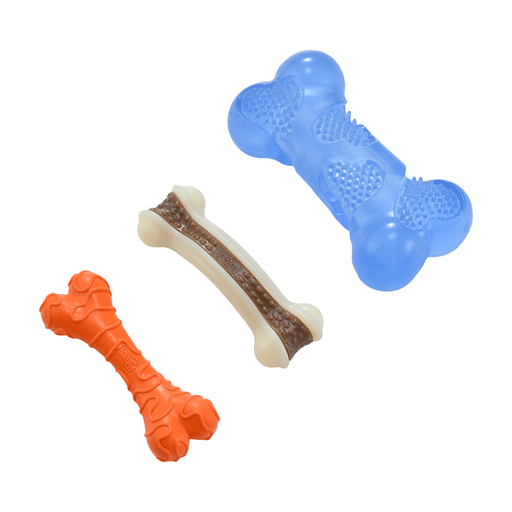
Why This Fits Their Persona: Three shapes and materials give puppy owners options for teething, solo chewing and interactive play, while making it easier to identify which format their dog prefers.
The set avoids putting every dog into one design category, although each piece still needs separate inspection and supervision.
Includes three stated sizes, with nylon, edible collagen snack and soft TPR components.
We have compiled a complete, real-time list of products that fully satisfy these strict selection criteria and UK safety regulations.
There is no fixed lifespan. It depends on bite strength, chewing frequency, material, size and whether the toy is used for tugging or fetch. A toy may last weeks or considerably longer, but regular inspection matters more than a promised duration.
They may suit some strong chewers when the size and product guidance are appropriate. However, nylon is not automatically suitable for every dog. Stop use if sharp edges, large fragments or excessive wear appear, and consider asking a vet for guidance if your dog has a history of swallowing pieces.
No. Textured dog toys for teeth cleaning may support mechanical rubbing during chewing, but they do not replace a regular dental-care routine or veterinary advice. Choose a suitably sized toy and treat any dental claim as a product feature rather than a guaranteed result.