
24/7 Customer Support

Free returns

Same-day & Next-day Delivery

Quality Guaranteed

Unlock Your Welcome Offers: FREE Delivery | Up to 80% OFF | Free 30-day JoyPlus trial
Download the APP
Buying dog chew toys can seem straightforward until a new toy is shredded within minutes, proves too small for your dog’s mouth or contains a squeaker that quickly becomes exposed. The right choice depends less on colourful packaging and more on size, material, intended use and your dog’s chewing behaviour.
This guide explains the common buying traps, the specifications worth checking and a selection of dog toys for puppies, small breeds, medium dogs and strong chewers.
Terms such as tough, bite-resistant and long-lasting are useful only when supported by clear material and usage information. Even durable dog toys can wear, split or lose small components when used by a powerful chewer.
A tug toy, for example, may have reinforced stitching but still be unsuitable as a chew toy. Always check whether the product is intended for chewing, tugging, fetching or supervised interaction.
Textured surfaces, raised nubs and firm materials may provide physical contact with teeth and gums during chewing. However, dental chew toys for dogs should not be treated as a replacement for brushing, professional dental care or veterinary advice.
Avoid assuming that a toy will remove all plaque or resolve oral problems simply because the packaging uses phrases such as “dental care”. Look for objective details, including the material, texture and cleaning instructions.
A toy that is suitable for a small dog may become a choking risk for a larger dog, while an oversized or excessively hard toy may be uncomfortable for a puppy. Check the stated dimensions and recommended dog size before ordering.
For dogs that swallow fragments, strong supervision is particularly important. Remove any toy immediately if it develops cracks, tears, sharp edges, exposed squeakers or loose pieces.
A toy designed for chewing should not automatically be used for throwing. Hard impact can place unnecessary pressure on teeth, so follow the product’s specific directions.
Measure your dog’s mouth and compare it with the listed product dimensions. A toy should be large enough that it cannot be swallowed whole, but still comfortable to hold and carry.
Examples include:
These measurements are product specifications, not a substitute for observing how your own dog handles the toy.
Different toys serve different purposes:
Choose based on your dog’s daily routine rather than buying a toy solely because it has several advertised features.
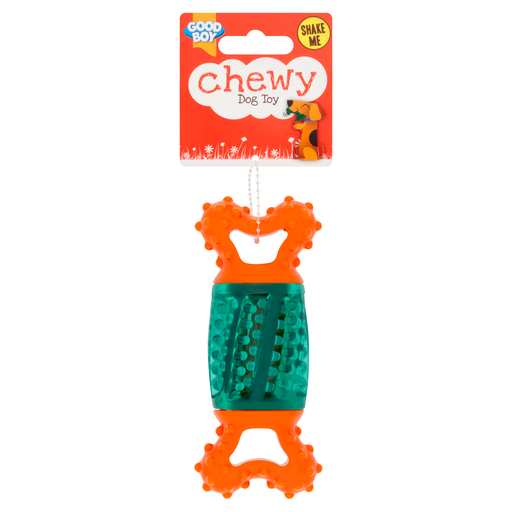
Why This Fits Their Persona: A straightforward option for owners wanting one shakeable toy for supervised solo play and everyday stimulation at home.
The description states that it is sturdy but not indestructible and clearly advises supervision and replacement when worn.
Shakeable design; suitable for various sizes and play styles when correctly matched.

Why This Fits Their Persona: Suitable for owners seeking a shaped, scented chew for puppies and moderate chewers, particularly during quiet indoor periods.
It is specifically described for puppies and non-aggressive chewers rather than being presented as suitable for every chewing style.
Bamboo fibre and nylon blend; textured surface and paw-friendly fish shape.
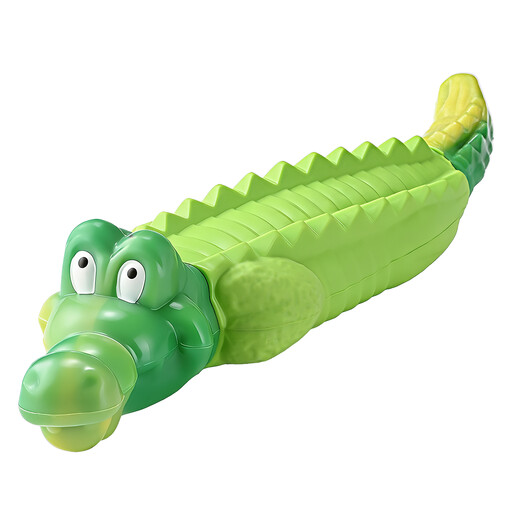
Why This Fits Their Persona: A practical match for medium and large dogs that need a toy for supervised chewing, fetch training and outdoor activity.
Its stated size and medium-to-large-dog suitability make the intended use clearer than a generic all-breeds claim.
24 × 6 cm dimensions; natural rubber exterior with a nylon core; designed for fetch and interactive play.
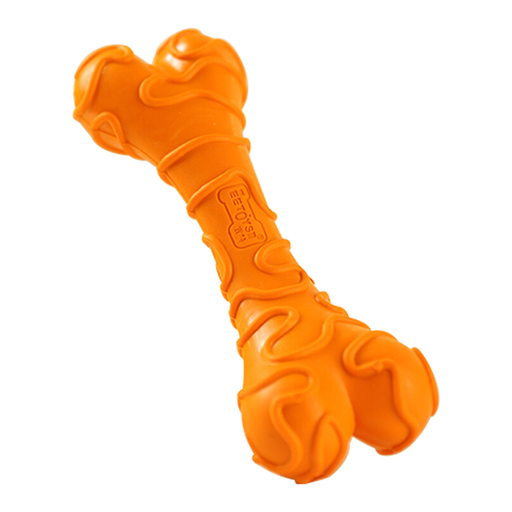
Why This Fits Their Persona: The compact format is aimed at small dogs and puppies needing a manageable toy for chewing and supervised interactive training.
The listing identifies small dogs as the intended users and provides clear instructions for inspection, cleaning and replacement.
Approx. 10.7 × 4 cm; rubber construction; lightweight shape for carrying and chewing.
Before each session, check for:
Supervise new toys closely, especially with puppies and dogs that swallow fragments. Wash toys according to the product instructions, dry them fully and store them in a cool, dry place. If your dog shows difficulty chewing, mouth discomfort or swallows part of a toy, stop use and seek veterinary advice.
We have compiled a complete, real-time list of products that fully satisfy these strict selection criteria and UK safety regulations.
There is no fixed lifespan. It depends on the toy’s material, your dog’s bite strength and how often it is used. Replace a toy as soon as it becomes damaged, develops sharp edges or produces detachable pieces, even if it appears relatively new.
Some are designed for puppies, while others are intended for adult or strong-chewing dogs. Check the age, size and material guidance. Puppy teething toys should be appropriately sized and used under supervision, particularly during first use.
Squeaky dog toys are better used with supervision if your dog tries to remove or swallow the squeaker. Inspect the toy regularly and discontinue use if the squeaker or inner material becomes exposed.