
24/7 Customer Support

Free returns

Same-day & Next-day Delivery

Quality Guaranteed

Unlock Your Welcome Offers: FREE Delivery | Up to 80% OFF | Free 30-day JoyPlus trial
Download the APP
A new toy can look sturdy in a product photo yet become unusable after a few enthusiastic chewing sessions. For UK dog owners, choosing suitable dog chew toys is less about buying the most heavily marketed option and more about matching the toy’s size, material and purpose to the individual dog.
No dog toy is suitable for every chewing style. A toy described as durable may still be unsuitable for a dog that bites hard, removes fragments or swallows pieces. Soft latex, plush fabric and toys containing sound modules generally need closer supervision than a solid rubber, nylon or layered chew design.
A toy marked “for large dogs” may still be too narrow for a powerful jaw, while an oversized toy can be difficult for a smaller dog to carry. Always compare the product’s length, width and thickness with your dog’s mouth size and chewing habits. A toy should not be small enough to swallow, nor so large that your dog cannot grip it comfortably.
Raised ridges and knobbly surfaces may create friction during chewing, but dental chew toys for dogs are not a substitute for veterinary advice or a regular oral-care routine. Avoid products that present dental benefits as guaranteed results. Look instead for clearly described textures, accessible surfaces and materials that your dog can use safely.
Rubber dog toys are often flexible and easy to rinse, making them practical for fetch and everyday chewing. TPR and natural rubber can provide a softer mouthfeel, but products with exposed squeakers or thin sections may not suit strong chewers.
Nylon dog chew toys are usually firmer and may be appropriate for dogs that quickly damage softer toys. Layered designs, such as a nylon core with a rubber exterior, combine different textures. However, inspect hard toys regularly for sharp edges, cracks or excessive wear.
For owners looking for plant-based materials, natural bamboo dog toys may offer a wood-like chewing texture. Product descriptions vary considerably, so check the stated material blend and follow the manufacturer’s supervision instructions rather than assuming that “natural” means suitable for every dog.
Use the listed dimensions as a starting point:
Choose according to the problem you want to solve:
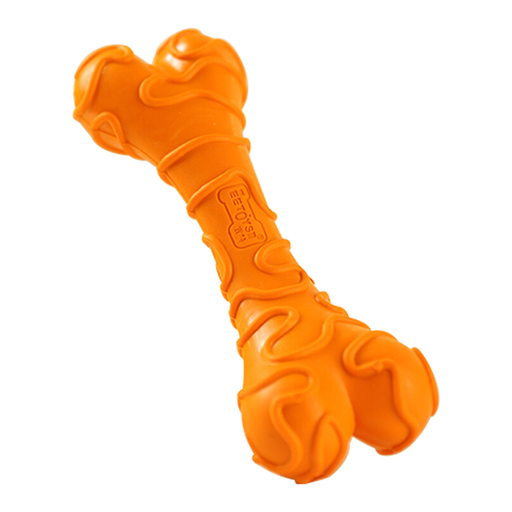
Why This Fits Their Persona: The compact 10.7 × 4 cm rubber design is listed for small dogs and puppies, making it a straightforward option for owners starting a basic chew-and-play routine.
Its stated dimensions and small-dog recommendation make size checking easier than relying on a vague breed label. It should still be removed if cracked or torn.
Rubber construction; compact shape; suitable for interactive play and teething use according to the listing.
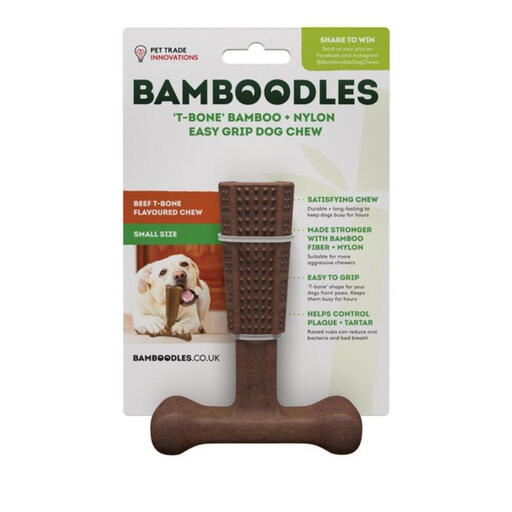
Why This Fits Their Persona: Owners wanting a firmer, textured chew can consider the natural bamboo fibre and nylon blend, with a T-bone shape designed for paw control.
The material blend is stated clearly, while the warning still advises supervision and replacement when worn, avoiding an assumption of indestructibility.
Bamboo fibre and nylon construction; raised nubs; beef flavour; listed for small dogs over 10 weeks.
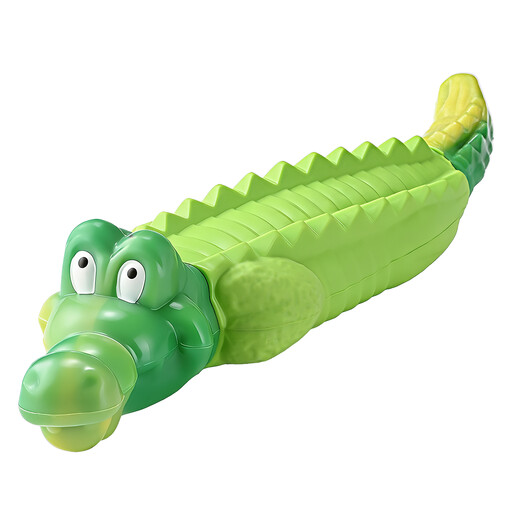
Why This Fits Their Persona: Designed for medium and large dogs, this 24 × 6 cm toy suits owners seeking a broader option for chewing, fetch and outdoor play.
The size and double-layer construction are specified, but regular checks remain important because strong chewing can damage any toy.
Natural rubber exterior; nylon core; textured crocodile shape; suitable for fetch and tug-style interaction.
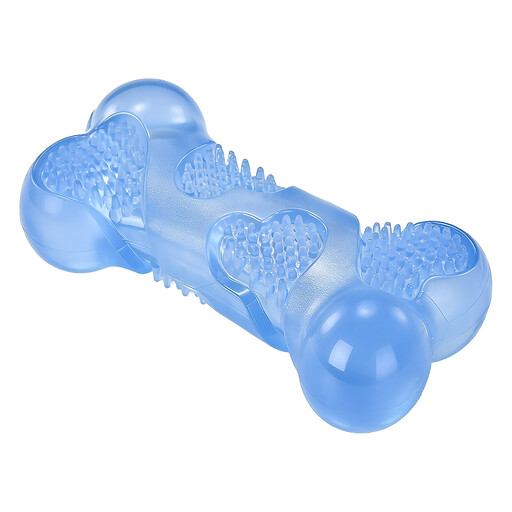
Why This Fits Their Persona: The approximately 12.5 cm TPR bone is listed for small to medium dogs and combines chewing with a built-in sound for indoor play.
The listing states its size range and warns against use by large, strong chewers, helping buyers avoid choosing a squeaky toy for the wrong dog.
TPR body; textured surface; built-in squeaker; can be wiped or rinsed and air-dried.
We have compiled a complete, real-time list of products that fully satisfy these strict selection criteria and UK safety regulations.
There is no fixed lifespan. A gentle chewer may use the same toy for weeks or months, while a strong chewer may damage it quickly. Replace the toy when its shape changes, cracks appear, edges become sharp or any part can be swallowed.
They can be suitable when the product is correctly sized and used under supervision. Puppies may focus on removing the squeaker, so inspect the toy frequently and choose a stated puppy or small-dog size. Stop use if the internal component becomes exposed.
They may give a dog an appropriate outlet for chewing and activity, but they do not guarantee a change in behaviour. Combine suitable toys with exercise, training and supervision. If destructive chewing is sudden or persistent, consider discussing it with a qualified veterinary professional.