
24/7 Customer Support

Free returns

Same-day & Next-day Delivery

Quality Guaranteed

Unlock Your Welcome Offers: FREE Delivery | Up to 80% OFF | Free 30-day JoyPlus trial
Download the APP
Strong chewers can destroy a soft toy in minutes, while an oversized or excessively hard chew may create a different set of problems. For UK dog owners, choosing durable dog chew toys is less about finding a toy labelled “indestructible” and more about matching the material, size and play style to the individual dog.
A suitable toy can provide an outlet for natural chewing, support interactive play and help reduce boredom. However, marketing descriptions can make similar products appear interchangeable. The following guide highlights common buying traps, practical specifications and suitable options for different households.
No dog toy is indestructible. A product described as a tough dog chew toy may still develop cracks, loose fibres or sharp edges when used by a powerful chewer. Bite strength, chewing technique and frequency of use all affect the toy’s lifespan.
Inspect the toy before and after play. Replace it if pieces become loose, the surface splits or the toy becomes small enough to swallow.
A realistic bone, branch or food shape may attract your dog, but appearance alone does not indicate durability. Latex, natural rubber, nylon, cowhide and layered constructions behave differently under pressure.
Soft latex can suit fetch and gentle chewing, while a nylon dog chew toy generally provides a firmer chewing surface. Natural rubber offers some flexibility and can be quieter on indoor floors. Combination toys may balance a hard inner core with a softer outer layer.
A toy that is suitable for a small dog may be a choking risk for a large dog, while a toy designed for large breeds may be too difficult for a puppy or small adult dog to grip. Always compare the stated dimensions with your dog’s mouth size and chewing habits.
A toy should be large enough that your dog cannot swallow it whole, but not so large that they cannot hold and manipulate it comfortably.
Look for clear material information rather than vague phrases such as “extra strong”. Useful options include:
Material does not determine safety on its own. Check the edges, seams, openings and any attached parts.
A dental chew toy for dogs often uses ridges, contours or textured surfaces to create contact with the teeth as the dog chews. These designs may help remove surface debris, but they are not a replacement for brushing or veterinary dental care.
Shapes such as curved bones, branches and crocodiles can be easier to hold than smooth cylinders. A fetch toy should also be easy for both dog and owner to pick up without encouraging unsafe grabbing. For medium and large breeds, check length and width carefully rather than relying only on the breed label.
A treat-dispensing dog toy can turn chewing into a food puzzle, while an interactive dog toy may be better for tug, fetch or guided play. Fillable toys can be useful indoors, especially during wet-weather days, but account for the calories in pastes and treats.
Supervise initial use and any dog known to swallow non-food items. Clean toys according to their instructions, allow them to dry fully and avoid prolonged heat or direct sunlight where the manufacturer advises against it.
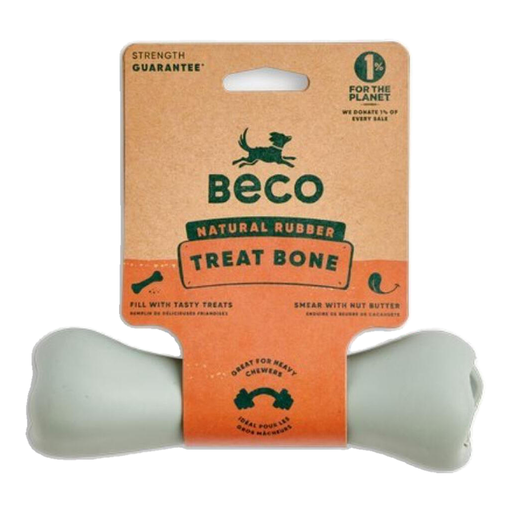
Why This Fits Their Persona: A practical starting point for owners wanting one toy for quiet indoor chewing, treat use and occasional fetch during walks.
Its material and dimensions are clearly stated, avoiding reliance on an unqualified “indestructible” label. The manufacturer also advises regular inspection.
Thick natural rubber; two fillable ends for pastes or dry treats; stated size of 17.5 × 4.9 × 5.4 cm.
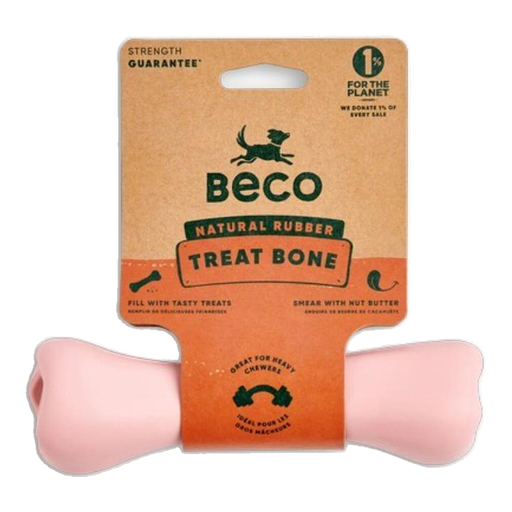
Why This Fits Their Persona: Suitable for households that want a quieter, less visually intrusive toy for a lounge, flat or home office.
It is presented as a multi-use toy rather than a promise of unlimited lifespan, with cleaning and replacement guidance supplied.
Soft, elastic natural rubber; quiet for indoor use; openings accept pastes, baked snacks or dry treats.
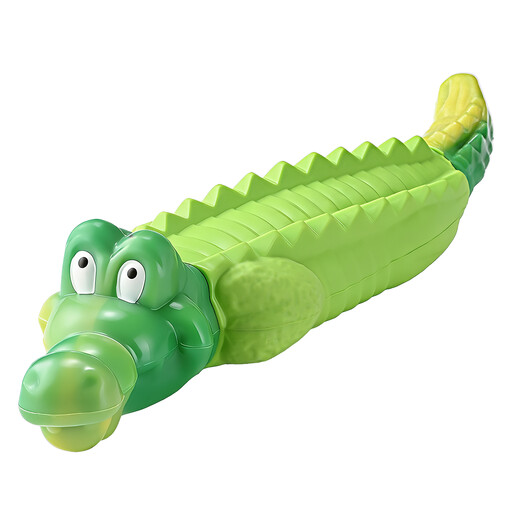
Why This Fits Their Persona: A practical option for owners of medium or large dogs that need one toy for chewing, retrieving and outdoor activity.
The listing identifies the intended dog size and gives a 24 × 6 cm specification, making it easier to avoid an unsuitable small toy.
Nylon core with natural rubber exterior; crocodile shape with textured gripping surfaces; suitable for fetch, tug and outdoor play.
For dogs that prefer firm chewing, the Rosewood Large Nylon Chicken Bone is listed for large dogs and uses nylon with a chicken flavour. Its large format should still be checked against the dog’s bite strength, as the listing excludes extra-large dogs with extreme bite force.
Owners of small or medium dogs may consider the Blinkit Chicken Wing Chew Toy, measuring 15 × 8 × 3 cm and made from cowhide and nylon. The listing specifically advises against use by large dogs.
For active households wanting a squeaky dog fetch toy rather than a dedicated heavy-chew product, the Petface Foodie Faces Latex Orange Dog Toy is supplied as a set of three large latex toys. It is intended for supervised play and is not described as indestructible.
We have compiled a complete, real-time list of products that fully satisfy these strict selection criteria and UK safety regulations.
There is no fixed lifespan. A toy may last weeks or months depending on the dog’s bite strength, chewing frequency and material. Check it regularly rather than relying on a promised duration. Rotate several toys and remove damaged items promptly.
They can suit some strong chewers, but suitability depends on size, shape and the individual dog. Nylon can wear into sharp edges or fragments. Stop use if this happens, and supervise dogs that tend to swallow pieces.
No. Textured toys may provide mechanical contact with tooth surfaces during chewing, but they should not be treated as a substitute for a dental routine or veterinary advice. Choose a size your dog can grip safely and never allow them to consume non-edible toy parts.