
24/7 Customer Support

Free returns

Same-day & Next-day Delivery

Quality Guaranteed

Unlock Your Welcome Offers: FREE Delivery | Up to 80% OFF | Free 30-day JoyPlus trial
Download the APP
Choosing dog collars is not simply a matter of picking a colour. The right option should match your pet’s neck size, walking habits, coat type and level of training. A collar that looks suitable online may be uncomfortable, difficult to adjust or unsuitable for unsupervised wear.
This guide explains the practical details to check before buying, including materials, sizing, safety features and specialist designs for puppies, cats and dogs.
Breed labels can be a useful starting point, but neck sizes vary considerably between individual animals. Two dogs of the same breed may need different collar lengths, while puppies can outgrow a collar quickly.
Always measure your pet’s neck rather than relying only on a size such as small, medium or large. Check the product’s stated adjustable range and compare it with the measurement taken around the position where the collar will sit.
A nylon dog collar is usually lightweight, easy to wipe clean and practical for wet UK weather. However, a leather dog collar may appeal to owners looking for a more structured accessory with a traditional appearance. Leather requires different care and should not be repeatedly soaked.
Decorative materials, heavy fittings and thick designs may also add unnecessary weight for smaller dogs, puppies or cats. Consider comfort and daily use before prioritising appearance.
A dog training collar or chain check collar is not automatically suitable for every dog. Some designs are intended to provide additional control during walking and should be used under supervision, with correct fitting and gentle handling.
For dogs that pull, a no-pull dog headcollar can help guide the direction of movement, but it must be introduced gradually. It should never be fitted tightly or used as a substitute for calm, reward-based training.
Use a soft tape measure around your dog’s neck, keeping it level and allowing normal movement. Once fitted, you should generally be able to place one or two fingers between the collar and the neck, depending on the product guidance.
Check the following before ordering:
For example, an adjustable dog collar measuring 28–36cm may suit some small to medium-sized pets, while a 35–43cm version is intended for a larger neck range. These measurements should always be compared with your own pet’s neck size.
Nylon webbing is a practical choice for everyday walks, play and changing weather. It is lightweight and available in various colours, including a versatile black dog collar.
Leather offers a distinct feel and appearance, but it should be wiped clean and allowed to dry naturally after contact with moisture. Avoid excessive soaking and follow the care instructions supplied with the product.
Padded neoprene and soft-weave fabrics can be useful around sensitive areas, particularly on headcollars or puppy accessories. Look for smooth edges and lightweight fittings to reduce rubbing.
Kittens should use a purpose-designed kitten safety collar rather than a standard dog collar. A breakaway kitten collar is designed to release under pressure, helping reduce the risk of entanglement. Fit should be checked regularly as a kitten grows, and collars should be removed during unsupervised play where recommended by the product instructions.
For dogs using a headcollar, a safety link connected to the regular collar can provide a secondary connection. Introduce the headcollar slowly, using treats and praise, and monitor your dog’s response.
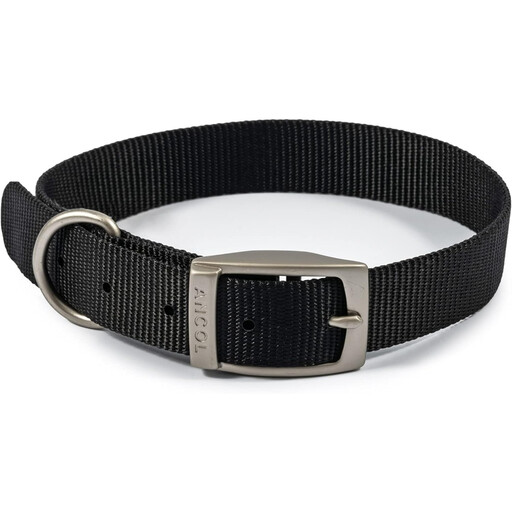
Why This Fits Their Persona: A straightforward option for owners seeking a lightweight everyday collar for a small to medium-sized dog or cat.
The stated 28–36cm adjustment range makes sizing more transparent than choosing by breed label alone.
Nylon webbing, quick-release buckle and metal D-ring; classic black colour is easy to pair with leads.
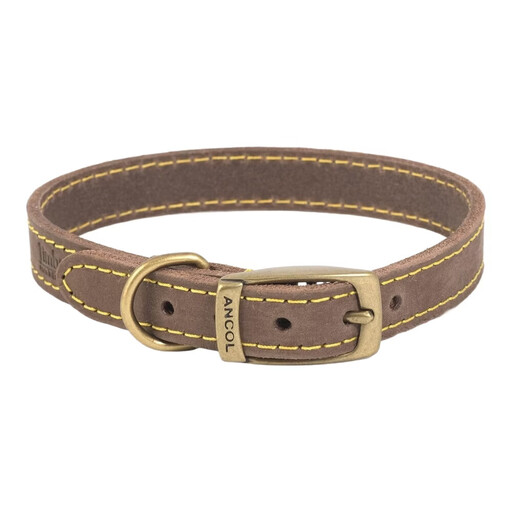
Why This Fits Their Persona: Suitable for owners who prefer the feel and traditional finish of a leather accessory for regular walks.
Its care guidance clearly acknowledges that leather should not be excessively soaked, helping owners choose it with realistic expectations.
Top-grain bridle leather, bonded nylon stitching and an antique gold-tone buckle and D-ring.
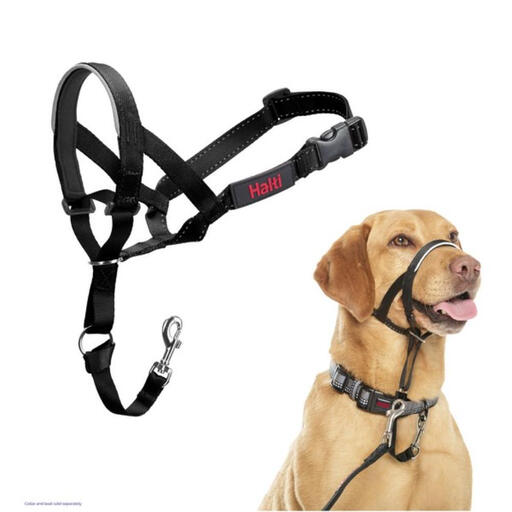
Why This Fits Their Persona: Designed for owners seeking additional guidance during walks with a dog that pulls on the lead.
The instructions emphasise measuring both neck and nose circumference and introducing the headcollar gradually.
Padded neoprene nose band, reflective accents, lightweight nylon webbing and a safety link.
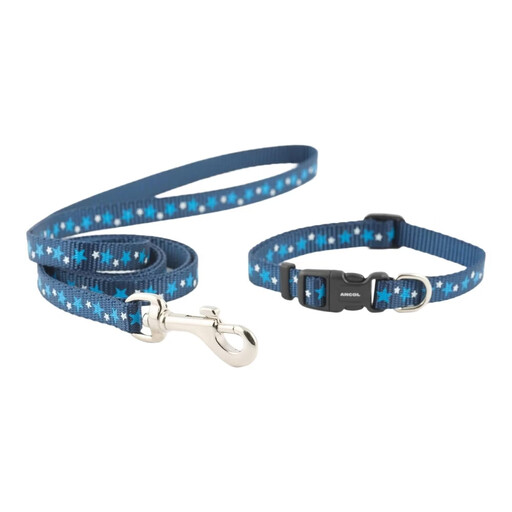
Why This Fits Their Persona: A practical starter choice for a new puppy or small dog beginning lead training in the UK.
The collar is adjustable and specifically described for puppies and small dogs, rather than being an oversized adult design.
Includes a collar and lead, with soft-weave fabric and weather-resistant nylon construction.
We have compiled a complete, real-time list of products that fully satisfy these strict selection criteria and UK safety regulations.
Inspect dog collars regularly, particularly around the buckle, stitching, D-ring and any chain section. Replace the collar if the webbing is frayed, the fastening no longer closes securely or the metal fittings show damage.
Remove a collar when your pet is in a cage or left unsupervised if the product guidance warns against this. For kittens, check the breakaway mechanism and fit frequently as they grow. Keeping a spare collar can also be useful if the everyday one becomes wet or damaged.
It should be secure without restricting breathing or movement. A practical starting point is leaving enough room for one or two fingers between the collar and your dog’s neck. Recheck the fit after grooming, weight changes and puppy growth.
Lifespan depends on material, weather exposure, washing, pulling and frequency of use. Check collars before every walk if they are used heavily, and replace them when stitching, buckles, D-rings or webbing show meaningful wear.
No. A headcollar needs correct sizing, gradual introduction and supervision. Measure the neck and nose as instructed, ensure the noseband does not obstruct panting, eating or drinking, and stop use if your dog shows persistent distress or discomfort.