
24/7 Customer Support

Free returns

Same-day & Next-day Delivery

Quality Guaranteed

Unlock Your Welcome Offers: FREE Delivery | Up to 80% OFF | Free 30-day JoyPlus trial
Download the APP
Choosing dog collars can seem straightforward until you compare sizes, materials, fastening systems and walking aids. A collar that looks suitable online may rub the neck, loosen during a walk or become uncomfortable when wet. Puppy owners also face the added challenge of growth, while owners of larger or stronger dogs need dependable fittings without selecting unnecessarily restrictive designs.
This guide explains the practical details worth checking before buying, followed by product recommendations matched to different UK dog-owner needs.
Labels such as “small dog collar”, “medium dog collar” or “large dog collar” are useful starting points, but they are not precise sizing measurements. Two dogs of the same breed may have different neck shapes, coat thicknesses and growth stages.
Measure around the neck where the collar will sit, then compare the result with the product’s stated adjustment range. A collar should be secure without pressing into the skin. As a practical check, you should generally be able to place two fingers between the collar and your dog’s neck.
A nylon dog collar is usually a practical option for rainy walks because nylon webbing is weather-resistant and easy to wipe clean. Leather can feel supple and durable, but it is a natural, porous material that requires more careful drying and conditioning. Repeated soaking may affect its colour and texture.
Look beyond words such as “premium” and check the actual material, stitching, buckle and care instructions.
A dog headcollar, no-pull dog headcollar or check chain dog collar may be selected for specific walking or training requirements, but each needs correct fitting and supervision. These products should not be viewed as a shortcut to training or used harshly.
Headcollars require gradual introduction, while check chain designs should not be left on an unsupervised dog. Inspect all walking equipment regularly and replace it if the stitching, chain, buckle or D-ring shows damage.
An adjustable dog collar gives you room to achieve a secure fit and, in some cases, accommodate a growing puppy. Check both the minimum and maximum neck size rather than relying on the product title alone.
For example, the Ancol Viva Collar Black Size 3 adjusts from 28–36cm, while Size 4 covers 35–43cm. These ranges help shoppers compare products with their dog’s actual measurement.
Recheck the fit regularly, particularly for puppies, dogs with changing coats and pets that have gained or lost weight.
Choose the material according to the dog’s routine:
Also inspect the details that transfer walking force: bonded or reinforced stitching, a secure buckle, heat-sealed holes and a sturdy metal D-ring.
A standard dog collar and lead are appropriate for many everyday walks. A headcollar works differently by guiding the dog’s direction through the nose and head area. Products such as the HALTI designs supplied with a safety link can provide an additional connection to the regular collar, but correct fitting remains essential.
Reflective accents may improve visibility in low-light conditions, although they should not replace a light or high-visibility clothing or safe walking practices where needed.
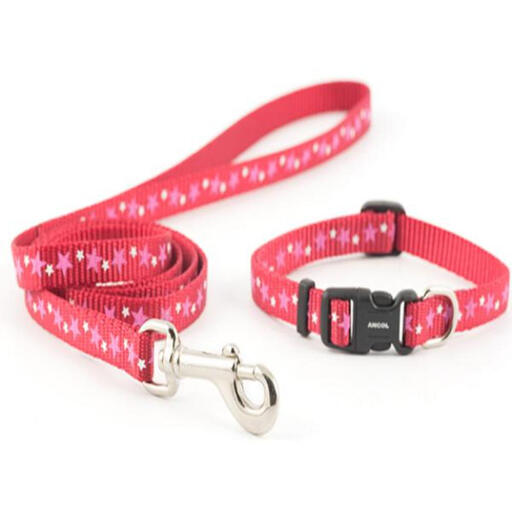
Why This Fits Their Persona: A practical starting point for UK puppy owners who need a collar and lead together for early everyday walks.
The fully adjustable collar helps accommodate growth, while the soft-weave fabric avoids relying on a generic puppy size label.
Includes a matching lead, soft-weave fabric and weather-proof nylon weave.
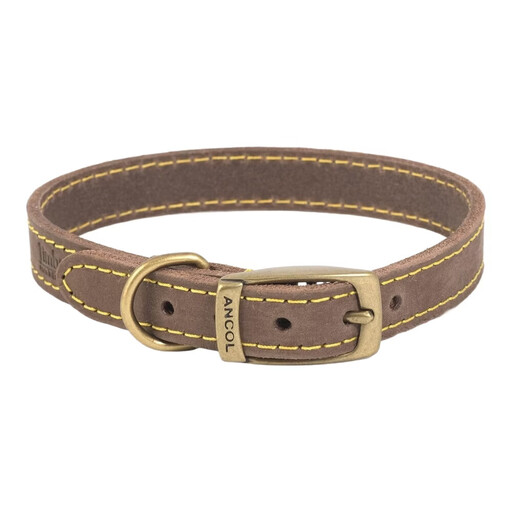
Why This Fits Their Persona: Suitable for owners who value a traditional leather finish and are prepared to follow the required care routine.
Its stated 35cm size and adjustable design make measurement more useful than choosing by appearance alone; care instructions also clearly address water exposure.
Top-grain bridle leather, bonded nylon stitching, antique gold-tone fittings and a UK-made construction.
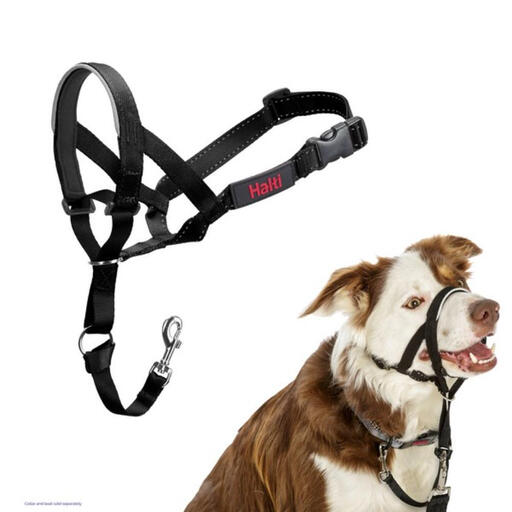
Why This Fits Their Persona: A walking-control option for owners managing lead pulling who can introduce and use a headcollar patiently.
The instructions specify gradual introduction, noseband positioning, measurement and use of the safety link rather than relying on force.
Padded neoprene nose band, lightweight nylon webbing, reflective accents and included safety link.
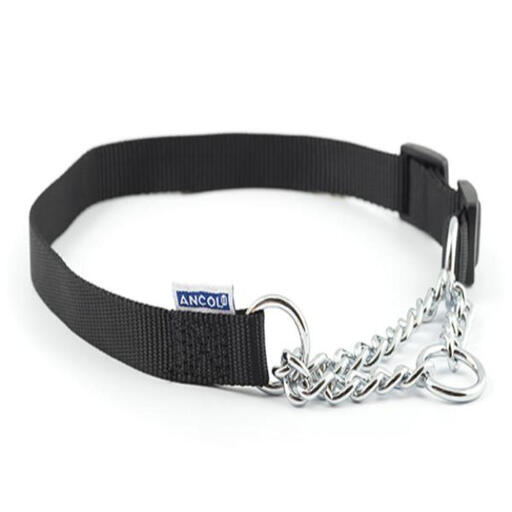
Why This Fits Their Persona: Designed for owners considering a check chain dog collar for supervised walking or training, particularly with longer-coated dogs.
The 50–70cm alternative sizing information and supervision warning encourage measurement and responsible use instead of buying solely for control.
Combines nylon webbing with a metal chain and is described as suitable for longer coats when fitted loosely.
We have compiled a complete, real-time list of products that fully satisfy these strict selection criteria and UK safety regulations.
A correctly fitted collar should sit securely while allowing approximately two fingers between the collar and the neck. It should not restrict normal breathing, rub persistently or slide over the dog’s head when the lead is attached. Check the fit again after grooming, weight changes or puppy growth.
A nylon dog collar is generally easier to wipe clean and is suited to regular wet-weather use. A leather dog collar may offer a supple feel and classic appearance, but it should not be repeatedly soaked and needs appropriate drying and conditioning.
It is advisable to introduce a dog headcollar gradually using positive reinforcement. Follow the sizing instructions, position the noseband correctly and monitor your dog’s behaviour. A safety link connected to the regular collar can provide an additional backup, but the headcollar should still be checked before every walk.