
24/7 Customer Support

Free returns

Same-day & Next-day Delivery

Quality Guaranteed

Unlock Your Welcome Offers: FREE Delivery | Up to 80% OFF | Free 30-day JoyPlus trial
Download the APP
Choosing dog collars and leads is not simply a matter of colour or pattern. The wrong size can slip over a dog’s head, rub during everyday walks or become unreliable after exposure to rain and mud. Marketing language can also make ordinary features sound more advanced than they are.
This guide from the Joybuy Product Recommendation Officer focuses on the details that matter: fit, materials, safety features and the type of walking you actually do.
Breed labels are only a rough guide. Neck shapes vary considerably between individual dogs, while puppies grow quickly. A collar described as “small” may still be too large for a fine-necked dog, and a fashionable puppy collar may become restrictive within weeks.
Always measure your pet’s neck and compare it with the product’s stated adjustment range. For example, the Ancol Viva Collar Size 3 covers 28–36 cm, while Size 4 covers 35–43 cm. These measurements are more useful than a general small, medium or large label.
A standard collar, training collar and kitten safety collar have different purposes. Quick-release and breakaway features can improve convenience or reduce entanglement risks, but they do not make a collar suitable for every situation.
The kitten collars listed here specifically advise removal during unsupervised play or extended periods alone. Similarly, chain check collars should be used under supervision rather than left on in a crate or while tethered.
A dog headcollar or anti-pull dog collar may help guide direction, but it does not replace gradual introduction and reward-based training. An unsuitable fit or sudden use can cause resistance and discomfort. Any headcollar should be introduced slowly in a quiet environment, with the dog monitored throughout.
A correctly fitted dog collar should be secure without restricting breathing or movement. As a practical starting point, allow one to two fingers between the collar and the neck, then check that the collar cannot easily slide over the dog’s head.
Measure the neck where the collar will sit. For a headcollar, also follow the manufacturer’s instructions for measuring the nose circumference. Recheck the fit regularly for puppies, growing dogs and pets whose weight changes.
Look for:
A nylon dog collar is generally lightweight, weather-resistant and easy to wipe clean, making it practical for everyday UK walks. Soft-weave nylon can be more comfortable for puppies and small dogs. A leather dog collar may offer a supple feel and traditional appearance, but it needs appropriate care and should not be soaked repeatedly.
Inspect the metal D-ring, buckle, chain and stitching rather than focusing only on the strap material. These parts receive much of the force when a lead is attached. Replace any collar or lead showing fraying, damaged stitching, rust, cracks or weakened clips.
A reflective dog collar can make a pet easier to notice in low light, but reflective accents are not a substitute for a lead, torch or high-visibility clothing. Consider visibility particularly during darker winter mornings and evenings.
For kittens, select a purpose-designed breakaway kitten collar. A breakaway buckle is intended to release under pressure, but it still needs regular adjustment as the kitten grows. Do not attach a lead to a kitten safety collar unless the product specifically allows it.
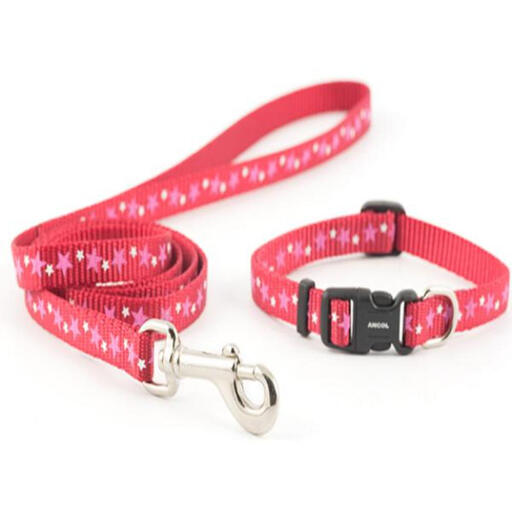
Why This Fits Their Persona: A practical starting point for new puppy owners who need a matching collar and lead for short daily walks and early training.
The fully adjustable collar helps accommodate growth, while the product guidance specifies a two-finger fit and regular checks.
Soft-weave fabric, weather-proof nylon construction and recyclable packaging; supplied as a collar-and-lead set.
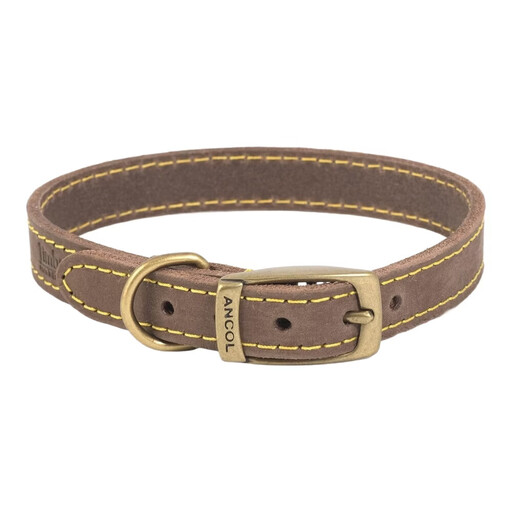
Why This Fits Their Persona: Suits owners who prefer a traditional leather dog collar for everyday use and are prepared to maintain the material.
The 35 cm size is clearly specified, with care instructions that address water exposure, drying and conditioning.
Top-grain bridle leather, bonded nylon stitching and an antique gold-tone buckle and D-ring.
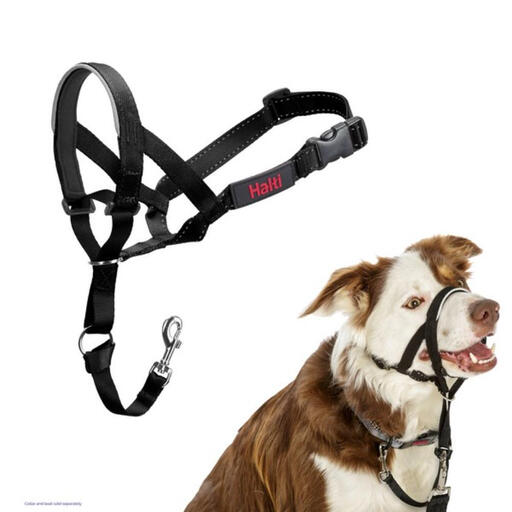
Why This Fits Their Persona: Designed for owners managing lead pulling who want a head-guidance option for structured walking practice.
It includes fitting instructions, gradual introduction guidance and a safety link connecting the headcollar to the dog’s regular collar.
Lightweight nylon webbing, padded neoprene nose band and reflective accents for low-light visibility.
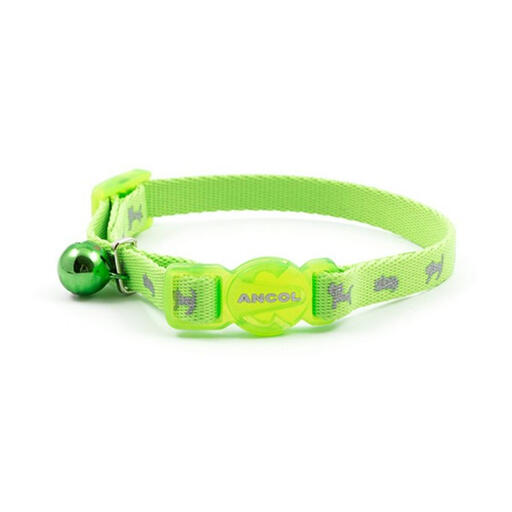
Why This Fits Their Persona: A kitten-specific option for owners who want bright visibility and a collar designed around a young cat’s changing size.
The breakaway buckle is designed to release under pressure, with guidance to remove it during unsupervised play and adjust it as the kitten grows.
Soft, lightweight nylon webbing and a hi-vis green finish intended to improve visibility in indoor and outdoor settings.
We have compiled a complete, real-time list of products that fully satisfy these strict selection criteria and UK safety regulations.
Include these dog walking accessories in your routine:
A collar is not a substitute for identification, supervision or suitable lead handling. Select equipment for the pet’s actual size and behaviour, then introduce it calmly.
Measure the dog’s neck and select a collar whose adjustment range includes that measurement. Fasten it so that one to two fingers fit between the collar and the neck. Check that the buckle is closed, the D-ring is secure and the collar cannot slide over the head during normal movement.
There is no fixed lifespan because use varies. A collar used daily in wet, muddy conditions may need replacing sooner than one used occasionally. Inspect it before every walk and replace it immediately if the webbing, stitching, buckle, D-ring or lead clip shows damage.
No. A dog headcollar is intended for guided walking and should be fitted according to its instructions. Introduce it gradually with positive reinforcement, avoid sudden pulling and monitor the dog’s behaviour. If the dog remains distressed or the fit cannot be adjusted correctly, stop using it and choose a different walking arrangement.