
24/7 Customer Support

Free returns

Same-day & Next-day Delivery

Quality Guaranteed

Unlock Your Welcome Offers: FREE Delivery | Up to 80% OFF | Free 30-day JoyPlus trial
Download the APP
As a Joybuy Product Recommendation Officer, my role is to help you navigate the crowded market of pet supplies. Choosing a dog collar seems simple, but with so many options available, it's easy to make a purchase you'll later regret. A good collar is more than an accessory; it's a vital piece of equipment for your dog's safety and your peace of mind. This guide will help you understand the key factors to consider and avoid the common pitfalls that lead to wasted money and unsuitable products.
Before you buy, be aware of a few frequent issues that catch many UK dog owners out:
To make a smart choice, focus on three non-negotiable elements. Getting these right ensures the collar is safe, durable and comfortable for your dog.
The two most common materials for dog collars in the UK are nylon and leather, each with distinct advantages.
The hardware is arguably the most critical part of any collar. Always check the quality of the buckle and the D-ring. A metal buckle is generally more robust than a plastic one, particularly for medium to large breeds. The D-ring should be solid and welded shut, not just bent into shape, to prevent it from being pulled open.
An adjustable dog collar is essential, especially for a growing puppy. The fit should be snug but not tight. The standard guideline is the "two-finger rule": you should be able to comfortably slip two fingers between the collar and your dog's neck. This ensures the collar won't slip over their head but doesn't restrict breathing or cause chafing. This rule applies whether you're fitting a small dog collar or a dog collar for large dogs.
To help you find the right fit for your companion, here are a few recommendations matched to specific owner profiles.
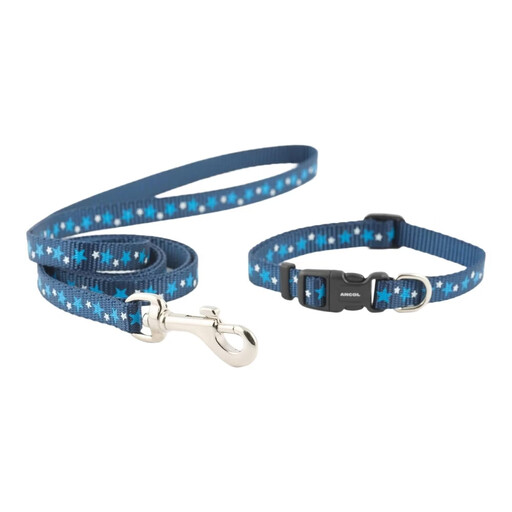
Why This Fits Their Persona: This is an ideal starter kit. A new puppy needs something lightweight, soft and adjustable to accommodate rapid growth. This set provides both a collar and a matching lead, taking the guesswork out of the first purchase.
It avoids the "one-material-fits-all" myth by using a supple, soft-weave fabric specifically chosen for a puppy's delicate neck, preventing chafing.
The complete puppy collar and lead set offers excellent value. The collar is fully adjustable, ensuring it will fit for longer as your puppy grows.
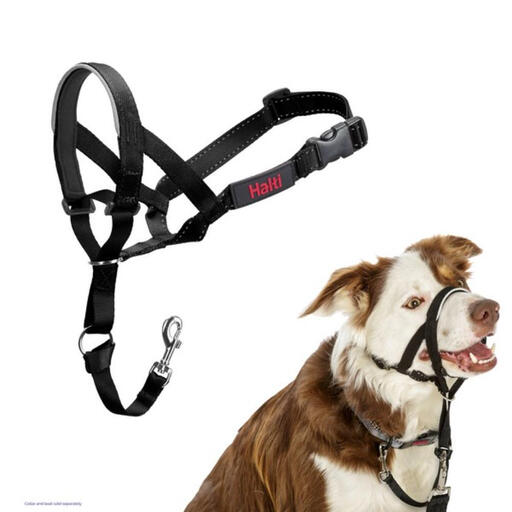
Why This Fits Their Persona: For owners struggling with a dog that pulls relentlessly on the lead, a standard collar can lead to a battle of wills. The Halti headcollar is a well-regarded dog training collar designed to give you more control by gently guiding the dog's head.
This avoids the "training tool misuse" trap by being a purpose-built aid. It works by steering, not by applying pressure to the throat, making it a kinder way to manage pulling.
It features a padded neoprene noseband for comfort and a safety link that attaches to your dog's regular collar for extra security. Reflective accents improve visibility in low light.
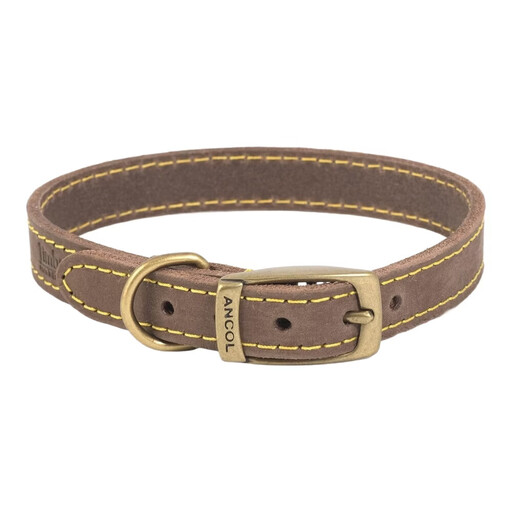
Why This Fits Their Persona: For the owner who values craftsmanship and is willing to invest in a product that lasts. This leather dog collar is a timeless piece, handcrafted in the UK for durability and a classic aesthetic.
This collar sidesteps the "style over substance" trap. Its beauty comes from its quality construction—premium top-grain bridle leather and industrial nylon stitching—not just its appearance.
It is treated with a 3M leather protector to resist water and stains. The antique gold-finish buckle and D-ring are both stylish and robust, ensuring long-term reliability.
We have compiled a complete, real-time list of products that fully satisfy these strict selection criteria and UK safety regulations.
Use a soft tape measure to find the circumference of your dog's neck where the collar would naturally sit. Add about two inches (or 5cm) to this measurement to find the right collar size. When the collar is on, you should be able to fit two fingers between it and your dog's neck to ensure a safe and comfortable fit.
This depends on the material, quality and your dog's lifestyle. Check the collar weekly for any signs of wear and tear, such as fraying nylon, cracked leather or a loose buckle. For very active dogs or those who swim frequently, you may need to replace a nylon collar annually. A high-quality leather collar, if cared for, can last for several years. Always replace a collar immediately if you notice any damage to its structural integrity.
When fitted and used correctly, headcollars like the Halti headcollar are widely considered a safe and humane training tool. They work by guiding the head, which discourages pulling without putting pressure on the throat. It is important to introduce the headcollar gradually with positive reinforcement and never to yank or jerk the lead, as the goal is gentle guidance, not correction. Always ensure it is used as a training aid and not left on the dog unsupervised.