
24/7 Customer Support

Free returns

Same-day & Next-day Delivery

Quality Guaranteed

Unlock Your Welcome Offers: FREE Delivery | Up to 80% OFF | Free 30-day JoyPlus trial
Download the APP
For many UK dog owners, dog dental chews are a convenient way to add chewing to a daily oral-care routine. They can also help occupy dogs that chew furniture, shoes or other household items. However, buying the wrong size, texture or format can waste money and create avoidable safety concerns.
The product label matters more than a bold front-of-pack promise. Before choosing dog dental sticks, dental treats for dogs or dog dental chew toys, check how the item suits your dog’s weight, age, chewing behaviour and diet.
A chew that is too small may be swallowed quickly, while one that is too large can be difficult for a smaller dog to handle. Products are often divided into categories such as dental chews for small dogs, dental chews for medium dogs and dental chews for large dogs, but the weight range can vary between manufacturers.
For example, one small-dog Dentalife product is specified for dogs weighing 7–12 kg, whereas the medium version is intended for dogs weighing 12–25 kg. Always compare your dog’s current weight with the feeding guide rather than relying only on breed descriptions.
Terms such as “deep clean”, “tartar control” and “fresh breath” describe the intended use, not a promise that every dog will experience the same result. According to product information supplied by some manufacturers, certain dental chews have been assessed for tartar reduction or cleaning action. These statements should be read alongside the feeding instructions and not as a replacement for professional dental care.
Dog plaque removal treats may help reduce build-up through chewing, but they do not remove established dental problems. If your dog has bleeding gums, loose teeth, facial swelling, persistent bad breath or difficulty eating, contact a veterinary practice.
A rubber, nylon or cowhide toy is not automatically safe to ingest. Some dog dental chew toys are designed to be chewed but discarded when damaged. Edible dental chews, by contrast, are intended to be consumed according to the label.
Check whether the item is marked not edible, whether it contains an edible centre and what to do if pieces break away. Supervision is particularly important for enthusiastic chewers and dogs that try to swallow fragments.
Look for three details:
For puppies, the Pedigree Puppy Denta Tubos product is listed for puppies aged 4–12 months and not for puppies under 5 kg. Feeding guidance differs by expected size, so follow the pack instructions carefully.
Porous, ridged dental sticks are designed to create friction as a dog chews. Other dog teeth cleaning chews use star-shaped or textured surfaces. These formats are generally more suitable for dogs that enjoy edible treats and chew for a reasonable period.
Chew toys use different materials. Nylon can provide a firm chewing surface, while rubber or TPR may offer more flexibility. A double-layer toy, such as nylon with a natural rubber exterior, may suit medium or large dogs that enjoy interactive play as well as chewing. Still, no toy is indestructible: inspect it before and after use.
Read the full composition, especially if your dog has allergies or a sensitive diet. Some products contain cereals, wheat, meat derivatives or peanut butter. Denzel’s Daily Dentals, for example, is described as vegan, grain-free and gluten-free, but it contains organic peanut butter, so it may not suit dogs with peanut sensitivities.
Many dental treats are designed for one chew per day, but calorie content varies. Denzel’s product is listed at approximately 70 kcal per chew, which should be included in your dog’s daily treat allowance. Fresh water should always be available.
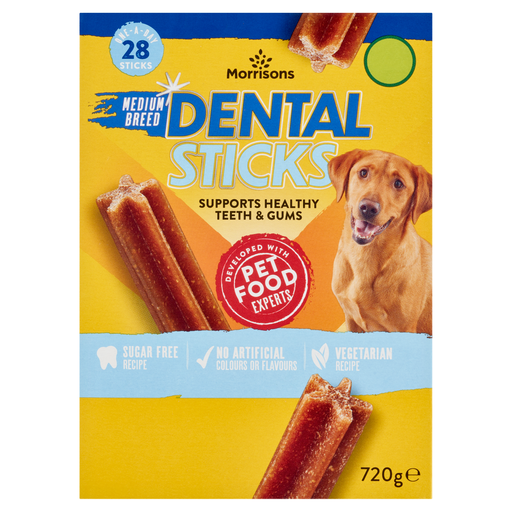
Why This Fits Their Persona: A practical everyday option for owners seeking a straightforward one-a-day dental stick for a medium-sized dog aged four months or older.
The pack states the target age, one-piece daily guidance and medium-breed positioning, making it easier to avoid choosing by appearance alone.
720g box, vegetarian recipe and listed analytical constituents of 8% protein and 2% fat.

Why This Fits Their Persona: Suits medium-dog owners who prioritise a clearly specified recipe and are willing to compare ingredients as well as price.
It states a 10–20 kg range, a minimum age of 16 weeks and approximately 70 kcal per chew, helping buyers assess suitability before ordering.
Five approximately 11.5 cm chews; grain-free and gluten-free recipe with peanut butter, peppermint, parsley and activated charcoal.
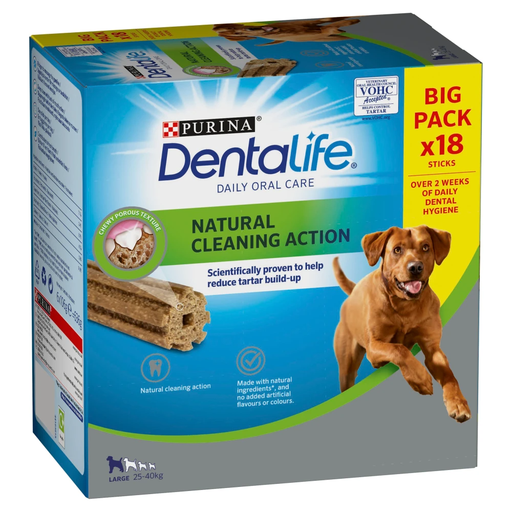
Why This Fits Their Persona: Designed for large dogs weighing 25–40 kg, it suits owners looking for a daily edible chew in a larger format.
The stated 25–40 kg range helps prevent the common mistake of giving a large dog a small chew intended for a lighter weight category.
18 sticks weighing 636g; porous chewy texture with ridges and a listed fat content of 2.4%.
For puppies aged four to 12 months, softer puppy dental chews may be more appropriate than firm adult products. The Pedigree Puppy Denta Tubos listing provides different serving guidance for small, medium and large-breed puppies.
If your main concern is destructive chewing, a non-edible toy may offer more repeated use. The Blinkit medium-and-large dog toy measures 24 × 6 cm and uses a nylon core with a natural rubber exterior. It is intended for chewing and interactive play, but it must be inspected and replaced if cracked or damaged. For smaller dogs, choose a toy specifically sized for them rather than cutting down a larger product.
We have compiled a complete, real-time list of products that fully satisfy these strict selection criteria and UK safety regulations.
Many products are designed for one chew per day, but follow the specific feeding guide. Reduce other treats if necessary so the chew fits within your dog’s overall diet. Always provide fresh water and supervise consumption.
Chewing may help reduce some surface build-up, depending on the dog and product texture. However, dog tartar chews cannot be assumed to remove established tartar or replace brushing and veterinary dental care.
There is no universal lifespan. Durability depends on the material, chewing strength and frequency of use. Inspect toys before and after each session, remove loose fragments and replace the item when it becomes cracked, sharply worn or small enough to swallow.