
24/7 Customer Support

Free returns

Same-day & Next-day Delivery

Quality Guaranteed

Unlock Your Welcome Offers: FREE Delivery | Up to 80% OFF | Free 30-day JoyPlus trial
Download the APP
For many UK dog owners, dog dental chews are an easy way to add oral care to an everyday routine. A chew after the evening walk can be more convenient than brushing, particularly for dogs that resist a toothbrush. However, not every dental stick suits every dog, and attractive packaging can hide important differences in size, texture, ingredients and feeding guidance.
This guide explains what to check before buying, highlights common purchasing traps and matches selected dog teeth-cleaning treats to different household needs.
“Small”, “medium” and “large” are not universal categories. One manufacturer may define medium dogs as 10–25kg, while another may use different limits. A chew that is too small may be swallowed quickly, reducing chewing time and creating a choking concern. An oversized, very firm chew may be unsuitable for a smaller dog.
Always compare your dog’s current weight with the pack’s feeding guide. For example, some small dog dental chews are intended for dogs weighing 5–10kg or 7–12kg, while a Dentalife large stick is listed for dogs weighing 25–40kg.
Terms such as “fresh breath”, “tartar control” and “plaque remover” describe the intended role of the product, not a guarantee of a particular result for every dog. Where a product listing refers to scientific or clinical research, treat this as the manufacturer’s stated evidence rather than a universal outcome.
Dental chews are complementary pet food. They do not replace regular tooth brushing, professional veterinary checks or treatment for established dental disease. Persistent bad breath, bleeding gums, loose teeth or difficulty eating should be discussed with a vet.
Even low-fat dog treats contribute to daily calorie intake. Check the analytical constituents, serving size and whether the recipe contains cereals, meat derivatives, vegetable ingredients or specific additives. If your dog has allergies, a sensitive stomach or a prescribed diet, consult your vet before introducing a new chew.
Look for three details on the packaging:
Never give a product labelled for adult dogs to a young puppy without checking the manufacturer’s instructions. Puppies may need softer puppy dental chews designed for developing teeth.
Dental sticks for dogs use different designs to encourage contact with teeth and the gumline. Pedigree Dentastix products use an X-shaped format, while Purina Dentalife chews use a porous texture with ridges. Whimzees dental chews include shaped vegetarian options, including sticks and sausage-style chews.
These features may support mechanical cleaning during chewing, but the result depends on whether your dog actually chews the product rather than swallowing it quickly.
A daily chew can become a regular household expense, so calculate how long a pack will last. A 28-stick pack generally represents around four weeks when one chew is fed daily. Smaller trial packs, such as a seven-stick or five-stick pack, can be useful if you are unsure whether your dog will accept the texture.
Check whether the product must be used within a stated period after opening, reseal the packaging and provide fresh drinking water. Treats should be included within the dog’s overall daily calorie allowance.
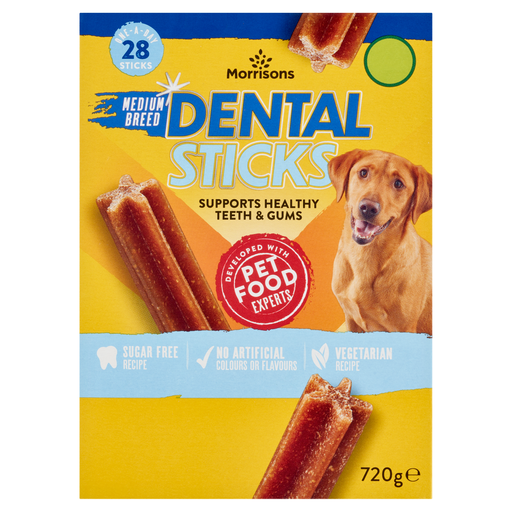
Why This Fits Their Persona: A practical option for owners seeking a large pack for a medium-sized dog, with one stick per day as the stated routine.
The pack specifies medium-breed use and a daily feeding direction, helping buyers check suitability before opening a bulk pack.
720g pack; vegetarian, sugar-free recipe with no artificial colours or flavours listed.
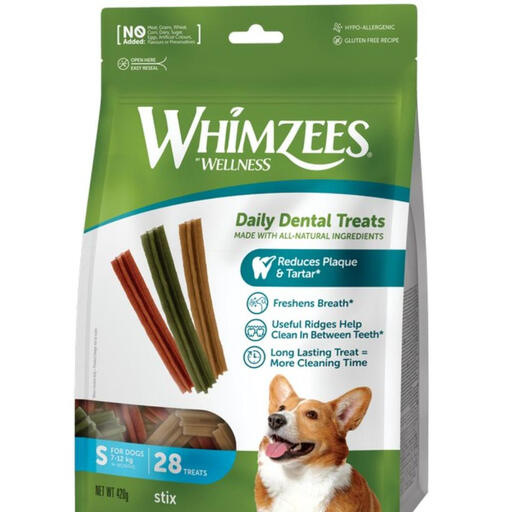
Why This Fits Their Persona: Suitable for owners prioritising a vegetarian, high-fibre recipe and a clearly defined 28-chew pack for daily use.
The product information gives the small-stick format, ingredients and analytical values, allowing a more informed comparison than relying on packaging language alone.
Vegetarian recipe; 14% crude fibre and 2% crude fat listed; no artificial colours, flavours or preservatives stated.
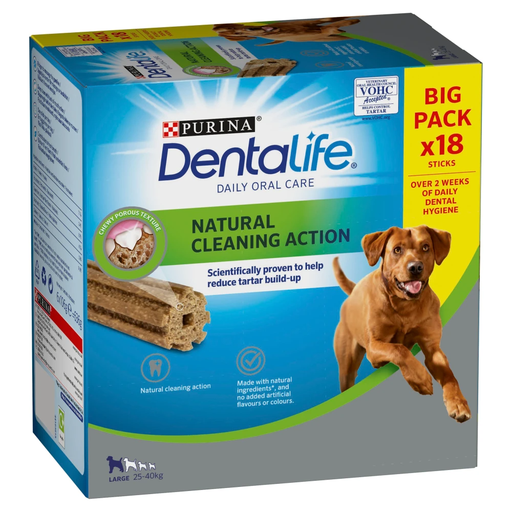
Why This Fits Their Persona: Designed for large dogs weighing 25–40kg, this pack suits households wanting a larger-format chew and a defined daily routine.
The stated weight range helps prevent buying a large chew for a smaller dog, while the pack includes clear supervision and water guidance.
18-stick, 636g pack; 2.4% fat content listed; porous texture and ridges are designed for chewing contact.
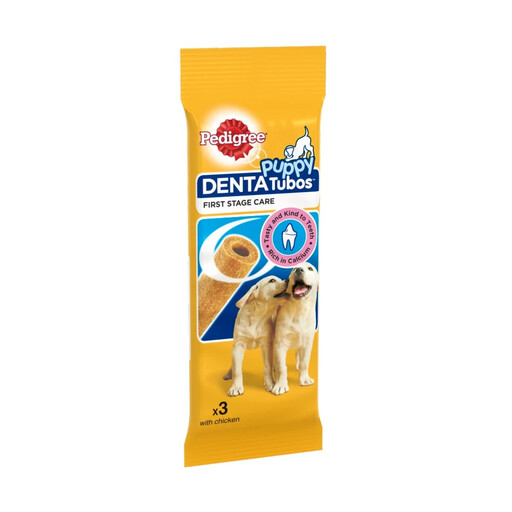
Why This Fits Their Persona: A puppy-specific option for owners building an oral-care habit during the 4–12-month growth stage.
Unlike adult dental sticks, the listing identifies a softer texture and a specific 4–12-month age range, with feeding amounts divided by puppy size.
Calcium listed at 0.60%; feeding guidance covers small, medium and large-breed puppies; not suitable below 5kg.
We have compiled a complete, real-time list of products that fully satisfy these strict selection criteria and UK safety regulations.
Many daily dental chews for dogs are designed for one chew per day, but the correct amount depends on the product and your dog’s weight. Check the label rather than assuming that all dental sticks follow the same serving size.
Some are, but many adult products are not suitable for puppies under four months. Choose a puppy-specific product with an appropriate texture and age range. Puppies below the stated minimum weight should not be given the chew.
Calculate the cost per chew by dividing the pack price by the number of sticks, then multiply by the intended monthly usage. A 28-stick pack used once daily lasts approximately four weeks, while a seven-stick pack is more suitable for trialling acceptance before buying in larger quantities.