
24/7 Customer Support

Free returns

Same-day & Next-day Delivery

Quality Guaranteed

Unlock Your Welcome Offers: FREE Delivery | Up to 80% OFF | Free 30-day JoyPlus trial
Download the APP
Dog dental chews can make daily oral care more convenient, but choosing by flavour, pack size or an impressive front-of-pack claim alone can lead to wasted money. The right option depends on your dog’s age, weight, chewing style, diet and supervision needs.
Whether you are looking for dental treats for dogs, dog dental sticks or dog toys for dental health, use the following checks before buying.
A textured surface may encourage chewing, but it does not automatically reach every tooth or remove established tartar. Edible dog teeth-cleaning treats generally rely on the physical action of chewing, while rubber or nylon dog chew toys offer repeated use but are not eaten.
Treat wording can also be easy to over-interpret. If a product listing refers to clinical or scientific results, regard these as the manufacturer’s stated research or claim rather than a guarantee for every dog. Dental chews should support, not replace, brushing or veterinary care.
A small chew may be swallowed too quickly by a large dog, while a large, firm product may be unsuitable for a puppy or small breed. Check the stated weight range and minimum age rather than relying on breed names alone.
For example, several adult dental chews are not suitable for puppies under four months. Puppy dental chews usually have a softer texture and a specific age range, such as four to 12 months.
No chew toy is indestructible. Strong chewers can break or remove pieces from even robust materials. Inspect products before and during use, and replace them if they develop cracks, sharp edges, loose fragments or become small enough to swallow.
Look for a clearly stated feeding or usage guide:
If your dog falls between categories, choose according to the manufacturer’s weight guidance and ask your vet if your pet has dental, digestive or dietary concerns.
Edible dog dental sticks often use a chewy or porous texture, ridges or an X-shaped profile. These features are intended to increase contact with teeth and the gumline during chewing. Ingredients vary considerably, so review cereals, animal derivatives, oils, minerals, preservatives and calorie information if your dog has sensitivities or is prone to weight gain.
For reusable dog chew toys, materials such as TPR, natural rubber and nylon have different properties. Soft TPR may suit gentler chewing and teething, while nylon can provide a firmer chewing experience. A textured design may help massage gums or scrape the tooth surface, but it should never be considered a replacement for professional dental cleaning.
Supervise your dog whenever introducing a new chew. Keep fresh drinking water available with edible treats, follow the feeding guide and count treats as part of the daily diet.
For toys, follow the product’s cleaning instructions. Some can be rinsed with mild soap, while others should only be wiped with a damp cloth. Store edible products in a cool, dry place and reseal opened packs as directed.
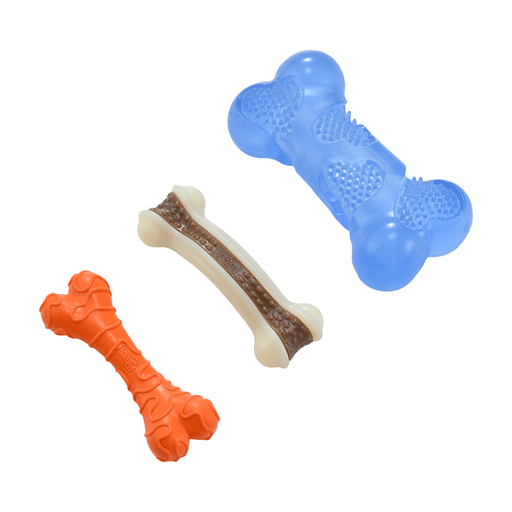
Why This Fits Their Persona: Three shapes provide variety for households wanting play and chewing in one purchase, including homes with puppies or dogs that quickly lose interest in one toy.
It is presented as a chew and play set rather than a guaranteed dental treatment. Supervision and replacement are clearly required when wear appears.
Three nylon and TPR toys; edible collagen snack centres; textured surfaces intended to support chewing and gum massage.
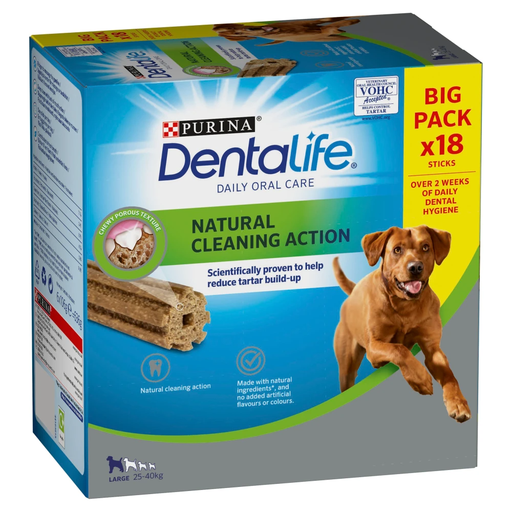
Why This Fits Their Persona: A larger 18-stick pack suits owners seeking a defined daily routine for a large dog, with fewer immediate repurchases.
The listing identifies the large-dog format and gives a one-stick-per-day guide for dogs weighing 25–40 kg, rather than relying only on breed labels.
Porous, chewy texture with ridges; includes stated vitamin D and calcium content; low-fat recipe with no added sugar listed.
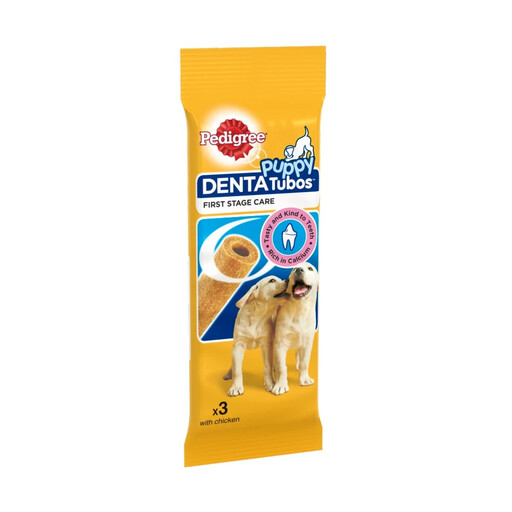
Why This Fits Their Persona: Its stated suitability for puppies aged four to 12 months makes it easier to select an age-appropriate treat during the teething stage.
The product specifies a softer texture and excludes puppies under four months and those under 5 kg, helping avoid unsuitable sizing.
Age-specific guidance; softer chew format; feeding examples for small, medium and large breed puppies.
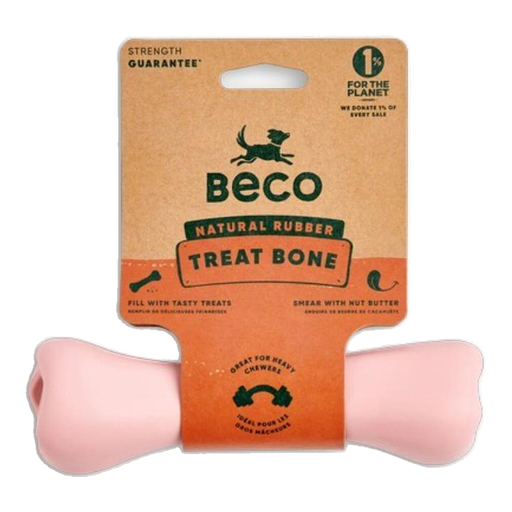
Why This Fits Their Persona: Fillable ends allow owners to add paste or dry treats, creating a reusable boredom-relief activity for indoor play.
The product information states that no toy is indestructible, so regular inspection remains essential even with thick natural rubber construction.
Fillable design; washable with warm water; suitable for quiet indoor chewing and fetch-style play.
We have compiled a complete, real-time list of products that fully satisfy these strict selection criteria and UK safety regulations.
Use dental chews as one part of a wider routine:
Fresh-breath dog treats may temporarily improve odour through flavour or chewing action, but ongoing bad breath can indicate an oral-health problem requiring professional attention.
No. They may support plaque and tartar control for dogs through mechanical chewing, but they do not replace brushing, regular checks or veterinary dental treatment. Dogs with existing dental problems should be assessed by a vet before starting a new product.
Edible dental sticks are normally designed for a single feeding occasion, often one per day, depending on the pack instructions. Reusable dog chew toys can last longer, but lifespan depends on chewing intensity. Remove and replace any toy showing damage or loose pieces.
Not automatically. Check the manufacturer’s stated suitability, material and size. Many toys are intended for moderate chewers only. Strong chewers need close supervision, and a toy should be removed immediately if fragments become detached or your dog tries to swallow pieces.