
24/7 Customer Support

Free returns

Same-day & Next-day Delivery

Quality Guaranteed

Unlock Your Welcome Offers: FREE Delivery | Up to 80% OFF | Free 30-day JoyPlus trial
Download the APP
For many UK dog owners, dog dental chews offer a convenient way to add oral care to an everyday routine. They can also give dogs something satisfying to chew, which may help reduce boredom and unwanted chewing around the home.
However, packaging can make similar products look interchangeable. A dental stick, edible treat and chew toy work in different ways, and choosing the wrong size or material may result in wasted money or a potential safety concern. This guide explains the practical details to check before buying, followed by our top recommendations for different dogs and households.
Dental chews may provide mechanical rubbing as a dog chews, but they do not replace tooth brushing, routine checks or veterinary dental care. Claims about plaque or tartar should be read alongside the feeding instructions and product composition.
Look for clear information about:
Products described as complementary pet food should be fed as part of a balanced diet, not as a complete meal.
“Small”, “medium” and “large” are useful starting points, but weight and chewing style matter more than breed name. A small dog that gulps food may need a different format from a slow, gentle chewer. Similarly, a powerful large dog may quickly break a toy designed for moderate chewing.
Check the product’s actual dimensions and weight guidance. A chew should be large enough that it cannot be swallowed whole, while still being manageable for your dog to hold and chew.
Dog chew toys for aggressive chewers can last longer than softer toys, but no product is entirely resistant to every dog’s bite. Nylon, rubber, cowhide and composite materials each wear differently. Inspect toys before and after use, remove loose pieces and replace them if cracks, sharp edges or significant damage appear.
For dental chews for small dogs, confirm the product is made for the dog’s weight range rather than relying only on the word “small”. Dentalife Small Dog Treat Dental Chew, for example, is listed for dogs weighing 7–12 kg and recommends one chew daily.
For dental chews for medium dogs, check whether the product is designed for a specific range. Pedigree DENTASTIX Fresh Adult Medium treats are described for medium-sized adult dogs, while the larger 56-pack version is listed for dogs weighing 10–25 kg.
Large dogs generally need a larger chew with enough surface area to encourage chewing rather than swallowing. Morrisons 7 Large Breed Dental Sticks are intended for dogs over four months old and are supplied with one-a-day guidance.
Edible dental sticks for dogs and dog dental treats contribute calories, so reduce the main meal where necessary. Read fat, protein and moisture figures, particularly if your dog has dietary sensitivities or is prone to weight gain.
A non-food toy, such as a nylon or rubber option, should never be treated as edible. It may support chewing engagement and provide textured contact with the teeth, but it must be removed if pieces begin to break away.
A transparent label is more useful than a broad promise such as “healthy”. Some options in this range are vegetarian or sugar-free, while others contain cereals, meat derivatives or flavourings. Wagg Chews Banana & Peanut Butter Bars, for example, specify a 7–12 kg adult-dog range in their usage information, so it is important to follow the pack rather than generalise from the product name.
Always provide fresh drinking water, supervise feeding and follow the age restrictions. Puppies, dogs with existing dental problems and dogs that swallow chews quickly may need advice from a veterinary professional before introducing a new product.
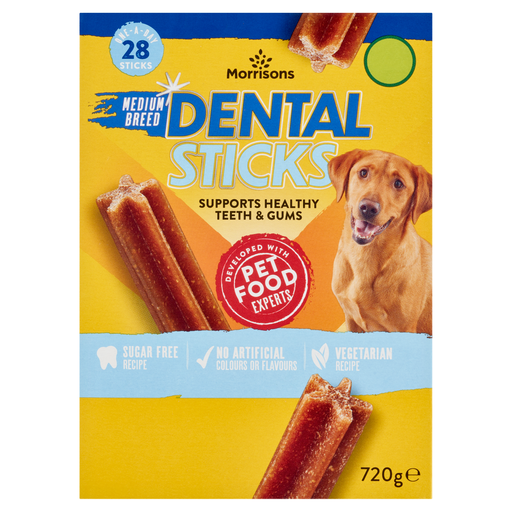
Why This Fits Their Persona: A practical multi-pack for owners establishing a consistent daily routine for a medium-sized dog.
The product gives clear one-piece-per-day guidance, an age recommendation of four months and a defined medium-breed format.
720g boxed pack; vegetarian recipe with no artificial colours or flavours listed in the product details.

Why This Fits Their Persona: A measured small-dog option for owners who want a defined portion and textured chew format.
Its product information states the 7–12 kg range and one-chew-daily direction, reducing guesswork about suitability.
30-stick, 490g pack; porous texture, ridges and stated calcium content.

Why This Fits Their Persona: A non-food option for large dogs that need an engaging chew toy between meals.
The listing specifies a large format, nylon construction and replacement guidance if cracks or wear appear.
Reusable toy; can be rinsed with water and has a curved, easy-to-grip bone shape.
Offer edible chews at a regular time and account for their calories in the daily food allowance. For toys, use short supervised sessions at first. Rotate between an edible option and a suitable non-food toy if your dog becomes bored, but avoid giving several calorie-dense treats in one day.
For dogs with persistent bad breath, bleeding gums, loose teeth or difficulty eating, arrange veterinary advice rather than relying on dog teeth cleaning treats alone.
We have compiled a complete, real-time list of products that fully satisfy these strict selection criteria and UK safety regulations.
Follow the individual label. Several products listed here recommend one chew or stick per day, while larger or richer treats may have different guidance. Never exceed the stated amount without adjusting meals accordingly.
Lifespan depends on material, size and chewing strength. Check a toy before every use and replace it when it develops cracks, sharp edges, loose pieces or becomes small enough to swallow. “Durable” should not be interpreted as indestructible.
Not usually. Large-format products may be too difficult to hold or too large to chew safely. Select a product matched to your dog’s weight and mouth size, and supervise the first use.