
24/7 Customer Support

Free returns

Same-day & Next-day Delivery

Quality Guaranteed

Unlock Your Welcome Offers: FREE Delivery | Up to 80% OFF | Free 30-day JoyPlus trial
Download the APP
Dog dental chews can make oral-care routines easier, particularly for dogs that resist a toothbrush. However, not every dental stick suits every dog. Size, age, texture and feeding instructions all affect whether a chew is practical and safe for your pet.
“Small”, “medium” and “large” are useful starting points, but they are not consistent across manufacturers. A small terrier may fall into a different weight category from a small spaniel. Always check the stated weight range on the packaging.
For example, some small dog dental chews are intended for dogs weighing 5–10kg, while other small products specify 7–12kg. A chew that is too large may be difficult to manage, while one that is too small may be swallowed quickly with limited chewing.
X-shaped designs, ridges and porous textures may encourage chewing and contact with the teeth. Some brands also publish tartar-reduction figures based on their own research. These should be read as product-specific claims rather than a guarantee for every dog.
Dog dental treats are complementary foods. They should not replace regular brushing, professional veterinary care or an assessment of existing dental problems. Persistent bad breath, bleeding gums, loose teeth or difficulty eating warrant veterinary advice.
A daily chew adds to your dog’s calorie intake. “Low fat” does not mean calorie-free, and meaty treats can contain considerably more fat than dedicated dental sticks. Reduce the main meal where appropriate and follow the pack’s feeding guidance.
Look for clear analytical information, including crude fat, moisture and feeding quantity. A simple one-a-day format can also make daily dental care easier to maintain.
Choose a product that matches your dog’s current weight, not its expected adult size. Puppy dental chews should state a minimum age and be designed for developing teeth. For instance, puppy products in this category may be suitable from four months, while some soft training treats are suitable from two months but are not specifically dental chews.
Never assume an adult dental stick is appropriate for a puppy. Follow the manufacturer’s age restriction and avoid products that are unsuitable for dogs below a stated weight.
A dental chew needs enough structure to encourage chewing, but your dog’s individual habits matter. Fast eaters may break off large pieces, while powerful chewers may need a larger format and close supervision.
Common options include:
Always inspect a chew during use. Remove it if it becomes small enough to swallow whole, splinters, cracks or develops sharp edges.
Read the full composition rather than relying only on front-of-pack phrases such as “natural” or “grain-free”. Some dog dental chews are cereal-based, while others use meat or vegetable ingredients. Neither description alone determines suitability; your dog’s allergies, dietary needs and tolerance are more relevant.
Useful details to compare include:
Fresh water should always be available, and supervision is recommended whenever your dog receives a chew.
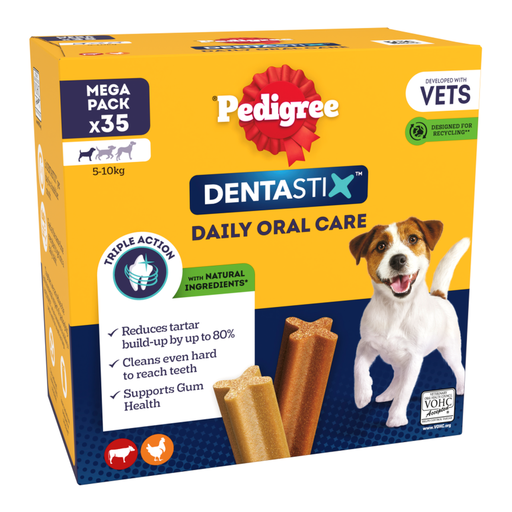
Why This Fits Their Persona: A straightforward daily option for owners of small adult dogs who want a clearly portioned dental treat.
The product information states a daily serving, low fat content of 1.3% and no added sugar. Check the label for the correct weight range before ordering.
X-shaped format, daily-use guidance and a 35-stick pack for regular portion planning.

Why This Fits Their Persona: Suitable for owners who value a porous, ridged texture and a compact daily-care format for dogs weighing 7–12kg.
Its stated size range helps prevent guesswork. The feeding guidance specifies one chew daily, with supervision and fresh water.
Porous chewy texture, ridges for gumline contact and a 30-stick pack.
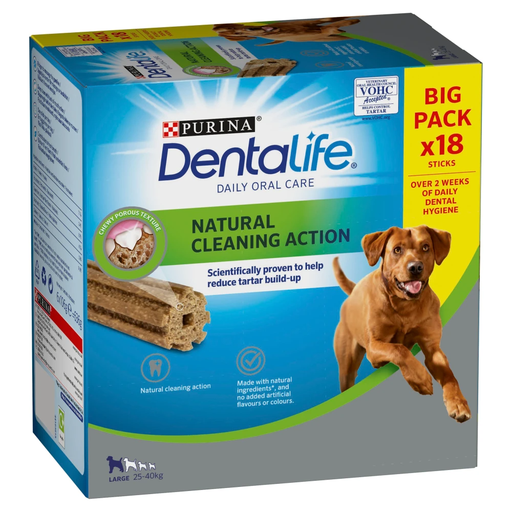
Why This Fits Their Persona: Designed for large dogs weighing 25–40kg, making it a practical match for owners managing a bigger dog’s daily chew routine.
The large-dog weight range is stated clearly, reducing the risk of using an undersized chew. Supervision is still required.
Large format, porous texture, ridges and one-stick-per-day guidance for dogs weighing 25–40kg.
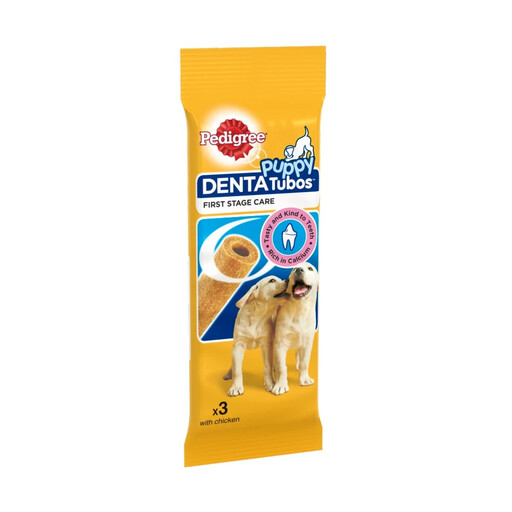
Why This Fits Their Persona: A puppy-focused option for dogs aged 4–12 months, with feeding amounts adjusted by breed size.
It is labelled for puppies rather than adult dogs and includes separate guidance for small, medium and large breeds.
Softer puppy-oriented texture, low-fat recipe and guidance for dogs above 5kg.
We have compiled a complete, real-time list of products that fully satisfy these strict selection criteria and UK safety regulations.
Many daily dental chews are designed for one chew per day, but the correct amount depends on the product and your dog’s weight. Treats should remain part of a balanced diet, and meal portions may need adjustment.
They can support routine plaque and tartar control through chewing, texture and, in some products, specific ingredients. They cannot reliably remove established tartar or replace veterinary dental treatment. A vet can advise if your dog already has visible build-up or gum discomfort.
Only when the packaging specifically states that they are suitable for puppies. Check the minimum age, minimum weight and texture. Puppy dental chews should be supervised, particularly for young dogs that chew quickly or attempt to swallow treats whole.