
24/7 Customer Support

Free returns

Same-day & Next-day Delivery

Quality Guaranteed

Unlock Your Welcome Offers: FREE Delivery | Up to 80% OFF | Free 30-day JoyPlus trial
Download the APP
By the Joybuy Product Recommendation Officer
Dog dental chews can make daily oral care more convenient, but choosing the wrong size, texture or recipe can leave you with an unsuitable product and unnecessary expense. UK dog owners often compare pack quantities and claims such as “tartar control” without checking the feeding guide or whether the chew matches their dog’s weight.
Before buying daily dental chews for dogs, watch for three common pitfalls:
The chew should be appropriate for your dog’s current body weight and life stage. For example:
Always read the specific packaging rather than relying on breed descriptions. Puppies also need extra care: many adult dog dental sticks are not suitable for puppies under four months. Puppy-specific products, such as softer dental chews, may have separate minimum weight and age guidance.
A useful dental chew should encourage sustained chewing without being so hard that it presents a risk to teeth. Porous or ridged textures are designed to create contact with teeth and the gumline, while shapes such as an X or star may help reach different areas of the mouth.
However, texture alone does not guarantee plaque or tartar removal. A dog that swallows treats quickly may receive less mechanical cleaning than one that chews steadily. Supervise every dog dental chew session and discard small fragments that could be swallowed.
Dental treats for dogs are complementary foods, so they should fit within a balanced diet. Compare:
Low-fat dog dental treats can be useful for owners monitoring calorie intake, but “low fat” does not mean calorie-free. Reduce main meal portions where the label recommends doing so.
The following options illustrate different shopping priorities, from a small trial pack to plant-based recipes and larger daily supplies. Product claims should be read alongside the current packaging and feeding guide.
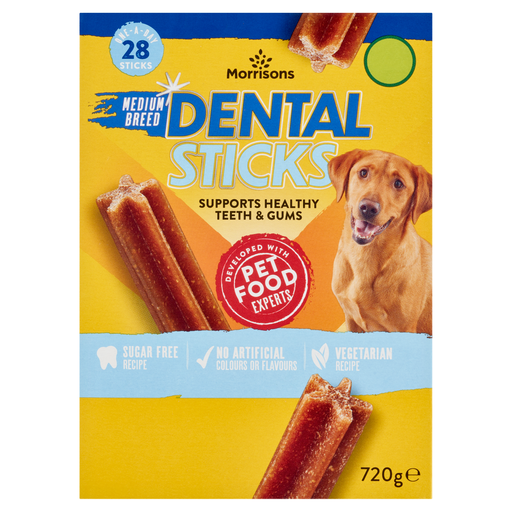
Why This Fits Their Persona: A large 720g pack suits owners of medium-sized dogs who want to establish a one-a-day routine without starting with several different formats.
The product information specifies medium-breed use, a one-piece daily guide and a recipe without added sugar, making the selection criteria clearer than choosing by pack size alone.
720g quantity; vegetarian recipe; 2% crude fat listed in the product information.
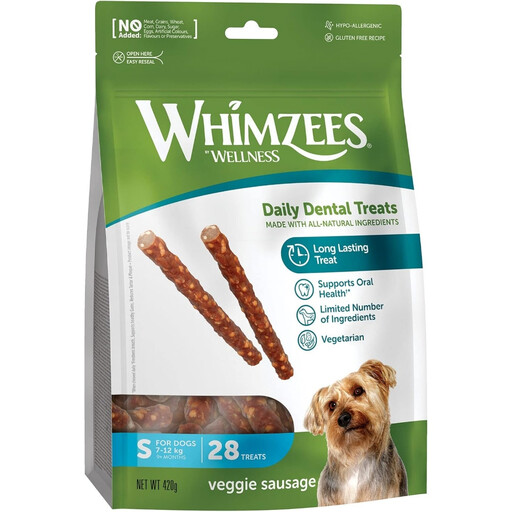
Why This Fits Their Persona: Suitable for owners looking for vegetarian dog dental chews with a clearly stated plant-based ingredient list and a convenient 28-piece pack.
Its ingredients and feeding instructions are stated directly, while the product guidance still requires supervision and removal of broken pieces.
Plant-based recipe; 3.7% crude fibre; no artificial colours, flavours or preservatives listed.
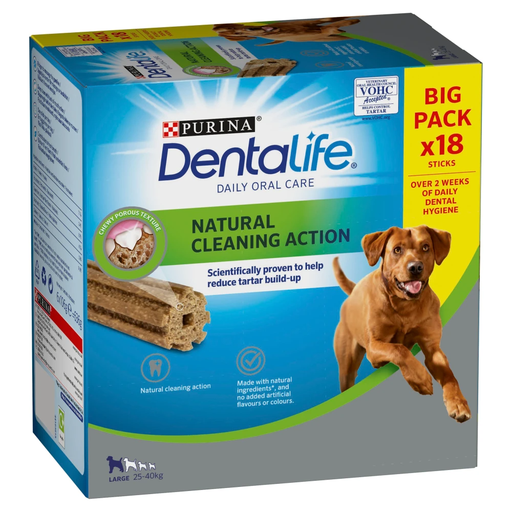
Why This Fits Their Persona: Designed for a large dog weighing 25–40kg, this format suits owners who want a substantial daily supply for a bigger chewer.
The stated weight range helps prevent an incorrect size choice, and the feeding guide gives one stick per day rather than leaving portioning unclear.
636g pack; porous chewy texture with ridges; 2.4% fat content listed in the product information.
We have compiled a complete, real-time list of products that fully satisfy these strict selection criteria and UK safety regulations.
Give only the quantity shown on the label and provide fresh drinking water. Supervise your dog throughout chewing, particularly if they bite off large pieces or attempt to swallow treats quickly.
Dental chews should complement, not replace, tooth brushing and routine veterinary care. If your dog has bleeding gums, persistent bad breath, loose teeth, mouth pain or difficulty eating, ask a UK veterinary professional for advice before introducing dog tartar control chews or dog plaque removal treats.
For puppies, check the minimum age and weight carefully. Pedigree Puppy Denta Tubos are specifically described for puppies aged four to twelve months, while many Pedigree Dentastix and Purina Dentalife adult formats are unsuitable below four months.
Many products are designed for one chew per day, but the correct amount depends on the dog’s size, age, diet and the specific label. Treats should be included in daily calorie planning.
Chewing may help reduce soft plaque accumulation and support oral hygiene, depending on the product’s texture and your dog’s chewing behaviour. Hardened tartar generally requires veterinary attention, so dog dental chews should not be treated as a substitute for dental treatment.
Divide the pack price by the number of recommended daily servings. A 28-stick pack used once daily lasts around four weeks, while a five-stick pack is more suitable for trying a product or maintaining a smaller supply. Always check freshness instructions after opening and choose a size your dog can safely use.