
24/7 Customer Support

Free returns

Same-day & Next-day Delivery

Quality Guaranteed

Unlock Your Welcome Offers: FREE Delivery | Up to 80% OFF | Free 30-day JoyPlus trial
Download the APP
As a nation of dog lovers, we want what’s best for our four-legged family members, and that includes their dental health. With veterinary advice highlighting that a majority of dogs over three show signs of gum disease, many of us turn to dog dental chews as a convenient daily solution. However, the market is flooded with options, and it's easy to fall into common purchasing traps that waste money and deliver poor results.
My role as a Joybuy Product Recommendation Officer is to help you navigate this confusing landscape. Let's look past the marketing hype and identify the key pitfalls to avoid, ensuring you choose a product that genuinely supports your dog's oral hygiene.
The 3 Common Pitfalls When Buying Dog Dental Chews:
To make an informed choice, focus on these three non-negotiable parameters. They are far more important than flashy packaging or clever marketing.
Look beyond the front of the pack and analyse the ingredients list. While cereals are common, their purpose is often to provide structure and bulk. More functional ingredients to look for include:
The effectiveness of dog teeth cleaning chews comes from their physical action.
While not a mandatory requirement, some brands invest in scientific studies to back their claims. For instance, a product that has been accepted by the Veterinary Oral Health Council (VOHC) or developed in collaboration with veterinary dentists offers an added layer of confidence that it performs as stated. According to Pedigree's own research, their DENTASTIX products are scientifically proven to reduce tartar build-up.
To help you find the right fit, here are several recommendations matched to common UK dog owner profiles.
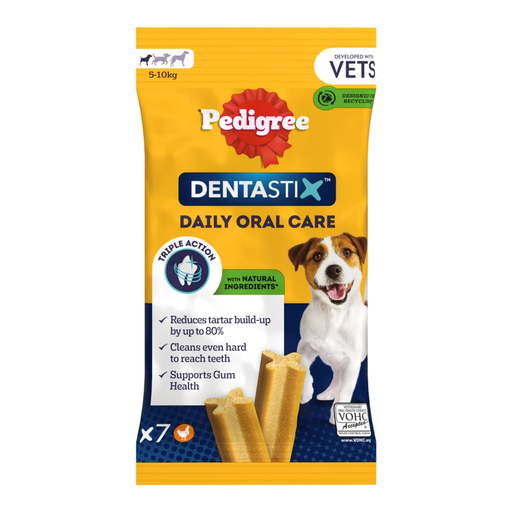
Why This Fits Their Persona: This is an ideal choice for owners who want to build a consistent, affordable oral care habit. As one of the most recognisable daily dental sticks for dogs, it's a reliable starting point for maintaining dental hygiene without a hefty price tag.
It is not marketed as an ultra-durable chew, but as a daily tool. Its purpose is clear: a quick, effective clean as part of a daily routine, avoiding the "long-lasting" myth.
The unique X-shape and abrasive texture are designed for effective cleaning. It's low in fat and free from added sugar, making it a sensible daily treat.

Why This Fits Their Persona: For the owner who scrutinises every label, this chew delivers. It's made from 100% natural, human-grade buffalo and is grain-free, making it perfect for dogs with sensitivities or for owners who prefer a minimalist, high-protein treat.
It cuts through the vague "natural" marketing by using a single primary ingredient. It also provides a genuinely longer-lasting chewing experience compared to softer, cereal-based sticks.
This is a high-protein, low-fat chew that satisfies a dog's natural urge to gnaw. The infusion of salmon oil also provides Omega-3 for skin and coat health.
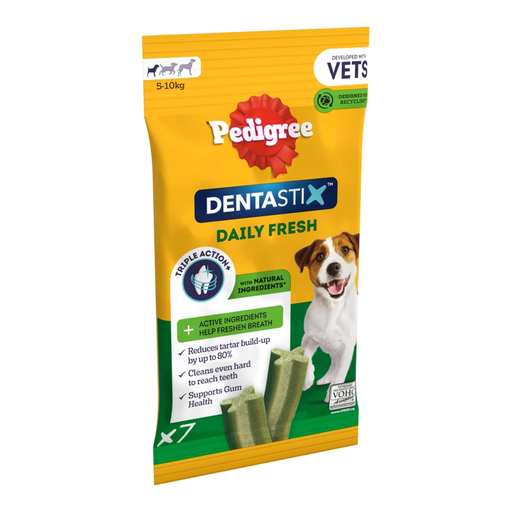
Why This Fits Their Persona: If your primary goal is finding a good dog breath freshener, this chew is specifically formulated for the job. It combines the cleaning action of the original stick with ingredients that target bad breath directly.
Instead of just claiming to "freshen breath," it lists the specific active ingredients—green tea extract and eucalyptus oil—that are included for that purpose, providing transparency.
It offers a triple-action formula: reducing tartar build-up, cleaning teeth and actively freshening breath. It's a multi-benefit solution in a single daily treat.
We have compiled a complete, real-time list of products that fully satisfy these strict selection criteria and UK safety regulations.
Most daily dental chews are, as the name suggests, designed to be given once per day. This consistency is key to helping manage plaque and tartar build-up. However, always read the feeding guide on the specific product you choose, as calorie content and size vary. They should be given as a treat alongside a balanced diet, not as a meal replacement.
It depends on the product. Most dental chews are not suitable for puppies under 4 to 6 months of age, as their jaws and teeth are still developing. Once your puppy's adult teeth have come in, you can introduce an appropriately sized chew. For very young dogs, it is better to opt for specific puppy teething toys, which are designed to be safer for their delicate mouths. Always check the product's age recommendation.
No. Dog dental chews are an excellent tool for at-home preventative care. They help to slow the accumulation of plaque and tartar between professional cleanings. However, they cannot remove significant, hardened tartar that has already formed, nor can they treat existing dental disease. Think of them as the equivalent of you brushing your teeth daily; it's essential maintenance, but you still need to visit the dentist for a check-up and professional clean.