
24/7 Customer Support

Free returns

Same-day & Next-day Delivery

Quality Guaranteed

Unlock Your Welcome Offers: FREE Delivery | Up to 80% OFF | Free 30-day JoyPlus trial
Download the APP
As a dedicated dog owner in the UK, you know that your companion's health is a top priority. While we focus on good food and long walks, oral hygiene can sometimes be overlooked. A simple daily routine can make a world of difference, and that's where dog dental chews come in. However, the market is flooded with options, making it difficult to separate effective products from clever marketing.
Many owners find themselves caught in a cycle of buying treats that are either gone in seconds, packed with hidden calories or simply don't deliver on their promises. Before you spend another pound, let's look at the common pitfalls to avoid and what truly matters when selecting a dental chew for your dog.
Navigating the pet aisle can be confusing. Here are two frequent issues that lead to wasted money and ineffective dental care:
To ensure you're making a worthwhile purchase, focus on these two core parameters. They are the foundation of an effective daily dog dental care routine.
Dog teeth cleaning treats primarily work in two ways. Understanding this helps you choose a product based on its function, not just its flavour.
A one-size-fits-all approach doesn't work for dental care.
To help you find the right fit, we've matched some popular options to different owner and dog profiles.
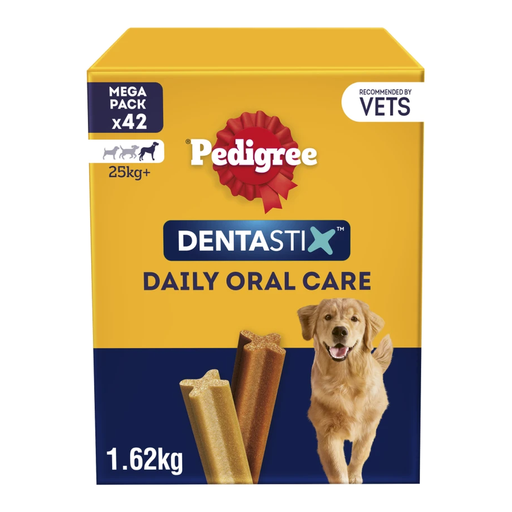
Why This Fits Their Persona: You want a reliable, no-fuss daily chew for your large dog to maintain good oral hygiene. This is a widely recognised option available in bulk, making it a convenient and consistent part of your dog's daily care.
Its unique X-shape and chewy texture are specifically designed to prolong chewing time, avoiding the "gone in 60 seconds" issue and maximising contact with teeth.
Low in fat with no added sugar, it's a healthy daily treat. According to the brand's own research, it can reduce tartar build-up by up to 80% when fed daily.
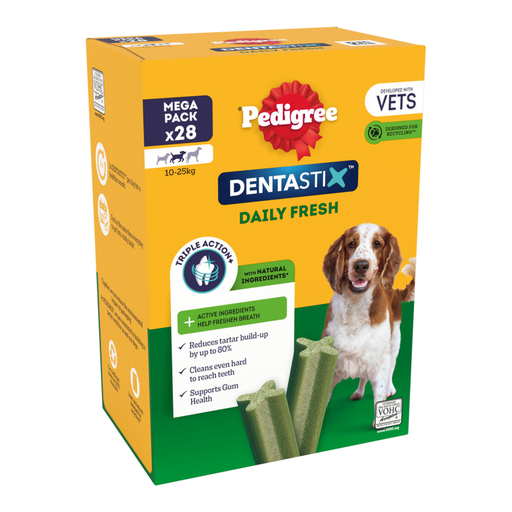
Why This Fits Their Persona: Your main concern is your dog's bad breath, and you're looking for a treat that does more than just scrape teeth. This chew is formulated with specific ingredients to tackle breath odour directly.
It avoids vague claims by including a "Triple Action" formula that combines mechanical cleaning with active ingredients like green tea extract and eucalyptus oil, specifically for freshening breath.
This chew offers a dual benefit: the proven cleaning action of the Dentastix shape plus targeted ingredients to improve breath. It remains a low-fat, no-added-sugar treat.
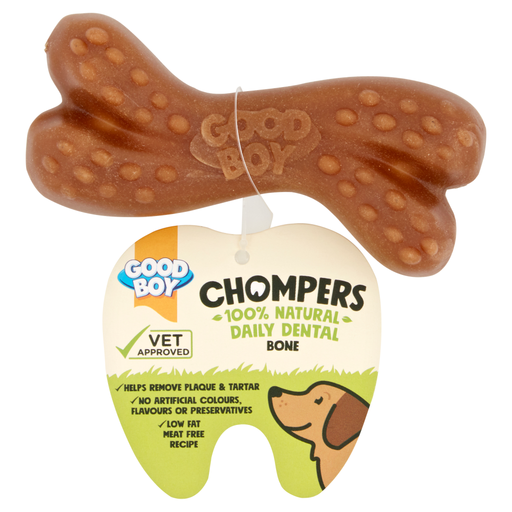
Why This Fits Their Persona: You prioritise natural ingredients and may have a dog with sensitivities. You prefer a meat-free, plant-based chew with a transparent ingredient list and no artificial additives.
It directly counters the "healthy treat myth" by offering a 100% natural, low-fat, meat-free recipe. The ingredient list is simple, featuring sweet potato flour, mint and parsley.
This vet-approved chew is great for dogs on a meat-free diet or with certain protein sensitivities. It uses natural ingredients like mint and parsley to help with breath while cleaning teeth.
We have compiled a complete, real-time list of products that fully satisfy these strict selection criteria and UK safety regulations.
Most dog dental sticks are designed for daily use to be effective. Think of it as the equivalent of us brushing our teeth every day. However, always read the feeding guide on the packaging. Remember, these are a complementary food and should be given as part of a balanced diet. They do not replace the need for periodic professional veterinary dental cleanings, especially if significant tartar is already present.
Safety is paramount. It is crucial to choose a chew that is the correct size for your dog's breed and weight to minimise the risk of choking. Most dental chews are not suitable for puppies under four months old, as their teeth are still developing. Finally, always supervise your dog when they are enjoying any chew or treat.
When used correctly as part of a consistent routine, they can be a very effective tool. The mechanical abrasion from chewing helps scrub away daily plaque before it has a chance to mineralise and harden into tartar. Some chews also contain active ingredients that help inhibit this mineralisation process. While they are excellent for prevention and maintenance, they are unlikely to remove large amounts of existing, hardened tartar. For that, a visit to your vet is necessary.