
24/7 Customer Support

Free returns

Same-day & Next-day Delivery

Quality Guaranteed

Unlock Your Welcome Offers: FREE Delivery | Up to 80% OFF | Free 30-day JoyPlus trial
Download the APP
As a nation of devoted pet owners, we all want what’s best for our four-legged family members, and that includes their dental health. The market for dog dental chews is vast, with promises of sparkling teeth and fresh breath. However, navigating the options can be tricky, and some popular choices may not be the right fit for your dog.
Many well-intentioned owners fall into common traps, leading to wasted money or, in some cases, unintended health issues. Before you add another pack of treats to your basket, let’s look at the pitfalls to avoid.
By understanding these potential issues, you can make a more informed choice that genuinely supports your dog's oral hygiene.
To choose effective and safe daily dog dental treats, focus on a few core parameters rather than just the marketing claims on the front of the pack.
The primary function of a dental chew is to mechanically scrape away plaque and tartar. The ideal texture is firm enough to create friction but pliable enough to not risk damaging the teeth. A good chew often has a slightly porous or abrasive surface and unique shapes with ridges or nubs. These features help clean along the gumline and between teeth as your dog chews. A simple at-home check is the "thumbnail test": if you cannot make a slight indent in the chew with your thumbnail, it may be too hard for your dog.
A quality dog tartar control chew should have a clear and understandable ingredient list. Look for formulations that go beyond simple fillers.
This is a non-negotiable safety factor. A chew designed for a large dog can be a choking hazard for a smaller one, while a small dog dental chew will be ineffective and quickly swallowed by a larger breed. Always choose a product that is explicitly labelled for your dog's weight and size. Likewise, puppy dental chews are formulated to be gentler on their developing teeth and gums, making them the only suitable choice for young dogs.
To help you find the right fit, we've matched some excellent options to common UK pet owner profiles.

Why This Fits Their Persona: This is an ideal choice for owners who prioritise clean, plant-based nutrition. The 100% natural, grain-free and vegan formula aligns with a modern, health-conscious approach to pet care, and the plastic-free packaging is a welcome bonus.
It sidesteps the "filler-first" trap with a transparent, potato-based recipe and avoids the "natural misconception" by using functional ingredients like peppermint and activated charcoal for tangible benefits.
Grain-free and gluten-free, making it suitable for dogs with sensitivities. Contains no added sugar or artificial additives.
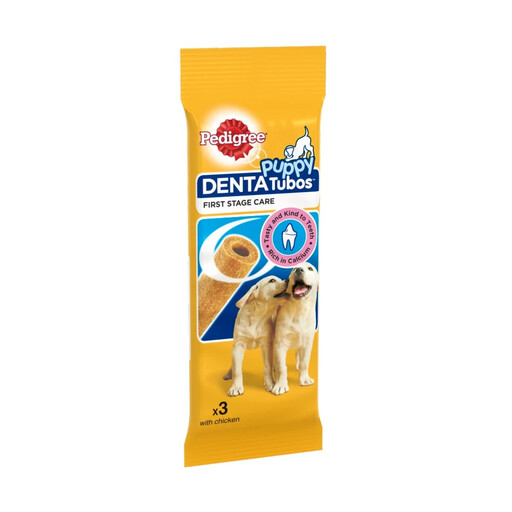
Why This Fits Their Persona: Welcoming a puppy comes with a unique set of needs. These chews are specifically designed for a puppy's mouth, providing a safe way to satisfy their chewing instincts while supporting oral health from a young age.
It directly counters the "too hard" hazard by offering a softer texture that is gentle on a puppy's developing teeth and gums, preventing damage that can occur from giving them an adult chew too early.
Rich in calcium to support healthy bone and tooth growth. The formulation is low in fat with no added sugar.
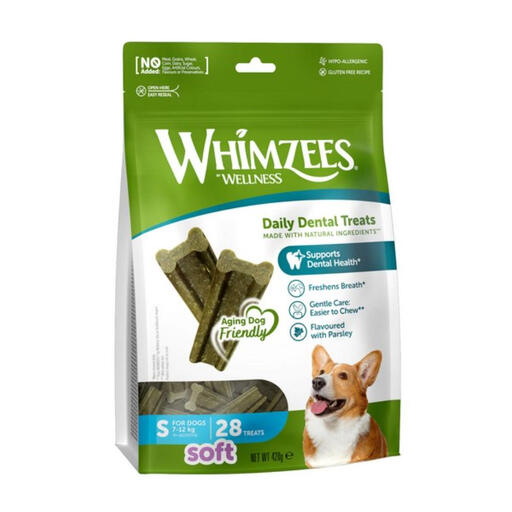
Why This Fits Their Persona: Owners of senior dogs or those with sensitive mouths need a dental care solution that cleans effectively without being too aggressive. This chew is specifically engineered to be softer, making it easier and more comfortable to chew.
This product is the perfect antidote to the "too hard" chew hazard. Its softer texture is gentle on ageing teeth and sensitive gums, providing a safe daily dental option for dogs that might struggle with standard chews.
The texture is 35% softer than standard Whimzees chews. It's made with natural ingredients and is ideal for senior dogs (7+ years).
We have compiled a complete, real-time list of products that fully satisfy these strict selection criteria and UK safety regulations.
1. How often should I give my dog a dental chew? Most dental chews, such as those from popular brands like Purina Dentalife or Pedigree Dentastix, are designed to be given once per day. They are a complementary pet food, not a meal replacement, so it's important to follow the feeding guide on the packaging and adjust your dog's main meal accordingly to maintain a healthy weight.
2. Are dental chews a substitute for brushing my dog's teeth? No, dental chews are best used as part of a comprehensive oral care routine. While they are effective at reducing plaque and tartar through mechanical abrasion, they cannot replace the thorough cleaning that comes from regular toothbrushing. Think of them as a helpful daily supplement to brushing, not a replacement for it.
3. Can I give my cat a dog dental chew? It is not recommended. Dogs and cats have different dietary needs and chewing behaviours. Dog dental chews are formulated and sized specifically for dogs. If you are looking for a solution for your feline friend, you should look for cat dental treats, which are designed with a cat's smaller mouth and specific nutritional requirements in mind.