
24/7 Customer Support

Free returns

Same-day & Next-day Delivery

Quality Guaranteed

Unlock Your Welcome Offers: FREE Delivery | Up to 80% OFF | Free 30-day JoyPlus trial
Download the APP
By Joybuy Product Recommendation Officer
Choosing dog dental treats can seem straightforward, but pack claims and product sizes do not always tell the full story. A chew that suits a 30kg Labrador may be unsuitable for a small terrier, while a treat labelled for “daily oral care” still needs to be used alongside sensible feeding, supervision and regular veterinary checks.
This guide explains the main pitfalls, specifications and product formats to consider before buying dog dental chews, dog dental sticks or other dental treats for dogs.
Dental treats work mainly through chewing action, texture and shape. A soft training treat may be enjoyable but is unlikely to provide the same mechanical contact as a ridged or porous dental chew. However, no treat should be treated as a replacement for brushing or professional dental care.
Look for clear information about the chew’s texture, recommended size and intended daily use rather than relying only on phrases such as “fresh breath” or “tartar control”.
“Small”, “medium” and “large” are useful starting points, but your dog’s actual weight is more important. A dental chew that is too small may be swallowed quickly, reducing chewing time and increasing the risk of choking. One that is too large may be difficult to handle.
Always compare your dog’s weight and age with the feeding guide. For example, some medium dental sticks are intended for dogs weighing 10–25kg, while small-dog options may be designed for approximately 5–10kg or 7–12kg.
Dental treats are complementary pet food, not a complete diet. Feeding one every day adds calories, so the main meal may need adjusting. “Low fat” and “no added sugar” can be useful features, but they do not automatically make a product suitable for every dog.
Check the analytical constituents, ingredients and additives if your dog has allergies, a sensitive stomach or a specific dietary requirement. If your dog has existing dental pain, loose teeth or gum problems, seek veterinary advice before introducing a firm chew.
The product label should state the suitable age and weight range. Several dental products in this category are not suitable for puppies under four months. Puppy dental treats need a softer texture and an age-appropriate design because developing teeth and gums require different handling from adult teeth.
For puppies aged four to 12 months, a product such as Pedigree Puppy Denta Tubos is described as having a softer texture and feeding guidance based on puppy size. It should still be offered only according to the packaging instructions and under supervision.
Ridges, porous surfaces and X-shaped designs are intended to increase contact with teeth and the gumline during chewing. They may also help a dog spend longer working through the treat than with a small, soft biscuit.
Marketing statements about plaque or tartar reduction should be read carefully. If a brand refers to scientific or clinical research, treat this as the brand’s stated evidence rather than a universal guarantee. The practical features you can verify are the chew’s shape, texture, ingredients, size and feeding instructions.
Many dog tartar control treats are designed for one chew per day. Do not exceed the stated amount without advice from a veterinary professional. Provide fresh water and supervise your dog throughout chewing.
Resealable packaging is useful for maintaining texture, especially when buying larger packs. Check the label for storage instructions, use-by information and any guidance about using an opened sachet within a particular period.
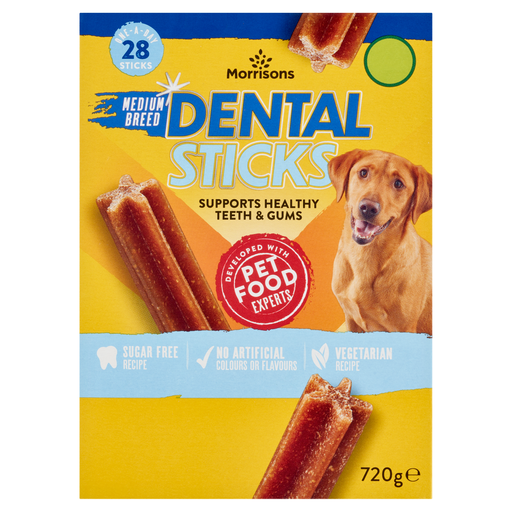
Why This Fits Their Persona: A practical larger-pack choice for owners beginning a consistent daily dog oral care routine with a medium-sized dog aged four months or over.
The listed feeding guide, medium-breed positioning and one-a-day format make sizing and routine easier to check before purchase.
The product information lists a vegetarian recipe, 2% crude fat, no added sugar and no artificial colours or flavours.
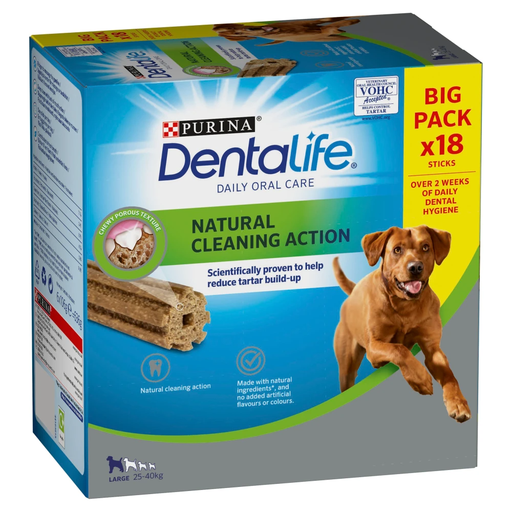
Why This Fits Their Persona: A large-dog option for owners who want a clearly portioned chew with a porous, ridged texture for regular use.
The stated 25–40kg range helps prevent choosing by breed label alone. The pack also specifies one stick per day for this size range.
The listed analysis gives 2.4% fat, while the product description identifies ridges, a porous texture, calcium and vitamin D.
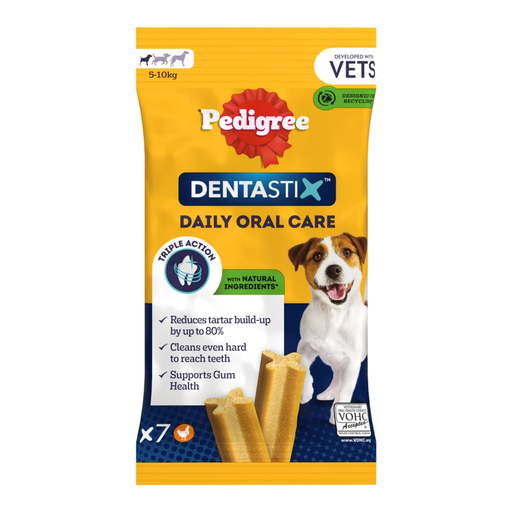
Why This Fits Their Persona: Suitable for owners of small dogs who want individually portioned dental sticks and a short pack to assess acceptance.
The product is specifically listed for small dogs and gives a 5–10kg feeding range, reducing the risk of buying an oversized chew.
The product information lists an X-shape, 1.3% fat, no added sugar and one stick per day.
We have compiled a complete, real-time list of products that fully satisfy these strict selection criteria and UK safety regulations.
Puppy dental treats should match both age and body size. Pedigree Puppy Denta Tubos is listed for puppies aged four to 12 months, while Pointer Puppy Love biscuits are described as complementary treats for puppies and small dogs rather than dedicated dental chews. Their calcium content may be a consideration, but the feeding guide and total diet remain more important than a single ingredient.
Crunchy biscuits, ordinary dog treats and multivitamin chews should not automatically be treated as dog plaque removal chews. They may provide rewards or nutritional features, but their shape and texture may not be designed for dental cleaning.
Many products are intended for one chew per day, but follow the specific label. Reduce main meal portions if necessary and count all treats towards your dog’s daily intake.
Some are, but only from the stated minimum age and weight. Products marked for adult dogs may be unsuitable for puppies. Supervise every chew and ask your vet if your puppy has developing-teeth concerns.
No. Dental sticks can support daily oral care through chewing, but they do not replace brushing, dental checks or treatment for pain, bleeding gums, broken teeth or persistent bad breath.