
24/7 Customer Support

Free returns

Same-day & Next-day Delivery

Quality Guaranteed

Unlock Your Welcome Offers: FREE Delivery | Up to 80% OFF | Free 30-day JoyPlus trial
Download the APP
A suitable fetch toy can turn a garden, park or beach visit into active shared play. However, choosing between dog balls, launchers and interactive dog toys is not simply a matter of picking the brightest colour or the product with the boldest durability claim.
The wrong toy may be too small, difficult to clean, unsuitable for your dog’s chewing style or impractical in the UK’s changing weather. This guide explains the main buying traps, the specifications worth checking and which types of dog fetch toys suit different households.
Many durable dog toys are designed for repeated play, but that does not mean they can withstand every dog’s chewing strength. Tennis balls, rubber balls and woven toys can split, shed fibres or develop loose sections over time.
Always inspect a toy before and after use. Replace it if it becomes cracked, torn, significantly worn or small enough to swallow. Dogs that actively dismantle toys may need supervised play with chew-resistant dog toys rather than unsupervised access.
A ball that is too small can present a swallowing risk, while an oversized ball may be uncomfortable for a smaller dog to carry. Product measurements are more useful than vague descriptions such as “suitable for all breeds”.
Check the toy’s diameter against your dog’s mouth size, jaw strength and ability to carry it comfortably. Puppies, small breeds, senior dogs and powerful chewers may all require different designs.
A standard ball may be suitable for a dry garden but difficult to find on a dark winter evening. A non-floating ball may disappear in a pond or at the beach. Electronic toys may offer hands-free play indoors, but they still require supervision and charging.
Consider where you will use the toy: open parks, enclosed gardens, shallow water, indoor rooms or low-light walks. This helps prevent paying for features that do not match your routine.
Look for clear information about the material, construction and intended use. Rubber, PU fabric, nylon and plastic each have different characteristics:
Descriptions such as “bite-resistant” or “wear-resistant” should be treated as product features, not guarantees against damage. No fetch toy is suitable for every chewing behaviour.
For evening play, consider a glow-in-the-dark dog ball or a flashing LED dog toy. Glow products generally need exposure to light before use, while battery-powered toys require responsible battery disposal when the light stops working.
For beaches, paddling pools and outdoor water play, select a floating dog toy and supervise closely near water. Bright colours can also make dog toys for fetch easier to locate in grass, sand or woodland.
A dog ball launcher can extend the distance of a throw while reducing the need to bend down and pick up a wet or muddy ball. Some models are compact for everyday walks, while longer launchers are more suitable for open parks.
A launcher is an interactive tool rather than a toy for the dog to chew. Check the handle, cup size and compatible ball dimensions before use. Avoid throwing towards roads, cyclists, other dogs or crowded areas.
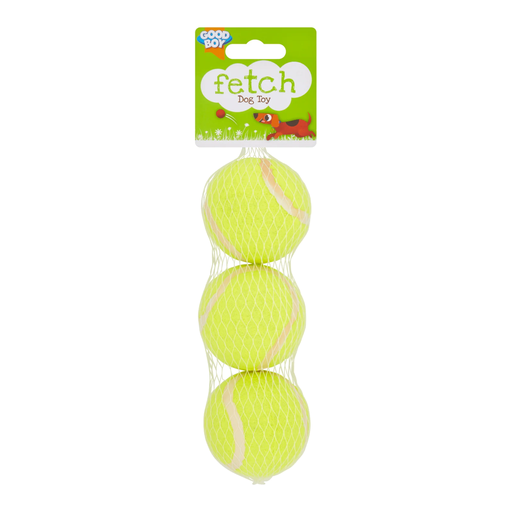
Why This Fits Their Persona: A straightforward multi-ball option for owners introducing a dog to everyday fetch in a garden or local park. Having three balls can make play sessions more convenient when one becomes wet or misplaced.
The pack format avoids relying on one ball, while the product guidance makes clear that it is not indestructible and needs supervised use.
Three-ball pack; designed for interactive play and everyday activity.
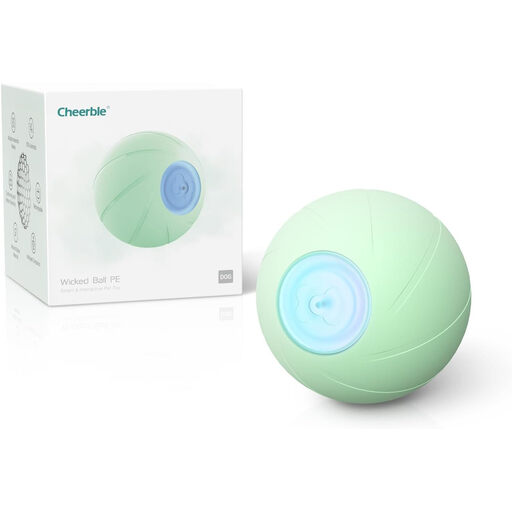
Why This Fits Their Persona: Suitable for owners seeking an electronic, hands-free option for medium and large dogs, particularly when outdoor exercise is limited by weather or available space.
Its stated 95 mm diameter helps buyers assess size before ordering, while the rechargeable design avoids disposable batteries. It still requires supervision.
Three play modes; LED lights; up to 90 minutes of play per charge according to the listed specification.
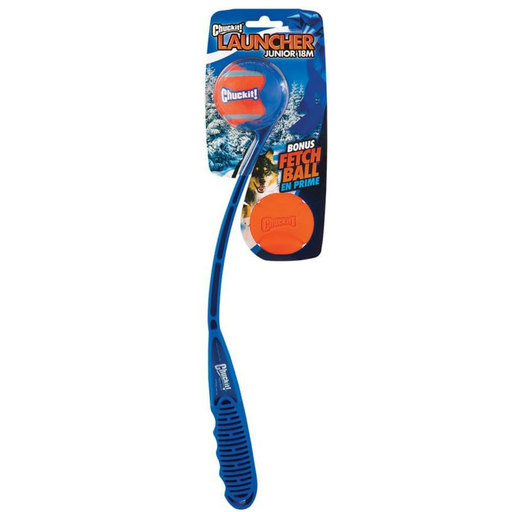
Why This Fits Their Persona: A practical tennis ball launcher for dogs that enjoy repeated running in a large park, open field or suitable beach area. The hands-free pickup design is useful for muddy UK walks.
The stated 18-metre range sets a clearer expectation than an undefined “long-distance” claim. The warning also states that it is not intended for aggressive chewers.
18-metre stated launch distance; includes a floating, bright-coloured ball and ergonomic rubber handle.
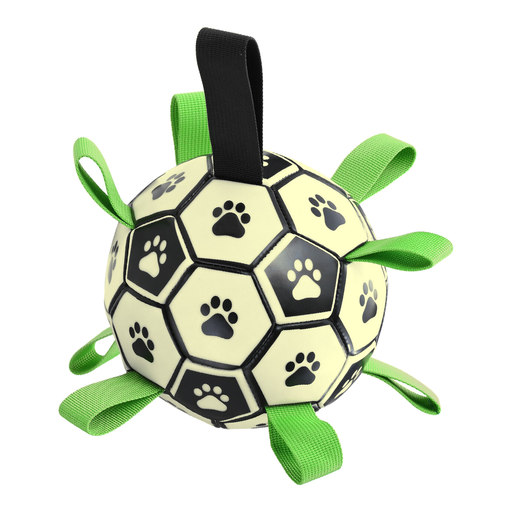
Why This Fits Their Persona: Designed for small to medium dogs and owners who want one toy for land-based play, shallow water interaction and lower-light sessions.
The 15 cm diameter and stated 5–20 kg recommendation make suitability easier to assess. The glow effect needs light exposure before play and does not remove the need for supervision.
Glow-in-the-dark surface; amphibious design; integrated nylon tug strap.
We have compiled a complete, real-time list of products that fully satisfy these strict selection criteria and UK safety regulations.
Not necessarily. A launcher can be useful for dogs that enjoy running and retrieving, but the throwing distance, ball size and pace should match your dog’s physical ability. Start with short throws and take breaks. Keep the launcher away from the dog when it is not being used, particularly if your pet chews plastic.
Lifespan depends on material, frequency of use, chewing behaviour and storage. A toy used daily by a strong chewer may wear faster than one used occasionally for supervised fetch. Inspect seams, handles, balls and batteries regularly, and replace any damaged item promptly.
Some automatic dog toys use rechargeable batteries and need periodic charging, while a treat dispensing dog toy may have no battery requirement but uses treats during play. Conventional balls and manual launchers have no electrical running cost. When comparing prices, consider replacement balls, treats, charging time and how often the toy is likely to be used.