
24/7 Customer Support

Free returns

Same-day & Next-day Delivery

Quality Guaranteed

Unlock Your Welcome Offers: FREE Delivery | Up to 80% OFF | Free 30-day JoyPlus trial
Download the APP
Fetch can provide useful movement, mental stimulation and quality time with your dog, but not every toy advertised for chasing is suitable for every pet. A ball that is too small may present a swallowing risk, while a launcher designed for long throws may be unsuitable for a nervous puppy or a small garden.
This guide explains the main buying pitfalls, the specifications worth checking and which types of dog fetch toys suit different households.
Marketing often focuses on how far a ball travels or how high it bounces. However, a very energetic toy can encourage sudden turns, repeated jumping or overexertion. Consider your dog’s age, size, mobility and the available play area before choosing high bounce dog balls or a long-range launcher.
A large open park may suit a launcher, whereas a living room or enclosed garden usually calls for a softer, more controlled toy.
Rubber and reinforced materials can be more suitable for repeated play, but no dog toy should be described as indestructible. Strong chewers may eventually damage seams, handles or balls. Inspect toys before and after use, and remove them if cracks, splits or loose pieces appear.
A replacement ball may also be difficult to find for some specialist toys, so check what is included and whether the product has a practical format for your dog.
Treat-based and self-play products can keep dogs occupied, but they still require an appropriate introduction. A dog that chews rather than nudges may damage a dispenser, while a fast eater may finish the treats quickly without gaining much enrichment.
Use treats suitable for your dog’s size, age and dietary needs. Supervise play, particularly during the first few sessions, and avoid leaving toys available if your dog attempts to swallow parts.
The ball should be large enough that your dog cannot swallow it. The correct size depends on the dog’s mouth and breed, so do not rely solely on a general small, medium or large label.
For outdoor use, look for bright colours that are easier to locate in grass or low light. Rubber can provide noticeable bounce, but it should still be checked regularly for damage. Tennis-ball-style products are useful for classic fetch, although they should be replaced once worn or split.
A dog ball launcher can help extend a throw while reducing the need to bend down and pick up a wet or muddy ball. Check that the handle is comfortable, the cup holds the included ball securely and the intended throwing distance suits your play space.
Avoid throwing near roads, cyclists, unfamiliar dogs or obstacles. Short, controlled throws are generally more practical for a small garden than powerful launches.
A treat-dispensing dog toy should have openings that match the treats you intend to use. If the compartments are too difficult, a puppy or senior dog may lose interest; if they are too easy, the activity may end immediately.
Battery-free designs avoid charging and replacement battery costs. Automatic or electronic toys may offer movement or dispensing functions, but check the battery type, cleaning instructions and whether the product requires supervision. For many households, simple mechanical interactive dog toys are easier to set up and maintain.
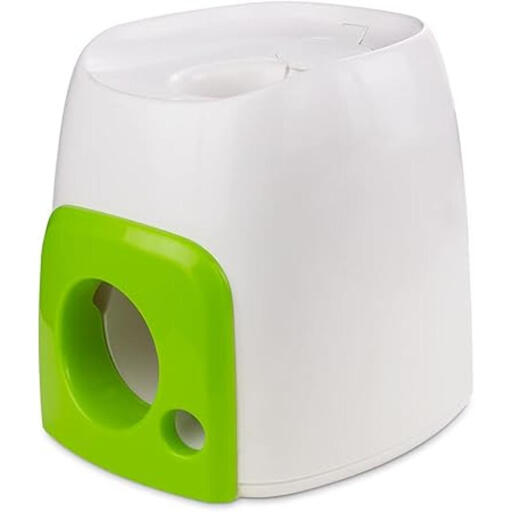
Why This Fits Their Persona: A practical starting point for owners seeking fetch and enrichment in one battery-free design. It can be introduced gradually to puppies, adult dogs and senior dogs.
It does not depend on disposable batteries or exaggerated throw-distance claims. Owners can control the difficulty by placing treats in the accessible compartments.
Includes a tennis ball, separate treat-hiding areas and a mechanical hatch that releases a treat when the ball is inserted.
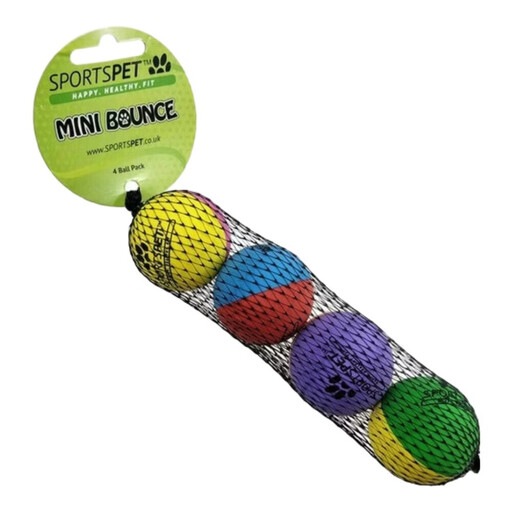
Why This Fits Their Persona: Suitable for owners who want a themed multi-ball set for seasonal play, outdoor games or rotating toys between sessions.
A four-ball pack gives you alternatives if one becomes worn, lost or unsuitable. The balls are intended for supervised play rather than being treated as indestructible.
Contains four vibrant rubber balls with Turkey, Sprout, Mince Pie and Christmas Cracker designs for seasonal gifting and play.
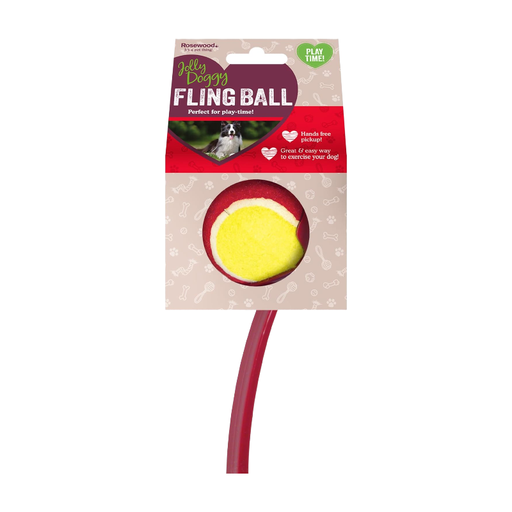
Why This Fits Their Persona: Designed for active owners who regularly play fetch in a park, garden or other open space and want to reduce bending and hand contact with a wet ball.
Its purpose is clear: extending a throw and collecting the ball without bending. Owners can choose shorter throws and stop play if the dog shows signs of fatigue.
Includes a launcher and tennis ball, with a lightweight ergonomic handle and hands-free ball pickup design.
We have compiled a complete, real-time list of products that fully satisfy these strict selection criteria and UK safety regulations.
Yes, provided the toy is appropriately sized and used under supervision. Start with simple, low-intensity games and avoid encouraging repeated jumping or sharp turns. Treat-dispensing designs can be introduced in easy stages before adding more challenging hiding places.
Lifespan depends on chewing strength, frequency of use, surface and storage. Inspect a ball before every session and replace it when it becomes cracked, split, excessively worn or small enough to present a swallowing risk. No fetch ball should be assumed to last indefinitely.
Not always. Some mechanical options operate without batteries, while electronic products may require disposable or rechargeable power. Check the product description and care instructions before buying. Battery-free designs can be convenient for households that want fewer running costs and less maintenance.