
24/7 Customer Support

Free returns

Same-day & Next-day Delivery

Quality Guaranteed

Unlock Your Welcome Offers: FREE Delivery | Up to 80% OFF | Free 30-day JoyPlus trial
Download the APP
Choosing dog food in the UK is not simply a matter of picking the largest bag or the most appealing ingredient on the front. Dry dog food, wet dog food and mixed feeding plans can all work well, but only when the product matches your dog’s life stage, size, activity level and dietary tolerance.
Marketing language can make comparison difficult. A recipe described as “natural”, “grain-free” or “rich in meat” may still be unsuitable for your dog, while a smaller or more plainly packaged product may offer the nutritional format you actually need.
The most important distinction is whether the packaging identifies the product as complete pet food or complementary pet food.
A complete dog food is formulated for daily feeding as the sole diet, following the manufacturer’s feeding guidance. A complementary product is intended to be combined with another food. For example, Pedigree Dry Mixer Adult Small Dog 2kg is described as a complementary dry food designed to be fed with Pedigree wet food. Feeding it alone could create an unbalanced diet.
Check the statutory product description rather than relying on phrases such as “balanced meal” or “healthy recipe”.
Grain-free dog food is not automatically more suitable, and a named meat or fish on the front does not tell you the full recipe. Look at the composition in descending order and check the analytical constituents.
A salmon dog food may suit an owner seeking a fish-based recipe, but the formula may also include poultry or other animal ingredients. This matters if you are trying to avoid a particular protein. Similarly, lamb dog food is not necessarily hypoallergenic dog food unless the full ingredient list and your dog’s individual needs support that choice.
A 12kg or 15kg bag may reduce the cost per kilogram, but it is only good value if your household can use it while the food remains fresh. Once opened, dry food should be sealed tightly and stored in a cool, dry place away from direct sunlight.
For a small dog, a 2kg bag may be more practical than bulk dog food. Larger households or owners with active, larger dogs may benefit from 12kg or 15kg packaging, provided storage is suitable.
Adult dog food is generally intended for mature dogs, but age ranges vary by product. Senior dog food may be labelled for dogs aged seven or eight years and over. Small breed dog food can feature smaller kibble and feeding guidance based on lower body weights.
Check that the pack clearly matches your dog’s stage:
A working dog food is not automatically appropriate for a household pet with low activity, as overfeeding can contribute to excess weight.
Protein and fat percentages help you compare products, but they should be read alongside moisture content. Wet dog food naturally contains more water, so its protein percentage may look lower than that of dry dog food without being nutritionally inferior.
Also check:
For example, Naturo Senior Turkey with Rice and Vegetables lists 73% moisture, while Harringtons Adult Rich in Lamb & Rice lists 21% protein and 11% fat in its dry format. These figures should not be compared without considering the different food formats.
Sensitive stomach dog food may include ingredients such as rice, potato, prebiotics or selected animal proteins. However, digestive issues can have many causes. If your dog has repeated vomiting, diarrhoea, itching or loss of appetite, seek veterinary advice rather than relying only on a packaging claim.
Check for cross-contact notes too. Some wheat-free recipes are made in factories that handle wheat. This is stated for certain Iams products and may matter to owners managing a confirmed intolerance.
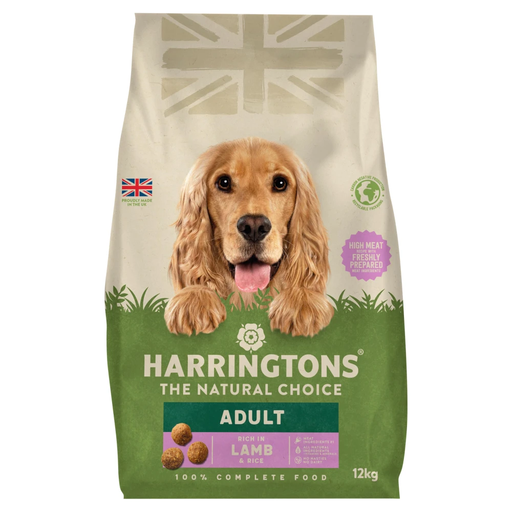
Why This Fits Their Persona: The 12kg format suits households seeking a practical dry dog food option for regular adult feeding and fewer repeat purchases.
It is labelled as a complete adult dog food, helping distinguish it from complementary mixers.
12kg pack; 21% protein and 11% fat; includes lamb and an omega blend.
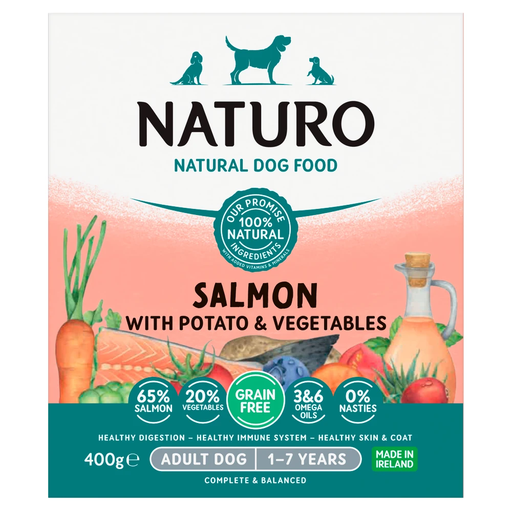
Why This Fits Their Persona: Suitable for owners comparing wet dog food with a grain-free recipe and a clearly stated adult age range.
The listed composition states 65% salmon and identifies it as complete and balanced, rather than relying only on front-of-pack wording.
Grain-free recipe; 400g wet format; includes salmon oil and vegetables.
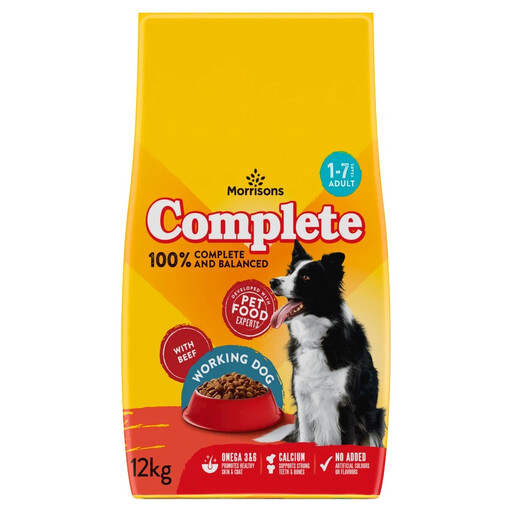
Why This Fits Their Persona: Designed for owners feeding an adult working dog and looking for a larger bag with feeding guidance based on activity.
It is specifically described as a complete feed for adult working dogs, so it is not being selected solely for its beef flavour.
12kg pack; 21% protein and 9% fat; includes feeding advice for active dogs.
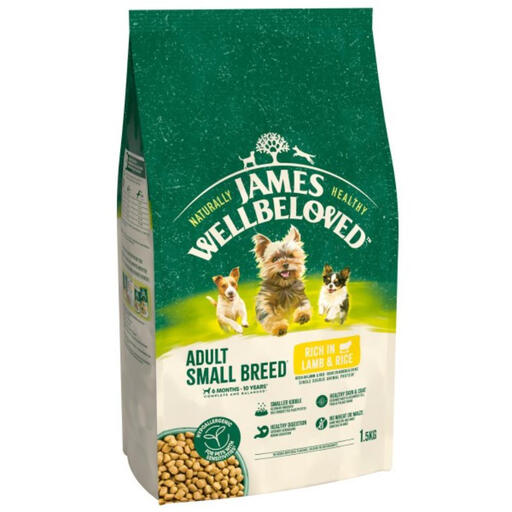
Why This Fits Their Persona: A smaller bag and small kibble format suit owners feeding a small adult dog with limited storage space.
The recipe lists excluded ingredients and states that the kibble is designed for small breeds, making the selection criteria easier to verify.
Small kibble; lamb-based recipe; includes prebiotics and fibre.
We have compiled a complete, real-time list of products that fully satisfy these strict selection criteria and UK safety regulations.
Dry dog food often has a lower cost per kilogram and is easier to store after opening. Wet dog food contains more moisture and can be useful for dogs that prefer a softer texture. Compare the feeding cost per day, not just the shelf price, because portion sizes differ between products.
This depends on bag size, daily portions and storage. A 2kg bag may suit a small dog or a household prioritising freshness, while a 12kg or 15kg bag can be practical for larger or multi-dog households. Seal the food after every use and follow the manufacturer’s storage guidance.
Yes, but reduce the portion of each food to avoid overfeeding. Confirm that the wet product is complete if it is replacing part of the dry food. A complementary mixer should only be used with a suitable complete food, according to its label instructions.