
24/7 Customer Support

Free returns

Same-day & Next-day Delivery

Quality Guaranteed

Unlock Your Welcome Offers: FREE Delivery | Up to 80% OFF | Free 30-day JoyPlus trial
Download the APP
Choosing dog food in the UK can feel more complicated than it needs to be. Shelves and product pages are filled with phrases such as “natural”, “premium”, “high protein” and “grain-free”, but these descriptions do not always tell you whether a recipe suits your dog’s age, size, activity level or dietary needs.
The practical approach is to look beyond front-of-pack marketing and check the product’s nutritional status, ingredients, feeding guidance and pack size.
A recipe can contain natural ingredients without being nutritionally complete. For everyday feeding, look for a product clearly described as complete pet food or complete dog food for the appropriate life stage. A complementary food, such as a dry mixer, should only be fed alongside a suitable complete food.
For example, Pedigree Dry Mixer Adult Small Dog 2kg is described as a complementary dry food intended to be combined with wet food. It should not automatically replace a complete adult dog food.
Grain-free dog food may be useful for owners avoiding particular ingredients, but removing grains does not automatically make a product hypoallergenic. Recipes can still contain several protein sources or ingredients that do not suit an individual dog.
Check the full composition rather than relying on terms such as “sensitive”, “gentle” or “hypoallergenic”. If your dog has recurring digestive problems or a suspected allergy, speak to a vet before making major dietary changes.
A 12kg dog food bag can offer convenience and a lower cost per kilogram, particularly for larger or multi-dog households. However, dry food may lose freshness if the bag is left open in a warm or damp area. Reseal the packaging or transfer the food to a clean, airtight container, and follow the storage and best-before information on the label.
This is the first non-negotiable check. A complete food is formulated for daily feeding when used according to the manufacturer’s guidance. It should also state the intended life stage, such as puppy, adult or senior.
A complementary product may be useful as a mixer, topper or occasional addition, but it needs to be paired with a complete diet to help provide balanced nutrition.
Puppy food is formulated for growth, while adult dog food is intended for maintenance. Senior dog food may have different energy and nutrient proportions for older, less active dogs. Breed size also matters: small breed puppies may need smaller kibble, while working dogs may require feeding guidance suited to higher activity.
Check that the label matches your dog’s age and size. Burns Puppy Mini 2kg, for instance, is made for small and toy breed puppies and uses smaller kibble. In contrast, working dog food should be selected with daily activity and body condition in mind rather than breed name alone.
The ingredients list shows what is included, while analytical constituents usually provide figures for protein, fat, fibre and ash. These figures help you compare products, but they do not tell the whole story in isolation.
Consider:
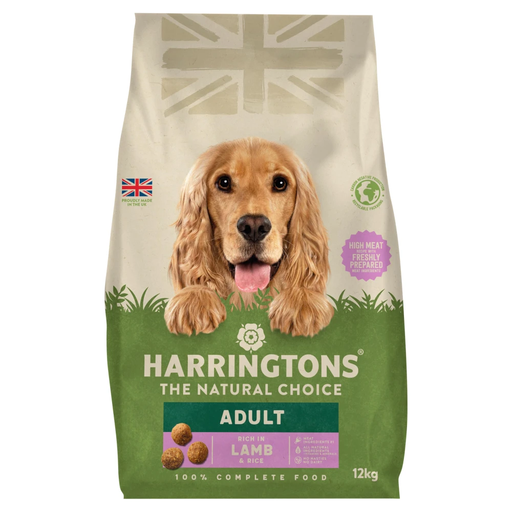
Why This Fits Their Persona: The large pack suits owners seeking a practical dry dog food option for a medium or large adult dog, or households that prefer fewer repeat purchases.
It is listed as complete adult dog food, with feeding guidance and analytical information rather than relying only on front-of-pack wording.
12kg net quantity; lamb and meat meals make up 28% of the listed composition; includes rice, salmon oil, linseed and prebiotic FOS.
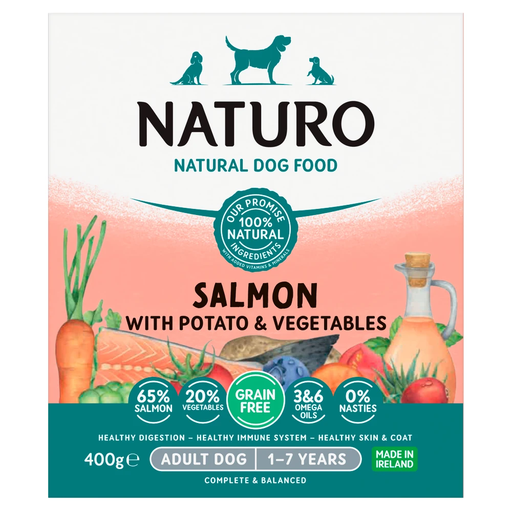
Why This Fits Their Persona: Suitable for owners who prefer wet dog food with a fish-based recipe and clearly listed vegetables for an adult dog.
The product is identified for adult dogs aged 1-7 years and lists its composition, moisture level and feeding instructions.
Contains 65% salmon and 20% vegetables as listed; grain-free recipe; supplied in a 400g wet-food format.
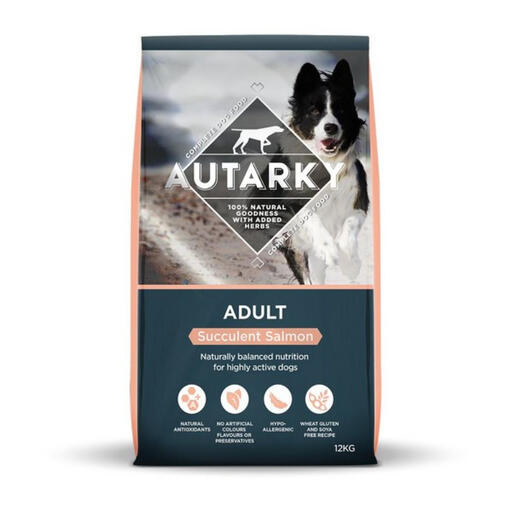
Why This Fits Their Persona: A sizeable dry-food option for active adult dogs and owners who specifically prefer a salmon-based recipe.
The composition and analytical constituents are provided, including 35% salmon, 24% protein and 14% fat. It is wheat-gluten- and soya-free, but owners should still review the complete ingredients list.
12kg pack; salmon and linseed provide listed omega fatty acids; feeding guidance can be adjusted for weight, condition and activity level.
We have compiled a complete, real-time list of products that fully satisfy these strict selection criteria and UK safety regulations.
Dry dog food often has a lower cost per kilogram and is easier to store after opening. Wet food contains more moisture and may be useful for dogs that prefer a softer texture. Compare the feeding cost per day rather than the pack price alone, since portion sizes differ between recipes.
Introduce a new food gradually, commonly over around seven days, by mixing increasing amounts of the new recipe with the existing food. Follow the product label and monitor appetite, stools and general tolerance. Stop and seek veterinary advice if your dog develops concerning or persistent symptoms.
Use the manufacturer’s feeding table as a starting point, then adjust for body condition, age, size and activity. Working dogs may need a different portion from a less active companion, while senior dogs may require careful monitoring as activity changes. Always provide fresh drinking water.