
24/7 Customer Support

Free returns

Same-day & Next-day Delivery

Quality Guaranteed

Unlock Your Welcome Offers: FREE Delivery | Up to 80% OFF | Free 30-day JoyPlus trial
Download the APP
Choosing dog food in the UK is rarely as simple as picking the most appealing packet. Packaging may highlight “natural” ingredients, high meat content or grain-free recipes, while important details such as life stage, feeding quantities and storage requirements receive less attention.
The right choice depends on your dog’s age, size, activity level, health needs and your household routine. This guide explains the practical checks that can help you compare wet dog food, dry dog food and dog food multipacks with fewer costly mistakes.
An ingredient named on the front of the pack may represent only a small proportion of the recipe. For example, some wet foods list chicken, beef or turkey percentages specifically “in the chunks”, rather than across the entire product.
Check the full composition and whether the food is labelled as a complete pet food. A complete and balanced dog food should be suitable for use as the dog’s sole daily diet when fed according to the manufacturer’s guidance.
Natural dog food can be attractive to owners who prefer simple ingredient lists, but the word “natural” does not automatically indicate suitability for a puppy, senior dog or dog with a diagnosed intolerance. Grain-free dog food is also not automatically better than a recipe containing rice, wheat or maize.
If your dog has recurring digestive problems, allergies or another specific dietary requirement, ask a vet for appropriate guidance before changing food. Read the composition carefully rather than relying on front-of-pack claims.
A large dog food multipack may appear economical, but the daily feeding amount can vary considerably between recipes. Wet dog food also contains a high proportion of water, so compare cost per day and cost per kilogram, not only the price of one pouch, tin or tray.
Puppy food is formulated for growth, while adult dog food is designed for maintenance. Senior dog food may be labelled for a particular age, such as eight years and over. These categories should not be treated as interchangeable.
Check whether the product is intended for:
For small and medium breeds, some dry food is sized or portioned with their needs in mind. Active or working dogs may also require different feeding quantities from less active pets.
A product labelled complete pet food for dogs is intended to provide the necessary nutrients when fed as directed. Complementary foods, toppers and treats are not designed to replace the main diet.
This distinction matters when buying wet dog food pouches, dog food tins or dog food trays. Check the statutory name and feeding instructions on the label before using a product as your dog’s everyday meal.
Look beyond marketing language and compare:
A food with a higher stated protein percentage is not automatically appropriate for every dog. Portion requirements, calorie density and your dog’s body condition are equally important. Introduce a new diet gradually over around seven days where the product instructions recommend it.
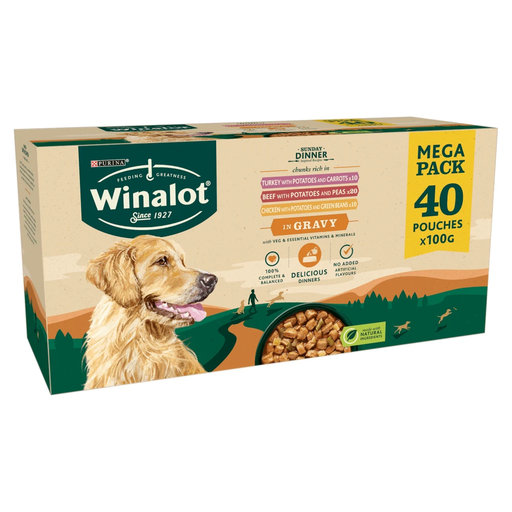
Why This Fits Their Persona: A large pouch multipack suits owners who want pre-portioned adult meals and several flavours for routine feeding.
The product is identified as complete food for adult dogs, with feeding guidance for wet-only and mixed feeding.
Forty 100g pouches, with beef, chicken and turkey varieties; refrigerate opened pouches and use within two days.
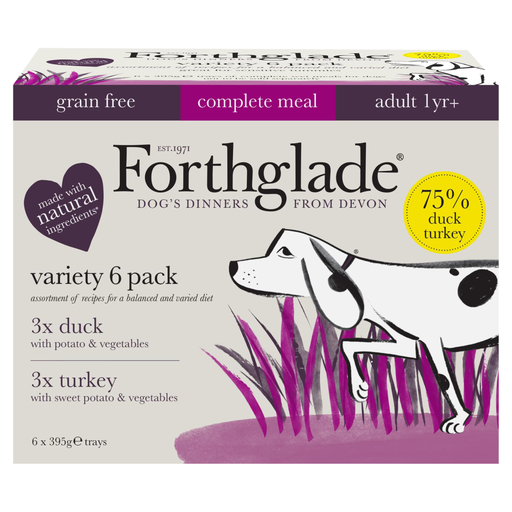
Why This Fits Their Persona: Suitable for adult-dog owners seeking wet trays with a declared high meat content and grain-free recipes.
The pack states the adult age range, complete-meal status and composition, allowing a clearer comparison than the word “natural” alone.
Six 395g trays; duck and turkey recipes contain 75% declared meat and are formulated without grains.
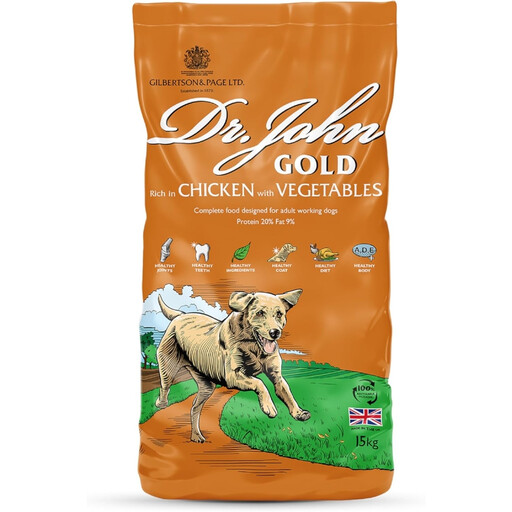
Why This Fits Their Persona: A 15kg dry-food format may suit active adult working dogs or multi-dog households that need a larger supply.
The pack size and stated complete recipe make it easier to plan supply, while the feeding amount still needs adjusting for activity and body condition.
15kg dry dog food pack; recipe includes 17% chicken, wholegrain ingredients and crunchy bite-sized kibble.
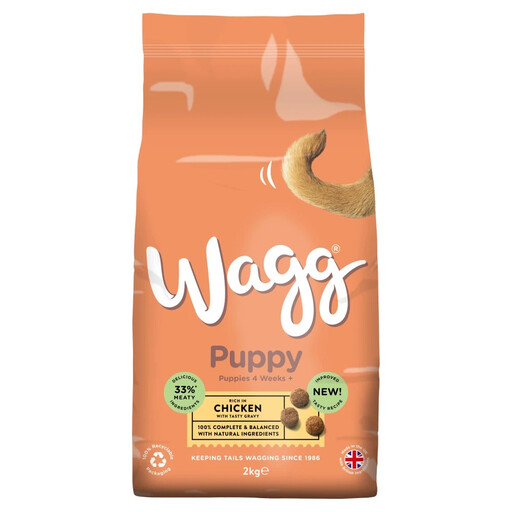
Why This Fits Their Persona: Designed for puppies from four weeks old, this dry formula suits owners managing the transition to solid food.
The life-stage suitability is clearly stated, reducing the risk of buying adult dog food for a growing puppy.
2kg pack; 28% protein, 10% fat and added calcium and vitamin D stated in the product information.
We have compiled a complete, real-time list of products that fully satisfy these strict selection criteria and UK safety regulations.
Dry dog food often provides more calories per gram, while wet food has a higher moisture content. The actual cost depends on the recipe, pack size and daily serving. Compare the feeding guide and calculate the cost per day before deciding.
Introduce the new food gradually, commonly over seven days. Begin with a small amount mixed into the current diet and increase it progressively. If your dog develops persistent vomiting, diarrhoea or loss of appetite, stop the change and seek veterinary advice.
Puppies should generally be fed a recipe labelled for puppies or growth, unless a vet advises otherwise. Check the minimum age and expected adult size on the packaging. Adult formulas may not be designed for the nutritional demands of development.