
24/7 Customer Support

Free returns

Same-day & Next-day Delivery

Quality Guaranteed

Unlock Your Welcome Offers: FREE Delivery | Up to 80% OFF | Free 30-day JoyPlus trial
Download the APP
By Joybuy Product Recommendation Officer
Choosing dog food in the UK can feel unnecessarily complicated. Shelves and online listings are filled with terms such as “natural”, “grain-free”, “high meat” and “superfood”, but these descriptions do not always tell you whether a product suits your dog’s age, lifestyle or daily nutritional needs.
The right choice starts with the label rather than the front-of-pack claims. Whether you are comparing wet dog food, dry dog food, puppy food or dog treats, check these practical details before adding to your basket.
A natural dog food recipe may contain recognisable ingredients, but “natural” alone does not confirm that it can be fed as your dog’s sole diet. Look for wording such as “complete pet food” and check the stated life stage.
Similarly, grain-free dog food is not automatically more suitable for every dog. It can be useful for owners who specifically want to avoid grains, but the overall recipe, protein source and analytical constituents still matter.
Freeze-dried dog treats, dental dog chews and meaty rolls are generally complementary products unless the packaging says otherwise. They should not replace a complete meal. Their calories also count towards your dog’s daily intake, particularly when used frequently during training.
Dog food multipacks and large dry food bags can offer convenience, but only if your dog will eat the product before its freshness declines. Wet food usually needs refrigeration after opening, while dry food should be sealed and stored in a cool, dry place. A smaller pack can be more practical for a small dog or a household testing a new recipe.
For everyday feeding, choose complete and balanced dog food that is labelled for your dog’s life stage. Puppy food should be formulated for growth, adult dog food for maintenance and senior dog food for mature dogs. A complementary item, such as a topper or chew, should be used alongside a complete diet.
Read the feeding guide carefully. Recommended portions are starting points and may need adjusting according to your dog’s size, age, activity level and body condition.
Ingredient lists are normally presented in descending order by weight. Compare the named protein sources and the percentages where provided, then review the guaranteed analysis, including crude protein, fat, fibre, ash and moisture.
Wet dog food naturally contains more moisture than dry food, so the protein percentages cannot be compared directly without considering the format. A recipe showing 8–11% protein in wet form may still be nutritionally complete, while dry food commonly displays higher percentages because it contains less water.
If your dog has a diagnosed allergy, persistent digestive problems or another specific dietary requirement, ask your vet before changing food. A “sensitive” or grain-free label is not a substitute for individual nutritional advice.
Puppies often need several meals daily and food suited to their expected adult size. Senior recipes may have different fat levels and added ingredients such as glucosamine, chondroitin or L-carnitine, but these should be considered as recipe features rather than medical treatments.
Texture also affects convenience. Wet food can be useful for dogs that prefer softer meals, while small-kibble dry dog food may suit small mouths. Chub rolls can be sliced or mixed with biscuits, but check whether they are complete or complementary before using them as a main meal.
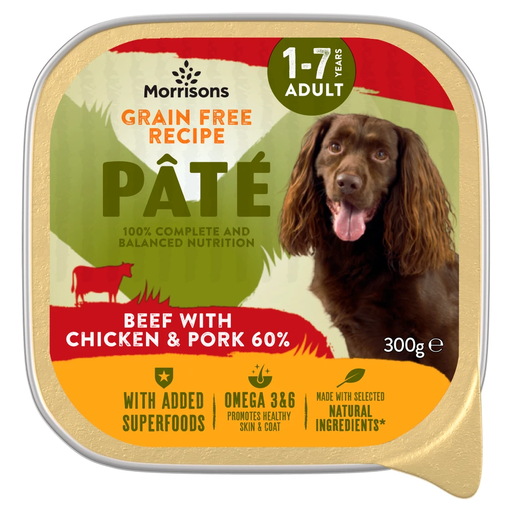
Why This Fits Their Persona: The 300g tray format allows new owners to manage portions and test a wet recipe without committing to a large multipack.
It is labelled as 100% complete and balanced adult food, while its grain-free recipe is clearly presented as a feature rather than a guarantee of suitability for every dog.
Wet format with 82% moisture; includes beef, chicken and pork ingredients plus omega 3 and omega 6.
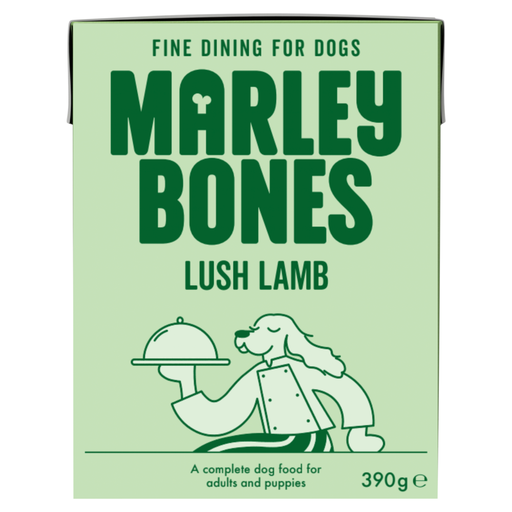
Why This Fits Their Persona: The single-serve pouch is convenient for owners who prefer a fresh-style wet meal with clearly listed ingredients and no freezer storage.
The product specifies that it is complete and balanced for puppies from two months and adult dogs, avoiding the ambiguity found in some topper-style foods.
Contains 60% lamb and a steam-cooked pouch format; includes quinoa, chia, hemp and linseeds.
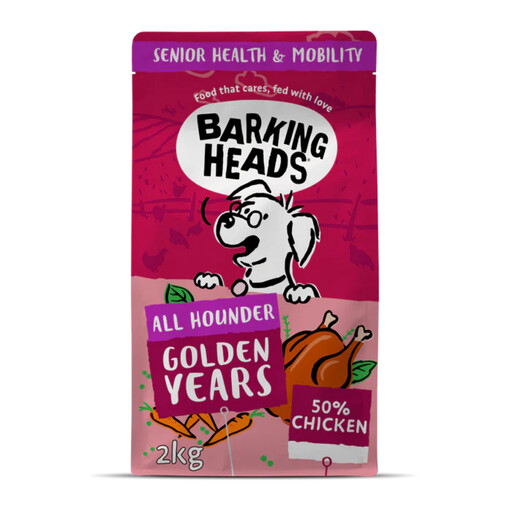
Why This Fits Their Persona: Owners of mature dogs can compare a recipe specifically labelled for senior dogs, with feeding guidance covering different body weights.
Rather than relying on a generic adult label, it identifies senior suitability and lists protein, fat and added ingredients for easier comparison.
Contains 50% chicken, 25% less fat than the stated comparison recipe, plus glucosamine, chondroitin and L-carnitine.
For training, single-ingredient options such as freeze-dried capelin or beef liver provide a simple composition to review. Use the feeding guidance and keep treats as a modest part of the daily diet.
Dental dog chews can provide an engaging chewing texture, but they are not a replacement for brushing or veterinary dental care. Always choose an appropriate size and supervise your dog. Products such as Webbox Serrano Ham Bones are intended for medium or large dogs from four months, so the age and size restrictions should be followed.
If you want to compare more formats, including dry food, wet food, puppy food and dog food multipacks, browse the wider raw dog food range.
We have compiled a complete, real-time list of products that fully satisfy these strict selection criteria and UK safety regulations.
Introduce a new recipe gradually over around five to seven days. Start by mixing a small amount with the existing food, then increase the proportion if your dog remains comfortable. Always follow the product label and provide fresh drinking water.
The answer depends on the recipe, pack size and portion guide. Dry food is often easier to store and measure, while wet food contains more moisture and may be useful for dogs that prefer a softer texture. Compare the cost per daily serving, not just the price of the pack.
Dry food should be resealed and kept in a cool, dry place. Opened wet food generally needs refrigeration and should be used within the period stated on the label, commonly 24–48 hours. Treats should also be resealed to protect texture and freshness.