
24/7 Customer Support

Free returns

Same-day & Next-day Delivery

Quality Guaranteed

Unlock Your Welcome Offers: FREE Delivery | Up to 80% OFF | Free 30-day JoyPlus trial
Download the APP
Choosing dog food can be surprisingly complicated. Shelves and online listings are filled with claims such as “natural”, “grain-free”, “high protein” and “complete nutrition”, but these descriptions do not always tell you whether a product suits your dog’s age, size, activity level or digestive needs.
The most useful approach is to look beyond front-of-pack marketing and check the statutory product description, ingredients, analytical constituents, feeding instructions and storage requirements.
Natural dog food may contain recognisable ingredients, but that alone does not confirm that it supplies every nutrient your dog needs. Look for wording such as “complete pet food” or “complete and balanced dog food” for the relevant life stage.
A mixer, topper or dog food roll may not be suitable as a sole diet. For example, some rolls are designed to be served with biscuits or added to dry dog food. Feeding them alone could create an unbalanced meal.
Grain-free dog food can be useful for owners avoiding particular ingredients, but grain-free does not automatically mean hypoallergenic or appropriate for every sensitive stomach. Read the full composition and check for other possible triggers, including poultry, fish, dairy or particular oils.
If your dog has recurring digestive symptoms or a diagnosed intolerance, consult a vet before making a major dietary change.
A large multipack may appear economical, but wet dog food contains substantial moisture, so you need to compare the daily feeding cost rather than only the price per pack. Dry dog food is more concentrated, while wet dog food pouches, trays and tins generally require larger portions by weight.
Also consider opened-food storage. Many wet recipes should be refrigerated and used within two to three days, while dry food needs to be sealed tightly and kept away from moisture.
Puppy food is formulated for growth, while adult dog food is intended for maintenance. Senior dog food may have a different calorie, fat or fibre profile. Always check whether the product is suitable for puppies, adult dogs, senior dogs or all life stages.
Breed size can also matter. Some dry recipes are designed for small and medium breeds, with kibble and feeding guidance matched to dogs below a stated weight. A puppy formula should also identify the expected adult size where relevant.
A complete recipe should clearly state its intended use. Then compare the analytical constituents, including:
These figures are not a substitute for individual feeding advice. Portion size should be adjusted according to body condition, activity and weight.
Ingredients are listed in descending order by weight. If you are looking for chicken dog food, turkey dog food, salmon dog food or beef dog food, check whether the named meat is a significant ingredient or simply a small percentage included in a broader “meat and animal derivatives” category.
Choose the format that fits your routine:

Why This Fits Their Persona: A straightforward wet dog food multipack for adult dogs, with chicken, beef and turkey varieties in 400g cans.
The listing identifies it as complete and balanced adult food, rather than presenting it only as a topper or treat.
12 x 400g format, three meat varieties and added vitamins and minerals.
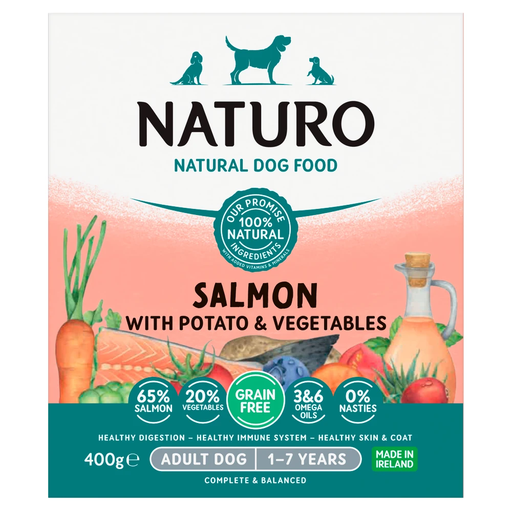
Why This Fits Their Persona: Suitable for owners seeking a grain-free adult recipe with salmon, vegetables and a soft wet texture.
The composition gives specific percentages for salmon and vegetables, allowing a clearer comparison than a flavour-only label.
Lists 65% salmon, 20% vegetables and Omega 3 and Omega 6 sources.
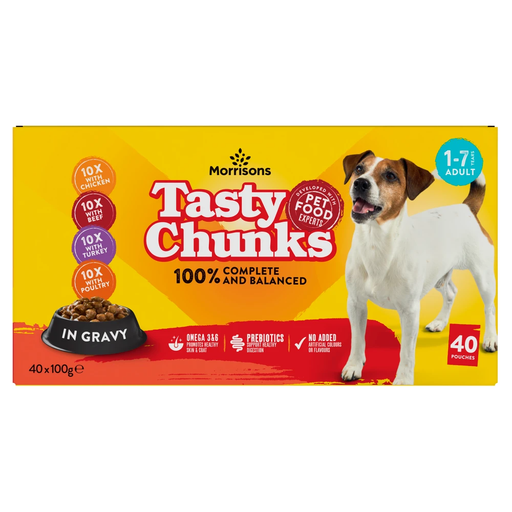
Why This Fits Their Persona: A large pouch multipack suited to busy households, regular wet feeding and multi-dog homes.
The 100g portions help reduce opened-food waste and make daily serving easier to measure.
40 pouches, mixed poultry and meat flavours, prebiotics and Omega 3 and Omega 6.
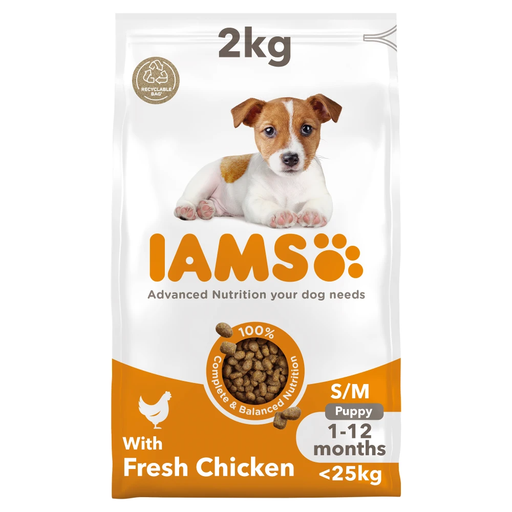
Why This Fits Their Persona: Designed for small and medium breed puppies, with a dry format that is simple to portion during growth.
It is clearly identified for puppies and provides listed calcium, phosphorus, protein and fat values for growth-stage comparison.
Contains DHA from fish oil, 28% protein and 17% fat according to the listed nutrition information.
We have compiled a complete, real-time list of products that fully satisfy these strict selection criteria and UK safety regulations.
Introduce new dog food gradually over approximately one week. A sudden change can make it difficult to identify whether a recipe suits your dog. Follow the pack’s feeding guide, but monitor body condition rather than treating the suggested amount as fixed.
Serve wet food at room temperature and refrigerate leftovers according to the label. Keep dry dog food sealed in a cool, dry place. Always provide fresh drinking water and discard food if the packaging is damaged, swollen or past its stated shelf life.
It depends on the recipe, feeding guide and your dog’s size. Dry dog food usually provides more calories per gram, while wet dog food has higher moisture content. Compare the cost per recommended daily portion rather than the price of one pouch, tray or bag.
Follow the product label. Many opened wet foods should be covered, refrigerated and used within two to three days. Single-serve pouches and trays can help reduce waste where your dog eats smaller meals.
You can mix them when both products are suitable for your dog and portions are adjusted accordingly. Do not add a complete wet meal on top of the full recommended dry portion, as this may lead to overfeeding. Transition gradually and seek veterinary guidance if your dog has specific dietary requirements.