
24/7 Customer Support

Free returns

Same-day & Next-day Delivery

Quality Guaranteed

Unlock Your Welcome Offers: FREE Delivery | Up to 80% OFF | Free 30-day JoyPlus trial
Download the APP
Choosing dog food and treats can seem straightforward until you compare wet food, puppy formulas, dental chews, training rewards and multipacks. Packaging often highlights flavour, added vitamins or a low-fat recipe, while the details that affect suitability are easier to miss.
Three common buying traps are worth avoiding:
The right choice depends on your dog’s age, size, activity level, dietary needs and how you plan to use the product.
Look for the statutory description on the packaging. Complete and balanced dog food is formulated to provide daily nutrition when fed according to the manufacturer’s guidance. Examples include puppy food and adult dog food labelled as complete pet food.
Treats, chews and rewards are generally complementary pet food. They should be offered alongside a suitable main diet, not used as a meal replacement. This distinction is particularly important when comparing dog treats, puppy treats and training treats for dogs.
For puppies, choose a recipe specifically intended for growth. A puppy formula should include feeding instructions based on age and expected adult weight. Do not assume that an adult recipe is suitable simply because it has a similar flavour or texture.
Puppies have different feeding requirements from adult dogs. The product label should state whether it is intended for puppies, adult dogs or all life stages. Check restrictions carefully: some chews are only suitable for particular weight ranges or ages.
For example, the Wagg Banana & Peanut Butter Bars are described for dogs over nine months and within a stated weight range. That makes label compliance essential before purchase, particularly if you have a large breed, a young puppy or a dog outside the recommended size bracket.
For adult dogs, compare the feeding guide with your dog’s current weight and activity. A sedentary household dog may need a different portion from an active working dog. Treat calories should also be included in the daily allowance.
Pack format affects both convenience and value. Dog food pouches are easy to portion, while cans and trays can suit households feeding larger quantities. A multipack may reduce shopping frequency, but only makes sense if your dog enjoys the recipes and the food can be stored properly.
Review the analytical constituents, especially:
Opened pouches, cans and trays should be handled according to the packaging instructions. Many wet products need refrigeration after opening and should be used within the stated period. Keep dry treats sealed in a cool, dry place to help preserve texture.
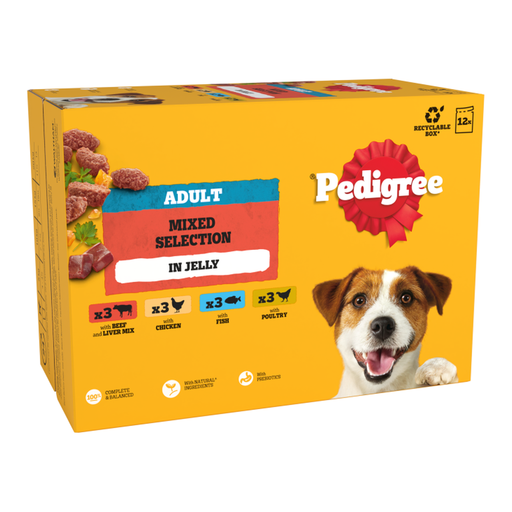
Why This Fits Their Persona: The 12 x 100g format offers portion-sized servings and four flavours, making it practical for owners starting an adult dog-food routine.
It is described as complete food for adult dogs, rather than a complementary snack. Check the feeding guide and account for any treats.
Four recipes, 100g pouches and stated nutritional information support easy portion planning.
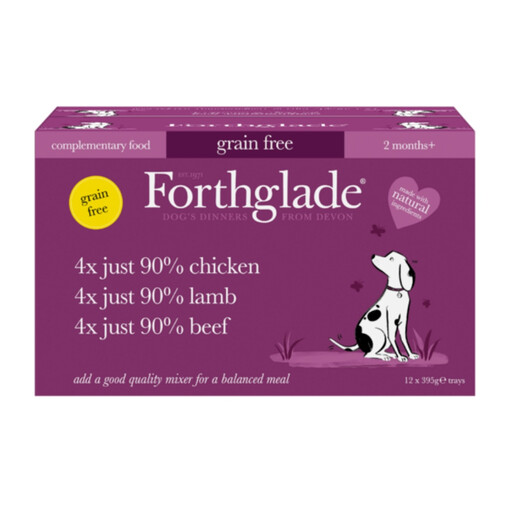
Why This Fits Their Persona: The variety tray format suits owners who prioritise ingredient information, larger portions and a UK-made adult wet-food option.
The listed analytical constituents vary by recipe, so buyers can compare fat and protein rather than relying only on front-of-pack wording.
Three meat varieties, tray packaging and instructions to refrigerate unused portions for up to 48 hours.
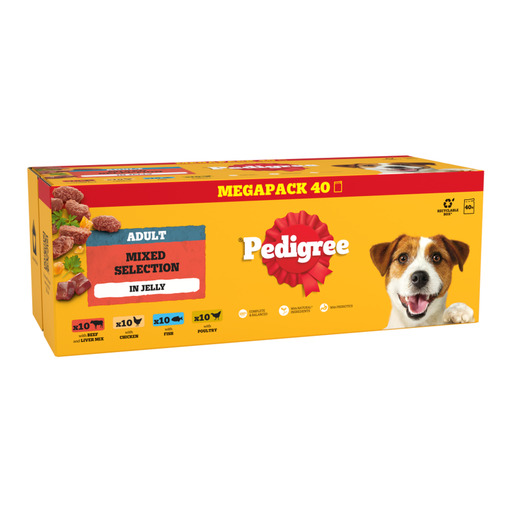
Why This Fits Their Persona: A 40-pouch pack is suited to multi-dog homes or owners who want to reduce frequent food shopping while retaining portion-sized servings.
The pouch quantity and individual 100g format are clear, helping buyers assess storage space and likely usage before ordering.
Four recipes, 4,000g total content and stated energy information of 77 kcal per 100g.
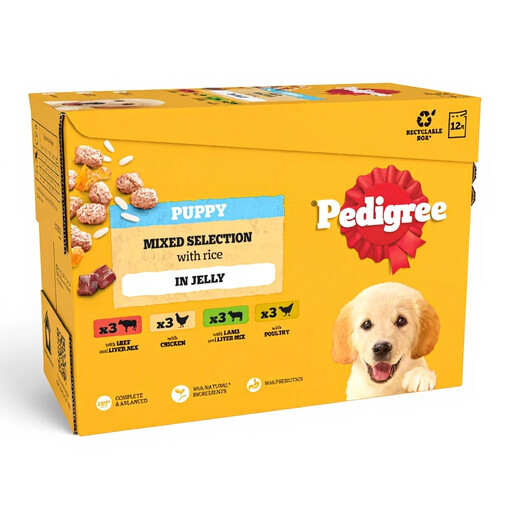
Why This Fits Their Persona: Small pouches and a puppy-specific recipe help new owners organise multiple daily meals while introducing flavour variety.
It is labelled for puppies and provides feeding directions based on age, expected adult weight and activity level.
Four recipes, 100g pouches and listed calcium, phosphorus and vitamin E content.
We have compiled a complete, real-time list of products that fully satisfy these strict selection criteria and UK safety regulations.
Use the feeding guide on the specific product, then adjust for your dog’s weight, age and activity. Wet food serving sizes vary by recipe and energy density. If you add dog treats or mix wet food with dry food, reduce the main meal where appropriate. Speak to a vet before making significant dietary changes, especially for a puppy or a dog with a health condition.
Some puppy treats are designed for young dogs, but age restrictions vary. Check the label before buying. Treats should remain a small part of the daily diet, and hard or large items may be unsuitable for a young puppy. Supervise feeding and provide fresh drinking water.
A multipack can reduce the cost and frequency of individual purchases, but value depends on portion size, storage and whether your dog eats all the recipes. Compare the total weight and feeding guidance rather than judging only by the advertised pack price.