
24/7 Customer Support

Free returns

Same-day & Next-day Delivery

Quality Guaranteed

Unlock Your Welcome Offers: FREE Delivery | Up to 80% OFF | Free 30-day JoyPlus trial
Download the APP
Choosing dog food and treats online can look straightforward until you compare portion sizes, product types and feeding instructions. A colourful label may highlight “natural” ingredients, added vitamins or a popular flavour, but these statements do not always tell you whether the product suits your dog’s age, weight or daily routine.
Joybuy’s Product Recommendation Officer approach is simple: check the information that affects everyday use before being persuaded by packaging.
A complete and balanced dog food is formulated to provide the nutrients needed for daily feeding when used according to the label. Treats, chews and mixers are usually complementary pet food, so they should not replace your dog’s main meals.
For example, Pointer Puppy Love Baked Dog Treats are intended to be fed alongside complete puppy food. Similarly, Pedigree Dry Mixer Adult Small Dog is described as a complementary food designed to be combined with wet food. Treating either product as a standalone diet could create an unsuitable feeding routine.
Dog food multipacks can reduce how often you reorder, but compare the total weight and portion format, not just the pack size. A 40-pack of 100g dog food pouches contains 4kg in total, while a 12-pack of 385g dog food cans contains 4.62kg.
Large packs also need suitable storage. Opened wet food commonly needs refrigeration and should be used within the period stated on the label. Check your fridge space and your dog’s daily consumption before buying in bulk.
Terms such as “natural”, “rawhide-free” and “dental” describe particular features, but they do not remove the need to check ingredients, calories, size and supervision requirements. Some chews are suitable only for specific weight ranges or ages. A treat containing peanut butter may also be unsuitable for a dog with a known ingredient sensitivity.
Puppies have different feeding requirements from adult dogs. Check whether the label specifies a minimum age, such as four months, eight weeks or nine months. Also check whether the product is designed for small, medium or large dogs.
Treat size matters for both training and chewing. Small, soft puppy treats can be easier to portion during repeated training, whereas larger adult dog treats may be more suitable for occasional rewards. Never assume an adult dental chew is appropriate for a puppy simply because the dog can physically bite it.
Look for the statutory description on the packaging:
Wet dog food, including dog food pouches and dog food cans, typically has a high moisture content. Dry dog food is more concentrated and convenient to store, but portions must be measured according to the feeding guide. When adding training treats for dogs, reduce the main meal if necessary to help maintain a suitable body condition.
Read beyond the front-of-pack flavour description. Compare the protein, fat, fibre, ash and moisture figures, and review the composition for ingredients relevant to your dog.
A resealable pouch is useful for dry or semi-moist treats, while wet food needs prompt refrigeration after opening where the label instructs this. Keep oxygen absorber packets away from pets, and discard any chew or dog chew toy that becomes damaged, splintered or small enough to swallow.
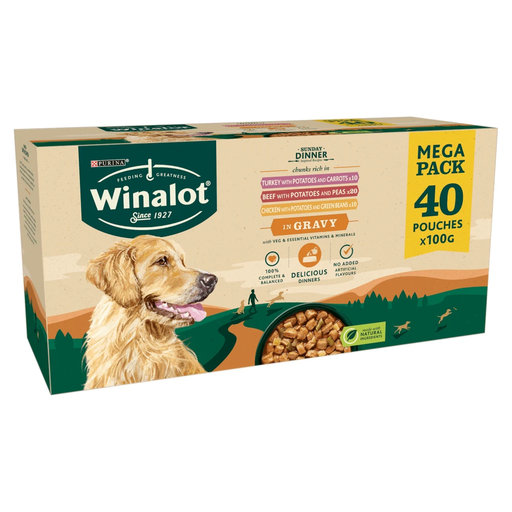
Why This Fits Their Persona: A practical option for households wanting portioned wet food and several adult-dog flavours in one large pack.
The listing identifies it as complete and balanced for adult dogs and provides feeding guidance for different body weights.
40 x 100g pouches; beef, chicken and turkey varieties; mixed-feeding instructions included.
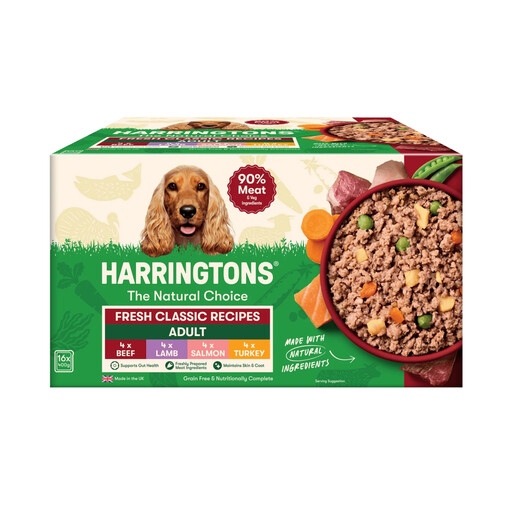
Why This Fits Their Persona: Suitable for owners prioritising a multi-flavour wet meal format and checking composition details before committing to a larger pack.
The product gives named flavours, analytical constituents and clear guidance to introduce the food gradually over three to seven days.
16 x 400g trays; beef, lamb, salmon and turkey recipes; label states complete food for all life stages.
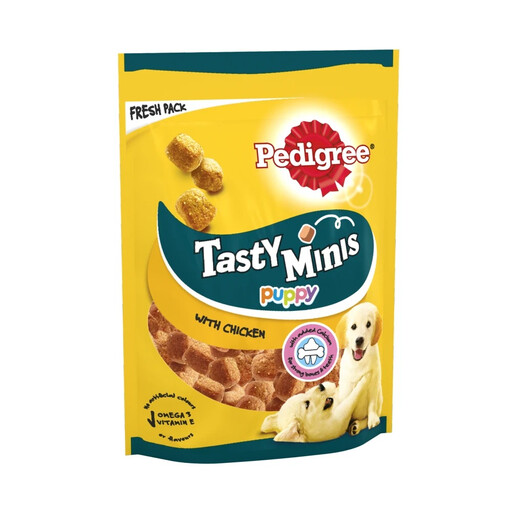
Why This Fits Their Persona: Bite-sized, soft puppy treats are convenient for short training sessions and everyday rewards.
The listing specifies suitability from four to 18 months and states that it is a treat to feed with a balanced diet.
Chicken chewy cubes; calcium, Omega 3 and dietary fibre listed; no added artificial colours or flavours.
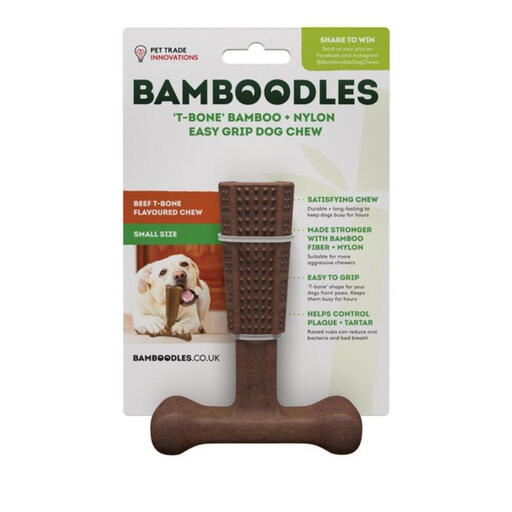
Why This Fits Their Persona: Designed for small dogs over 10 weeks, it offers a non-food option for dogs that need structured chewing and engagement.
It is a toy rather than an edible chew, and the instructions clearly say to supervise play and replace it if damaged or worn.
Bamboo fibre and nylon construction; T-bone shape; raised nubs and beef scent listed as design features.
We have compiled a complete, real-time list of products that fully satisfy these strict selection criteria and UK safety regulations.
It depends on the product’s calorie density, feeding guide and pack price. Compare the cost per kilogram and the daily portion rather than the price of one pouch or can. Dry food is often easier to store after opening, while wet food offers portioned servings and higher moisture content.
Follow the product’s feeding instructions and keep treats as a limited part of the daily diet. Training treats for dogs should be small and counted alongside larger chews or snacks. Reduce the main meal where appropriate, and seek veterinary advice if your dog has specific dietary requirements.
Change food gradually over several days by mixing increasing amounts of the new product with the existing food. Monitor appetite and digestion, keep fresh water available, and follow the product label. For puppies, older dogs or dogs with known sensitivities, consult a veterinary professional before making a significant dietary change.