
24/7 Customer Support

Free returns

Same-day & Next-day Delivery

Quality Guaranteed

Unlock Your Welcome Offers: FREE Delivery | Up to 80% OFF | Free 30-day JoyPlus trial
Download the APP
Choosing dog food and treats online can seem straightforward until you compare feeding labels, pack sizes and ingredient lists. Marketing often highlights phrases such as “natural”, “grain-free” or “high meat” without explaining whether the product is a complete meal, how much your dog should eat or whether the format suits their age and routine.
For UK dog owners, three buying traps are particularly common:
The right choice depends on your dog’s life stage, activity, sensitivities, preferred texture and how conveniently you can store and serve the food.
Look for wording such as “complete pet food” or “complete and balanced” on the packaging. A complete dog food is intended to provide the nutrients needed when fed according to the manufacturer’s guidance.
Complementary products include:
For example, a dry mixer may provide crunch and fibre but should be fed alongside a complete wet food. Treats should remain a limited part of your dog’s daily intake, with meal portions adjusted where necessary.
Puppies need food labelled for growth, while adult dog food is formulated for maintenance. Senior dog food may have different energy and nutrient levels for older animals. Always check the stated age range rather than relying only on general packaging images.
Working dog food is worth considering for dogs with genuinely high activity levels, but a less active pet may gain excess weight from an energy-dense recipe. Feeding guides are starting points: adjust portions according to body condition, exercise and advice from your vet.
A product labelled for dogs aged 7+ or 8+ should not automatically replace an adult formula before that stage. Similarly, puppy recipes should not be used indefinitely after growth is complete unless advised.
The ingredients list shows what is included, while the analytical constituents show the declared levels of protein, fat, fibre, ash and moisture. Consider:
For a dog with a sensitive stomach, introduce new sensitive stomach dog food gradually over approximately seven days. “Hypoallergenic dog treats” and single-protein options can simplify ingredient checking, but a suspected allergy requires professional veterinary guidance.
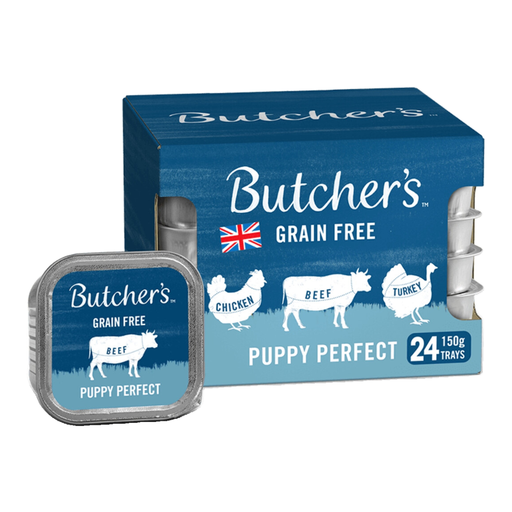
Why This Fits Their Persona: A multipack of portioned wet meals is practical for new puppy owners who want flavour variety and predictable serving sizes.
It is described as complete and balanced puppy food, rather than a complementary topper, and clearly states refrigeration guidance after opening.
24 x 150g trays, three flavours, grain-free recipe, salmon oil and prebiotics.
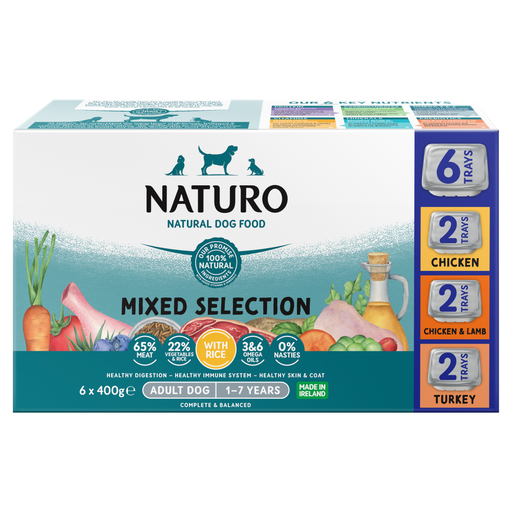
Why This Fits Their Persona: Suitable for adult owners looking for portioned wet food with different poultry and lamb recipes in one pack.
The listing identifies it as complete wet food and gives moisture, protein and fat values, making label comparison more transparent.
65% meat content, grain-free recipes, MOS and FOS prebiotics and a 6 x 400g format.
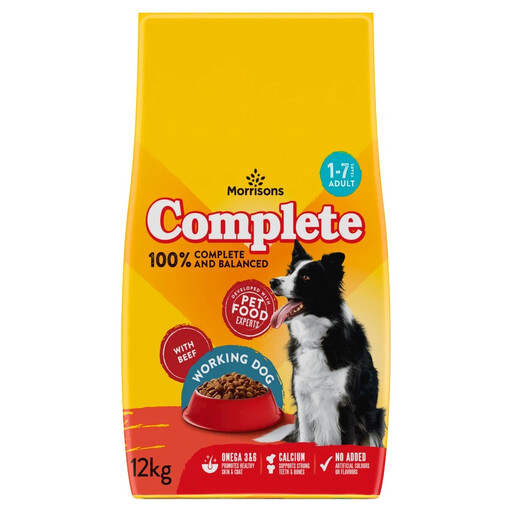
Why This Fits Their Persona: The large dry-food bag suits active working dogs and households that need a convenient bulk format.
It is identified as a complete dry food for working dogs, helping buyers distinguish it from a dry mixer or complementary product.
12kg quantity, 21% crude protein, 9% crude fat and a feeding guide based on weight and activity.

Why This Fits Their Persona: A smaller dry-food bag allows owners to trial a turkey-based, grain-free recipe without committing to a large quantity.
The listing gives a specific ingredient breakdown, including turkey, potato and vegetables, rather than relying only on broad “natural” wording.
50% turkey, 30% crude protein, FOS and MOS, plus a gradual seven-day introduction recommendation.
Choose treats according to texture, size and purpose. Freeze-dried dog treats made from a single ingredient, such as salmon, capelin or krill, offer straightforward composition checking and can be broken into smaller rewards. Soft meaty sticks may be more convenient during training, while crunchy biscuits suit dogs that prefer a firmer texture.
Check the feeding guidance and supervise chewing. Natural dog treats are still complementary foods, and “grain-free” or “hypoallergenic” wording should not be treated as a guarantee for a dog with diagnosed sensitivities. Store freeze-dried products away from moisture and reseal them after opening.
For regular feeding, compare the cost per kilogram and daily serving rather than only the shelf price. Dog food multipacks can reduce repeat ordering, but only when your dog accepts the recipe and you can use opened trays within the stated storage period.
We have compiled a complete, real-time list of products that fully satisfy these strict selection criteria and UK safety regulations.
It depends on the product’s price per kilogram and your dog’s daily portion. Dry food is generally easier to store and measure, while wet food contains more moisture and may require larger serving weights. Compare the feeding guide and cost per daily meal rather than pack price alone.
A gradual transition over about seven days is commonly recommended, mixing increasing amounts of the new food with the old. Follow the product label and monitor appetite and stool changes. Contact your vet if problems persist or if your dog has a known medical dietary requirement.
Storage instructions vary. Some products advise refrigerating leftovers and using them within 24 hours, while others state up to 72 hours. Always follow the individual label, use a covered container where appropriate and serve food at a suitable temperature.