
24/7 Customer Support

Free returns

Same-day & Next-day Delivery

Quality Guaranteed

Unlock Your Welcome Offers: FREE Delivery | Up to 80% OFF | Free 30-day JoyPlus trial
Download the APP
As a dog owner, you want to provide the very best for your companion. Yet, navigating the world of dog food can feel overwhelming. Shelves and websites are filled with bags and tins, all promising optimal health. But with so much marketing noise, it's easy to fall into common traps that don't benefit your dog or your wallet.
As the Joybuy Product Recommendation Officer, my role is to help you cut through the hype. This guide will highlight the key pitfalls to watch for and provide a clear framework for selecting a food that truly meets your dog's needs.
Walking down the pet food aisle, you're met with a barrage of claims. Let's look at the most common pitfalls UK consumers face.
To make an informed choice, focus on these three non-negotiable parameters. They provide a reliable way to compare different products.
This is the most critical distinction to understand.
There is no single right answer here; the choice depends on your dog's needs, preferences and your lifestyle.
The "Analytical Constituents" section on the back of the pack is your best tool for an objective comparison.
Based on these practical criteria, here are some recommendations matched to different owner and dog profiles.

Why This Fits Their Persona: This wet food is specifically formulated for dogs prone to digestive upset. It's a practical choice for UK owners who need a reliable, gentle and complete meal without having to decipher complex or exotic ingredients.
It sidesteps the "grain-free is always better" trap by using wholegrain rice, a gentle and effective fibre source. It also avoids vague labelling by stating it uses British & Irish farmed meat.
Contains prebiotics (MOS & FOS) to actively support healthy gut bacteria and digestion. It is a 100% complete and balanced meal.
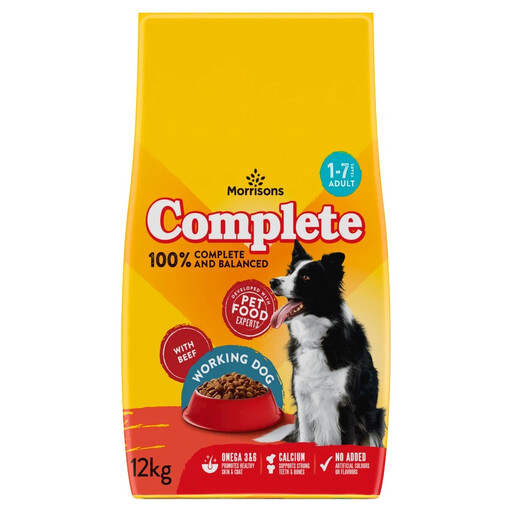
Why This Fits Their Persona: Ideal for owners of farm dogs, gundogs or highly active pets in the UK countryside. This dry food is specifically formulated with higher energy levels to fuel a demanding lifestyle and the large 12kg bag is practical and economical.
This product is transparent about its purpose. It is clearly labelled as a working dog food, avoiding the trap of using a standard adult food for a dog with higher energy requirements.
Features 21% protein and 9% fat to support muscle strength and provide sustained energy. The crunchy kibble also aids in maintaining dental health.

Why This Fits Their Persona: Perfect for the discerning owner who prioritises high-meat content and a grain-free diet for their dog. Tripe is highly palatable and nutritious, making this a great choice for fussy eaters or those with genuine grain sensitivities.
This product genuinely delivers on its grain-free promise without using it as a gimmick. It avoids fillers and focuses on a simple, high-quality protein base of tripe, chicken and beef from British & Irish farms.
Tripe is rich in natural nutrients, including Omega-3 and -6 for a healthy coat. The recipe is naturally gluten-free and contains no artificial colours, flavours or preservatives.
We have compiled a complete, real-time list of products that fully satisfy these strict selection criteria and UK safety regulations.
1. How much food should I give my dog? The correct amount depends on your dog's age, breed, weight and daily activity level. Always start by checking the feeding guide on the product's packaging. This will provide a recommended daily amount, which you can then adjust to maintain a healthy body condition. If you mix wet dog food and dry dog food, remember to reduce the portion of each to avoid overfeeding.
2. Is wet or dry food better for my dog? Neither is inherently "better"; they simply serve different purposes. Dry dog food is convenient and can help clean teeth, while wet dog food is excellent for hydration and is often preferred by picky eaters. The ideal choice depends on your dog's health, preferences and dental condition. Many owners find that a mixed-feeding approach works well.
3. How should I switch my dog to a new food? To avoid digestive upset, you should always transition to a new food gradually. Over a period of 7-10 days, start by mixing a small amount of the new food in with their old food. Slowly increase the proportion of the new food and decrease the old food each day until you have fully switched over.