
24/7 Customer Support

Free returns

Same-day & Next-day Delivery

Quality Guaranteed

Unlock Your Welcome Offers: FREE Delivery | Up to 80% OFF | Free 30-day JoyPlus trial
Download the APP
As a dog owner in the UK, navigating the aisles of dog food can feel overwhelming. With labels shouting "natural," "grain-free" and "superfood," it's difficult to know what truly benefits your companion and what is simply clever marketing. Many well-intentioned owners find themselves paying a premium for features their dog may not even need.
My role as Joybuy's Product Recommendation Officer is to help you cut through the clutter. This guide will highlight the common purchasing pitfalls and clarify the essential factors to consider, ensuring you can confidently choose a food that supports your dog's health and happiness.
Before you add anything to your basket, be aware of these frequent marketing tactics that can lead to confusion and wasted money.
To make an informed choice, focus on these three non-negotiable parameters. They provide a clear picture of what you are actually feeding your dog.
The ingredients are listed by weight, so the first few items make up the bulk of the food. Look for a high-quality, named protein source as the number one ingredient, such as "fresh chicken," "dried lamb" or "salmon," rather than vague terms like "meat and animal derivatives." This is particularly important when searching for hypoallergenic dog food or dog food for sensitive stomachs, as these often rely on a single, high-quality protein to minimise reactions.
This section on the packaging breaks down the nutritional content. Here’s what to look for:
There is no single right answer here; the choice depends on your dog's needs and your lifestyle.
Many owners find a combination of both works well, offering the benefits of each format.
Based on these practical criteria, here are some food choices from the dog food UK market, matched to different owner and pet profiles.
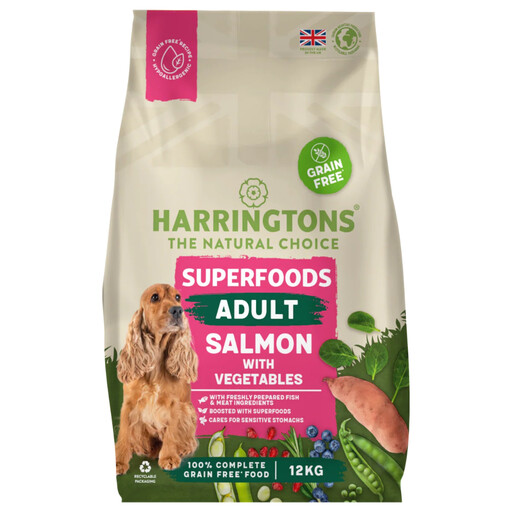
Why This Fits Their Persona: This is ideal for the UK owner carefully managing their dog's diet. The single primary protein source (salmon) and grain-free recipe are well-suited for dogs prone to digestive upset or skin irritations.
It avoids the "grain-free halo" by offering a genuinely beneficial formula. Instead of just removing grains, it uses digestible sweet potato and a clear, named protein source, making it a truly hypoallergenic dog food.
A complete dog food with added Omega 3 & 6 oils for coat health and a blend of superfoods like spinach and blueberries for immune support.
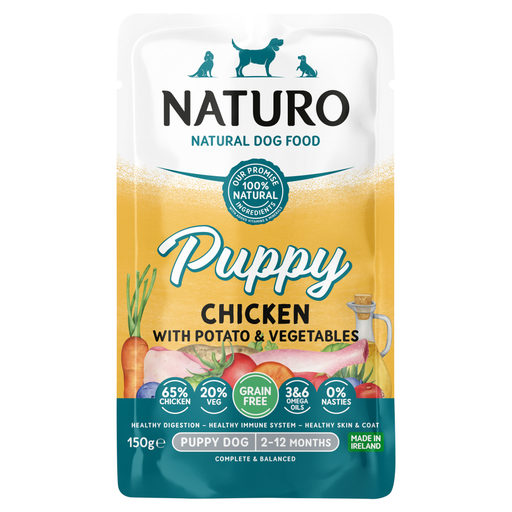
Why This Fits Their Persona: Perfect for those welcoming a new puppy. This wet dog food is specifically formulated for the high-energy and developmental needs of puppies aged 2-12 months, taking the guesswork out of feeding.
It avoids the "complete vs. complementary" trap by being a 100% complete puppy food. Its "natural" claim is backed by a high meat content (65% chicken) and recognisable vegetables.
High in protein for growth and enriched with salmon and sunflower oils to support cognitive development, skin and coat health. The wet texture is also highly palatable for young dogs.
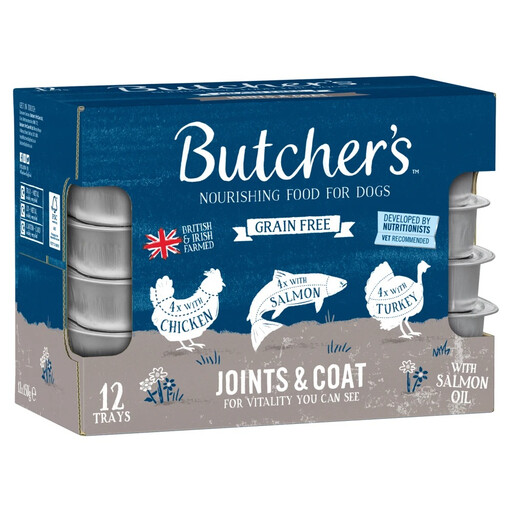
Why This Fits Their Persona: This is for the discerning owner who values UK-made products and wants to provide targeted support for their dog's mobility and coat. It's a great choice for active or ageing dogs.
It substantiates its "natural" credentials with a clear declaration of "British & Irish Farmed" meat and a list of functional ingredients. It is also a complete wet dog food, not just a supplementary mixer.
Enriched with natural sources of glucosamine and chondroitin (from green-lipped mussel) for joint support, plus salmon oil, zinc and biotin for a healthy skin and coat.
We have compiled a complete, real-time list of products that fully satisfy these strict selection criteria and UK safety regulations.
To avoid digestive upset, you should transition your dog to a new food gradually over 7-10 days. Start by mixing a small amount of the new food (around 25%) with their old food (75%). Every few days, increase the proportion of the new food while decreasing the old, until you have fully switched over.
Not necessarily. While price can reflect the quality of ingredients (e.g., high-meat content from named sources vs. cheaper fillers), the most important factor is finding a food that suits your dog's individual needs. Reading the label is more valuable than looking at the price tag. A food that works wonders for one dog may not be suitable for another.
This varies significantly between brands and formulas due to differences in calorie density and moisture content. You cannot simply swap them gram for gram. Always check the feeding guide on the packaging, which will provide instructions for sole feeding or mixed feeding (combining wet and dry). When in doubt, start with the recommended amounts and adjust based on your dog's body condition.