
24/7 Customer Support

Free returns

Same-day & Next-day Delivery

Quality Guaranteed

Unlock Your Welcome Offers: FREE Delivery | Up to 80% OFF | Free 30-day JoyPlus trial
Download the APP
As a dog owner, you want to provide the best for your companion, and that starts with their daily meals. Yet, the sheer volume of dog food options can be overwhelming. Navigating claims about ingredients, nutritional benefits and special formulas can feel like a full-time job. Many well-intentioned owners find themselves caught in common purchasing traps that can be costly and not always suited to their dog's actual needs.
As the Joybuy Product Recommendation Officer, my role is to help you cut through the clutter. This guide will highlight a few frequent pitfalls in the UK market and clarify the essential factors to consider, helping you make a confident choice for your dog's health and happiness.
grain free dog food is essential for dogs with a diagnosed grain allergy or sensitivity. However, for the majority of dogs, wholesome grains like rice and oats are excellent sources of energy and nutrients. The marketing push has led many to believe "grain-free" is automatically superior, but it's a specific dietary choice, not a universal sign of quality. The key is to choose a food that suits your individual dog's digestive health.wet dog food) to form a balanced meal. Feeding a complementary food on its own can lead to nutritional deficiencies over time. Always check the label.dry dog food kibble.To avoid these traps, focus on a few core parameters that truly define a food's suitability for your pet.
A dog's nutritional requirements change dramatically throughout its life.
puppy food is formulated to support rapid growth and build strong bones and muscles.senior dog food will typically have fewer calories, higher fibre for digestive health and added supplements like glucosamine and chondroitin to support ageing joints.Once you've established the life stage, consider the format.
wet dog food is excellent for hydration and is often more palatable, making it a great option for fussy eaters or older dogs with dental issues. It's frequently sold in tins, pouches or trays, including convenient dog food multipack options.If your dog has specific health concerns, a specialised diet is crucial.
Based on these practical criteria, here are a few options from our catalogue matched to specific owner profiles.
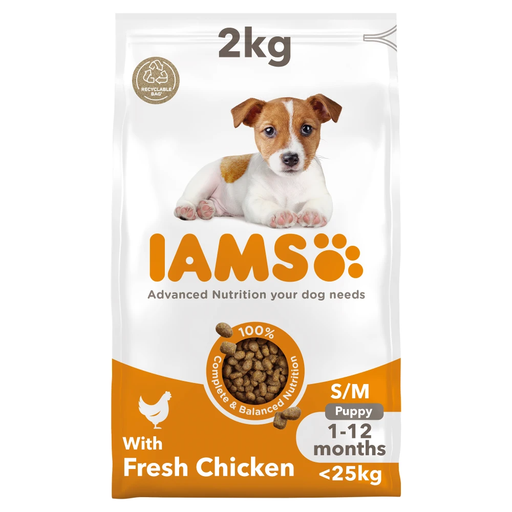
Why This Fits Their Persona: Perfect for UK owners of new small or medium-breed puppies. It's a complete, no-fuss solution packed with the specific nutrients needed for this critical growth phase, taking the guesswork out of feeding.
This is a 100% complete and balanced food, eliminating the risk of accidentally providing an incomplete diet. The ingredients clearly state the protein sources and added functional nutrients.
Contains DHA to support brain development and a high level of animal protein (85% of total protein) for strong muscle growth.

Why This Fits Their Persona: An excellent choice for owners managing a dog's sensitive digestion. This food is specifically formulated to be gentle on the stomach, making it ideal for dogs prone to digestive upset in the UK.
It moves beyond the simple "grain-free" label by using easily digestible potato and peas as carbohydrate sources and turkey as a primary protein, which is less likely to cause reactions than some other meats.
This is a hypoallergenic and grain-free recipe with 50% turkey. It also contains prebiotics (FOS and MOS) to actively support gut health.
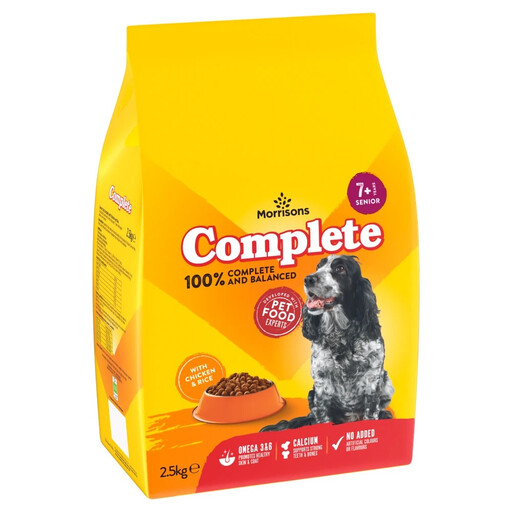
Why This Fits Their Persona: A practical and affordable choice for owners of dogs aged 7 and over. It addresses the changing needs of senior dogs without a premium price tag, focusing on joint, bone and coat health.
This is a purpose-built senior dog food, not a generic "all life stages" formula. It provides targeted nutrition with appropriate calorie levels for less active dogs, helping to manage weight.
It's a complete and balanced diet containing calcium to support strong teeth and bones plus Omega 3 & 6 for skin and coat health.
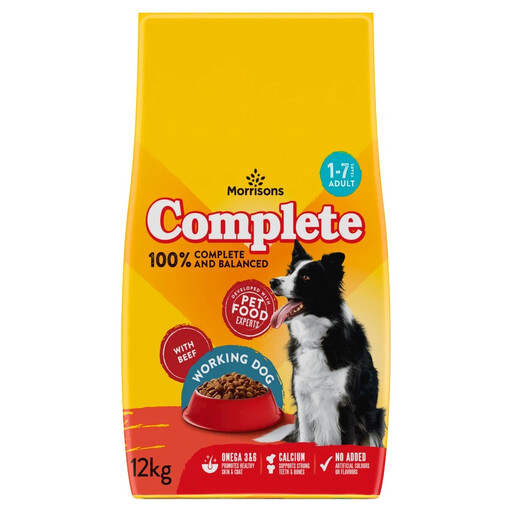
Why This Fits Their Persona: Ideal for owners of energetic dogs, from farm collies to active spaniels. The large 12kg bag offers great value, and the formula is designed to fuel a high-energy lifestyle.
This is a specifically formulated working dog food, not just a standard adult food in a big bag. It provides the higher protein (21%) and fat (9%) levels needed for sustained energy and muscle support.
It's a complete feed that is VAT-free for working dogs, offering significant cost savings. The large pack size is convenient and reduces shopping frequency.
We have compiled a complete, real-time list of products that fully satisfy these strict selection criteria and UK safety regulations.
A sudden change in diet can cause digestive upset. It is advisable to transition your dog to a new food gradually over 7-10 days. Start by mixing a small amount of the new food (around 25%) with their old food (75%). Every few days, increase the proportion of the new food until you have fully switched over.
Neither is inherently "better"; they simply offer different benefits. Dry dog food is convenient, cost-effective, and its abrasive texture can help clean teeth. Wet dog food is great for increasing a dog's water intake and is often preferred by picky eaters due to its strong aroma and flavour. Many owners find that a mixed diet, combining both wet and dry, provides a good balance.
In the UK, pet food labelling is regulated. If a food is intended to be the sole source of a pet's nutrition, it must be labelled as "complete" or "complete and balanced." This ensures it contains all the necessary vitamins, minerals and nutrients in the correct proportions. Foods labelled as "complementary," such as mixers and many treats, are not designed to be fed alone.