
24/7 Customer Support

Free returns

Same-day & Next-day Delivery

Quality Guaranteed

Unlock Your Welcome Offers: FREE Delivery | Up to 80% OFF | Free 30-day JoyPlus trial
Download the APP
Dog probiotics can be useful for owners comparing daily supplements for digestive balance, sensitive stomachs and irregular bowel movements. However, products can look similar while differing considerably in bacterial strains, dosage, format and suitability for different pets.
Before buying probiotic supplements for dogs, check the details behind the front-of-pack claims. A convenient chew is not automatically suitable for every dog, and a higher CFU figure does not by itself indicate a better choice.
CFU means colony-forming units and indicates the quantity of viable microorganisms stated by the manufacturer. It is useful for comparison, but it should not be the only factor. A product with several strains may have a different purpose from a single-strain supplement, while the stated amount may apply per chew, tablet, scoop or daily serving.
Always check:
Probiotics are live microorganisms, while prebiotics for dogs are fibres or compounds intended to provide a food source for beneficial gut bacteria. Some products combine both, but not all do.
A dog digestive health supplement containing prebiotic ingredients such as FOS, MOS, inulin or beta-glucans may suit owners looking for a broader gut-support formula. Nevertheless, ingredient quantity and serving guidance remain important. Marketing language such as “complete gut balance” should not replace a close look at the formulation.
A supplement that is difficult to administer may be left unused in a cupboard. Tablets may suit dogs that accept medication by hand or mixed into food, while soft chews can be more convenient for treat-oriented pets. Powders may work well in multi-pet households, provided the product is suitable for each species.
Also check minimum age, pregnancy warnings, ingredients such as chicken or soya, and whether the product is intended for probiotics for dogs and cats or dogs only.
Look for a clearly listed strain or blend rather than a vague reference to “friendly bacteria”. Examples in the products below include Enterococcus faecium, Bacillus coagulans, Bacillus subtilis, lactobacilli and bifidobacteria.
For combined support, check whether the label also lists prebiotics or yeast-based ingredients. These may include FOS, GOS, MOS, beta-glucans, inulin or yeast culture. The presence of these ingredients does not guarantee a particular outcome, but it helps you understand what you are buying.
Daily dosing should be straightforward and linked to your dog’s weight. A small dog may need one tablet or chew, while larger dogs may require more. Compare the serving size with the pack quantity to estimate how long the product will last and its practical cost per day.
Heat, moisture and poor sealing can affect supplement quality. Follow the product label carefully, particularly for powders that should be mixed with cool or lukewarm food rather than hot meals. Keep all pet supplements out of children’s reach and provide fresh drinking water.
If your dog has persistent diarrhoea, vomiting, blood in the stool, marked lethargy or another concerning symptom, seek veterinary advice rather than relying on a dog digestive aid alone.
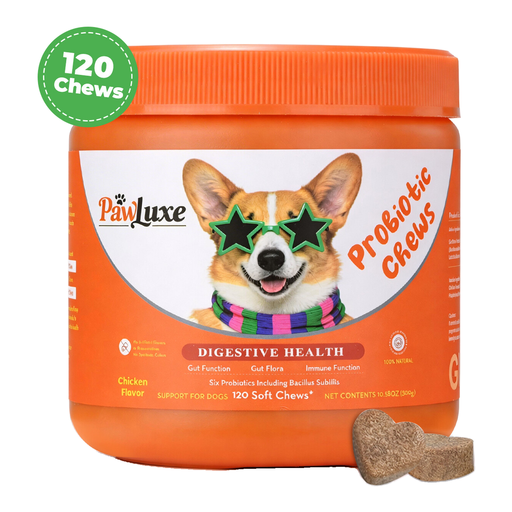
Why This Fits Their Persona: A 120-count soft-chew pack offers a convenient format for owners starting a daily routine and wanting a clearly portioned product.
The label specifies six probiotic strains and 2 billion CFU per soft chew, making the serving information easier to compare.
Chicken-based ingredients and a soft-chew format; six listed strains including Bacillus and Lactobacillus species.
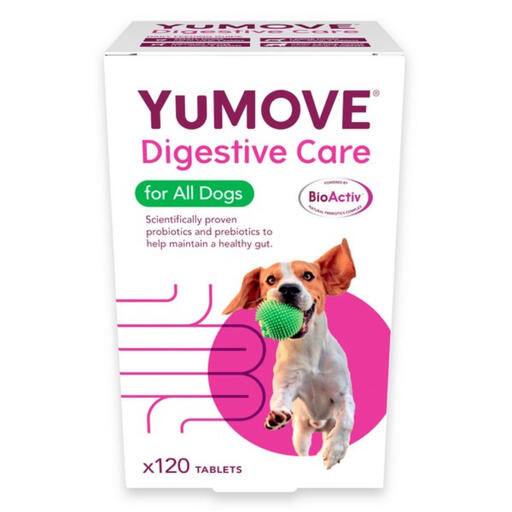
Why This Fits Their Persona: Suitable for dogs over three months old, this tablet format suits owners who prefer a defined weight-based routine.
The listing identifies 200 million Enterococcus faecium bacteria per tablet and names its prebiotic complex, rather than presenting only a general gut-health claim.
120 tablets; includes scFOS, MOS and beta-glucans; tablets can be given by hand or added to food.
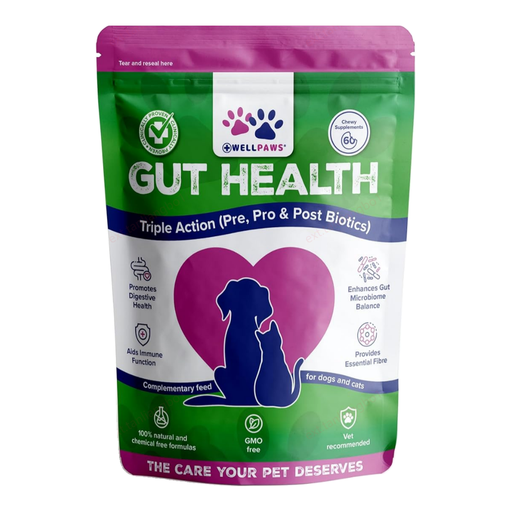
Why This Fits Their Persona: A practical option for multi-pet households or owners seeking a treat-style supplement with dog and cat dosing guidance.
The product states its species coverage, weight-based serving sizes and 120-day use guidance after opening.
180g chewable format; contains Bacillus coagulans, yeast culture and Fibrulose prebiotic fibre.
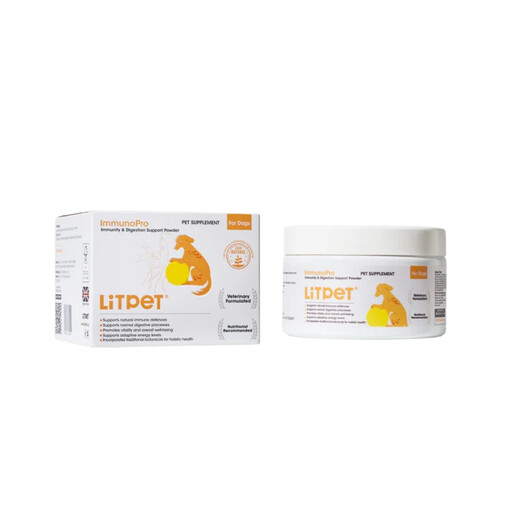
Why This Fits Their Persona: The powder can be mixed with food or cool water, making it useful for owners managing dogs and cats with different serving requirements.
The label provides gram-based dosing by body weight and states that the powder should not be mixed with water or food above 40°C.
200g pack; contains Lactobacillus acidophilus, Bifidobacterium bifidum, beta-glucan and dietary fibre.
We have compiled a complete, real-time list of products that fully satisfy these strict selection criteria and UK safety regulations.
Follow the serving instructions on the packaging and introduce the supplement alongside your dog’s normal food routine. Avoid changing several foods or supplements at the same time, as this makes it harder to identify what suits your pet. Stop and contact a vet if symptoms worsen or continue.
Shelf life varies by product. Check the expiry date, storage instructions and any post-opening guidance. Some chewables specify a period for use after opening, while powders may require careful resealing to limit moisture exposure. A change in colour, texture or odour is a reason to follow the label’s disposal advice.
The purchase price is only part of the calculation. Work out the cost per daily serving using the recommended dose for your dog’s weight. A larger pack may offer more servings, but a large dog may consume several chews or tablets per day. Compare the total number of days covered, administration convenience and ingredient format before buying.