
24/7 Customer Support

Free returns

Same-day & Next-day Delivery

Quality Guaranteed

Unlock Your Welcome Offers: FREE Delivery | Up to 80% OFF | Free 30-day JoyPlus trial
Download the APP
As a dog owner in the UK, you know that keeping your companion's coat healthy is about more than just looks. It’s essential for their comfort and well-being. A good dog slicker brush is a cornerstone of any grooming kit, especially for breeds with long or thick coats prone to tangles and shedding. However, the market is filled with options that promise much but deliver little, often leading to wasted money and a stressful grooming experience for both you and your pet.
This guide, from your Joybuy Product Recommendation Officer, cuts through the clutter. We’ll highlight the common pitfalls to avoid and break down the essential features you need, helping you find an effective and comfortable pet grooming tool.
Before you buy, be aware of these frequent issues that can turn a promising purchase into a drawer-filler.
To ensure you’re getting a tool that works, focus on these three non-negotiable parameters. Analysing these will help you select a high-quality dog shedding brush that lasts.
The "business end" of the brush is the most critical part. Look for a dog slicker brush with fine, flexible pins. These pins should be densely packed to effectively capture loose fur from the undercoat. The tips should be gentle, designed to separate hairs and work through tangles without scraping the skin. This design is what makes a good undercoat brush for dogs effective at reducing moulting without causing discomfort.
Grooming should be a comfortable bonding experience. A brush with an ergonomic, soft-grip handle is essential. This feature provides you with superior control and reduces hand and wrist fatigue during longer grooming sessions. A non-slip surface ensures you can maintain a firm, gentle grip even when tackling stubborn knots.
The size of the brush head must match the size of your dog.
Based on these practical criteria, we’ve matched some options to different UK dog owners.
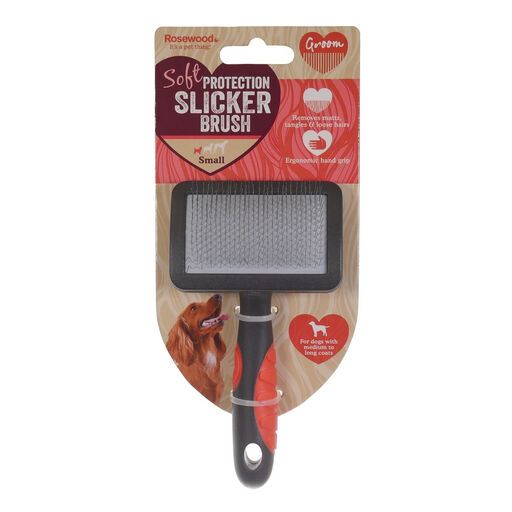
Why This Fits Their Persona: Ideal for owners of small dogs like Pomeranians or Shih Tzus or even long-haired cats. Its compact head allows for precise grooming on smaller bodies and delicate areas without causing stress.
This brush directly counters the 'one-size-fits-all' pitfall. Its small, purpose-built design ensures you are not using a clumsy, oversized tool on a petite pet.
The fine, flexible pins are gentle on delicate skin, while the soft-grip handle provides excellent control for detailed work.
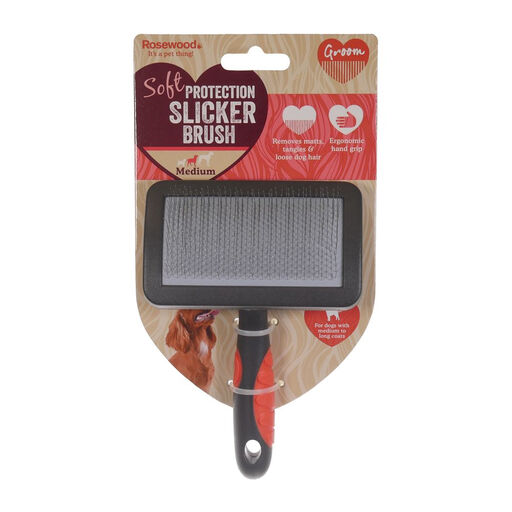
Why This Fits Their Persona: Perfect for those with Border Collies, Cocker Spaniels or similar-sized dogs. This brush provides a great balance of coverage and manoeuvrability for a thorough grooming session.
Its ergonomic soft-grip handle directly addresses the pitfall of wrist strain, ensuring you can groom your dog comfortably and effectively without losing your grip.
This is an excellent all-round **dematting brush for dogs** of this size, effectively removing loose fur and preventing knots in thick coats.
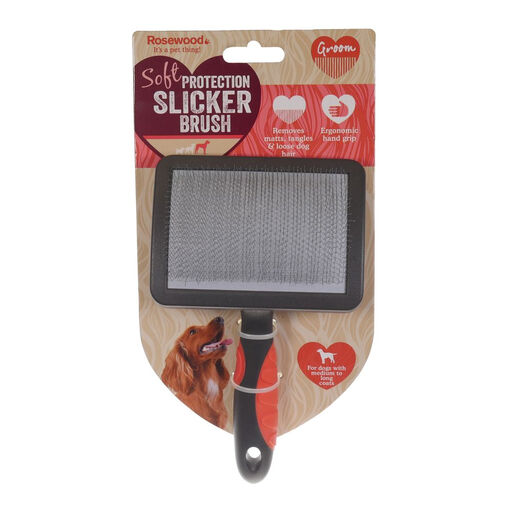
Why This Fits Their Persona: A must-have for owners of German Shepherds, Huskies or Golden Retrievers. The large head covers big areas quickly, making the daunting task of grooming a heavy-shedding dog far more efficient.
It avoids the "painful pins" trap. The fine, flexible pins are designed to penetrate deep into a dense double coat to remove loose fur without scratching or irritating the skin underneath.
Highly effective at reducing shedding and stimulating natural oils for a healthy, shiny coat. The comfortable handle makes regular grooming manageable.
We have compiled a complete, real-time list of products that fully satisfy these strict selection criteria and UK safety regulations.
The frequency depends on your dog's coat type and length. For dogs with long hair or a thick double coat prone to matting, grooming 2-3 times a week is often necessary to keep their coat in good condition. For dogs with shorter coats, once a week may be sufficient, with more frequent brushing during heavy shedding seasons.
Yes, if it is used with improper technique. Always brush gently in the direction of hair growth using short, smooth strokes. Never apply excessive downward pressure, as the pins can scratch the skin. If you encounter a severe mat, do not try to rip it out with the brush. It is often safer and more comfortable for your pet to have large mats addressed by a professional groomer.
After each grooming session, remove the collected fur from the pins. You can do this by hand or by using a comb to pull the hair out. For a more thorough clean, you can wash the brush head with warm water and a mild soap. Rinse it completely to remove any soap residue and let it air dry thoroughly before storing it. This prevents the pins from rusting and protects the handle material.