
24/7 Customer Support

Free returns

Same-day & Next-day Delivery

Quality Guaranteed

Unlock Your Welcome Offers: FREE Delivery | Up to 80% OFF | Free 30-day JoyPlus trial
Download the APP
Buying dog toys can seem straightforward until a squeaker disappears in minutes, a ball is too small for a large mouth or a “tough” toy starts shedding pieces after a few play sessions. UK owners also need to consider indoor space, muddy parks, wet weather and the different play habits of puppies, gentle chewers and powerful adult dogs.
This guide explains which features genuinely matter, which marketing claims deserve caution and how to match a toy to your dog’s size and play style.
Terms such as durable dog toys, “bite-resistant” and “long-lasting” describe intended construction, not a guarantee that a toy cannot be damaged. A determined chewer may still split rubber, loosen stitching or expose a squeaker.
Look for practical details including:
A soft plush toy with reinforced seams may suit a gentle dog, but it is not automatically suitable as one of the toys for aggressive chewers.
Textured dog chew toys and dental chew toys for dogs may help create a brushing-like chewing action across some tooth surfaces. However, they should not be treated as a replacement for a dog’s normal dental care routine or veterinary advice.
Check whether the product is an actual edible chew, a non-edible toy or a combination of materials. For example, a nylon-and-cowhide product may include an edible centre, while a rubber bone is a toy only. Never allow your dog to swallow fragments.
A squeaky plush toy is designed for sound and soft play, not necessarily prolonged chewing. Similarly, a fetch ball may be suitable for throwing but marked not a chew toy. Buying according to the activity helps reduce premature damage and improves value.
Choose separately for:
Size should be judged against your dog’s mouth, jaw strength and tendency to swallow objects—not only its breed. A toy that can fit completely inside the mouth may present a choking risk. Conversely, an oversized toy can be difficult for a small dog to carry or grip.
Some useful examples include:
Always read the product dimensions and suitability information before buying dog toys for small breeds or dog toys for medium and large breeds.
Match the material to the way your dog plays:
Features such as reinforced stitching, double layers and a smooth, washable surface are more useful than a vague claim of toughness.
For gardens, parks and beaches, consider high-visibility colours, buoyancy and cleaning instructions. Floating dog toys can be useful near a pond or beach, but buoyancy does not make a toy safe to leave unsupervised in water.
Washable rubber and latex toys are practical for frequent use. Fabric products may require spot cleaning rather than machine washing. Store toys dry and away from direct sunlight where the manufacturer recommends it.
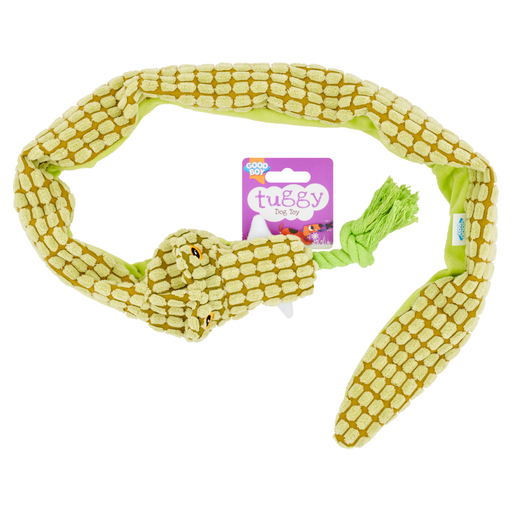
Why This Fits Their Persona: A straightforward option for owners introducing supervised tug games at home or in the garden. Its lightweight format is easy to hold and use for short interactive sessions.
The listing clearly states that it is not a chew toy, helping buyers avoid using a tug toy as a permanent chewing item.
Synthetic fabric, reinforced stitching, lightweight grip and suitability for indoor or outdoor tugging.
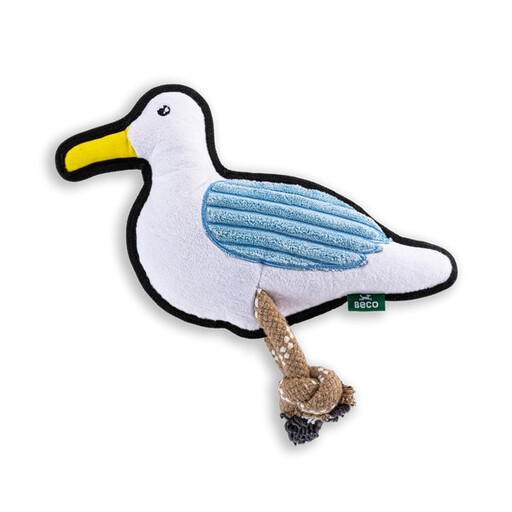
Why This Fits Their Persona: Suits owners who value recycled materials alongside energetic play, particularly for dogs that enjoy carrying, wrestling and playing near water.
The product information identifies the recycled construction, floating feature, squeaker and double stitching rather than relying only on a general sustainability message.
Made from recycled materials, includes double stitching, has an internal squeaker and floats in water.
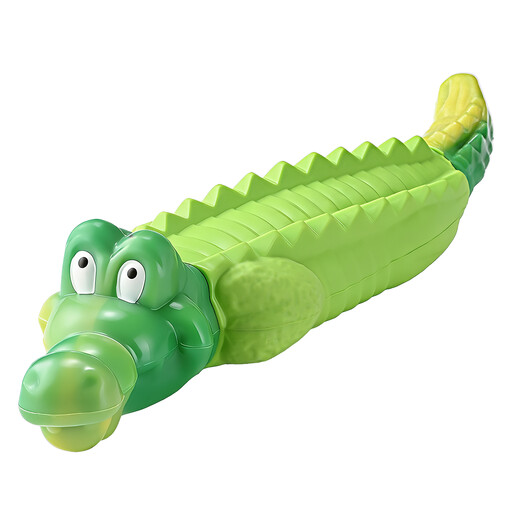
Why This Fits Their Persona: Designed for medium and large dogs needing a sturdier toy for fetch, tugging and outdoor activity.
Its intended size, 24 × 6 cm dimensions and natural-rubber-and-nylon construction are stated clearly, reducing guesswork for owners of larger dogs.
Double-layer construction, textured crocodile shape for gripping and suitability for fetch or outdoor play.
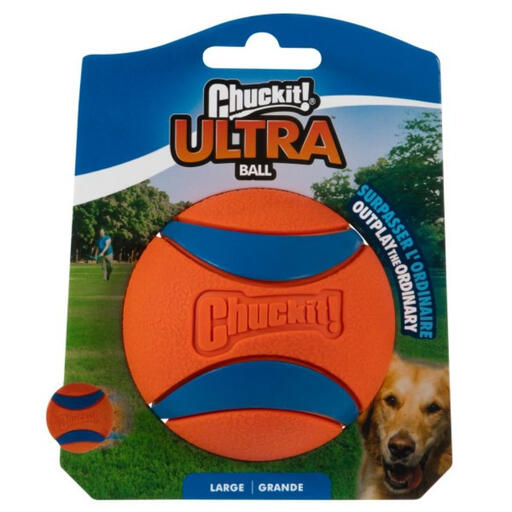
Why This Fits Their Persona: A practical choice for regular park, garden or beach fetch, especially where visibility and water play matter.
The product is described for fetch rather than being presented as an all-purpose chew toy, so its role is clear.
Extra-thick natural rubber, high bounce, buoyancy, bright colours and compatibility with launchers.
We have compiled a complete, real-time list of products that fully satisfy these strict selection criteria and UK safety regulations.
Choose puppy teething toys made for the puppy’s size and chewing strength, with a flexible texture that is not excessively hard. Supervise every session and replace the toy when it develops cracks, tears or loose parts. Puppies should not automatically use toys labelled for aggressive chewers.
There is no fixed lifespan. A toy’s useful life depends on material, size, chewing intensity and frequency of use. Inspect it before and after play rather than relying on a stated duration. A strong chewer may damage a toy quickly, while a fetch ball used only outdoors may last considerably longer.
Squeaky dog toys can encourage engagement, but the squeaker must remain enclosed. If your dog tears fabric or attempts to remove the sound component, take the toy away immediately. For dogs that destroy plush toys quickly, consider a suitable rubber fetch toy or a purpose-designed chew toy instead.