
24/7 Customer Support

Free returns

Same-day & Next-day Delivery

Quality Guaranteed

Unlock Your Welcome Offers: FREE Delivery | Up to 80% OFF | Free 30-day JoyPlus trial
Download the APP
The right dog toys can make rainy afternoons, garden exercise and quiet time more rewarding. However, choosing by appearance alone can lead to wasted money, damaged toys and avoidable safety risks. A squeaker may attract attention, but it does not automatically make a toy suitable for chewing. Likewise, a label such as “durable” does not mean indestructible.
This guide explains the practical details to check before buying dog toys, from size and materials to play style and supervision. It also highlights a selection of options for different households, including interactive dog toys, squeaky dog toys, soft dog toys and outdoor dog toys.
Many durable dog toys are designed for everyday play, but no toy is suitable for every chewing style. A soft fabric toy may be appropriate for carrying and supervised games, yet unsuitable for a dog that quickly tears and swallows fabric. Product warnings should always take priority over promotional wording.
Inspect toys before and after use. Remove them if stitching, squeakers, plastic sections or rubber pieces become loose.
A toy that is too small can present a choking risk, particularly for medium and large dogs. Conversely, an oversized toy may be difficult for a small dog to carry, grip or move. Breed is only a starting point: jaw strength, age and individual play habits matter too.
Look for the manufacturer’s recommended dog size and compare the toy with your dog’s mouth and body size before purchase.
Flashing lights, squeaks and complex treat mechanisms can look appealing, but not every dog enjoys noise or understands a puzzle immediately. A dog that prefers chasing may get more value from fetch toys for dogs, while a food-motivated pet may engage more readily with treat-dispensing dog toys.
The most useful toy is the one that matches your dog’s natural behaviour and your available play space.
Check whether the toy is made from latex, rubber, nylon, polyester, plastic or reinforced fabric. Materials affect flexibility, cleaning and resistance to wear:
Avoid relying on vague phrases such as “tough” without reading the product warnings and intended use.
For tug toys for dogs, choose a shape that gives both you and your dog a comfortable grip without placing fingers near the bite area. Fetch toys for dogs should be large enough to retrieve safely and easy to see outdoors.
Textured surfaces, curved edges and handles can make toys easier to pick up. For dog toys for small dogs, lighter construction is often more manageable. Dog toys for medium and large dogs should have dimensions and materials that suit their stronger bite and larger jaws.
Choose according to the activity:
Supervise play, especially when introducing a new toy. A toy should not be treated as a substitute for training, exercise or human interaction.
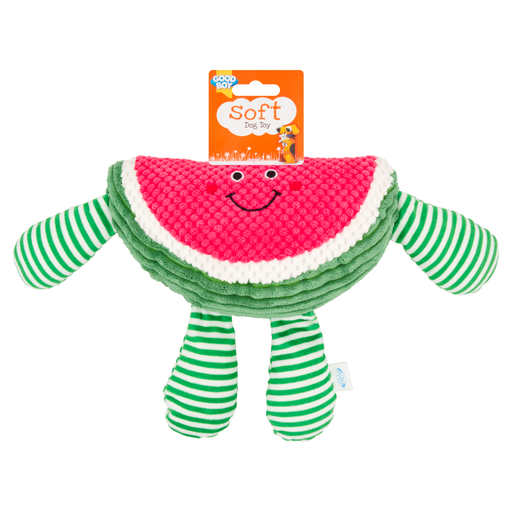
Why This Fits Their Persona: A lightweight option for households wanting a straightforward toy for indoor play, carrying and supervised fetch. Its synthetic rubber and reinforced fabric construction offers a practical starting point for gentle play.
The product information clearly states that it is not a chew toy, helping buyers avoid treating a soft interactive toy as a heavy-duty chew product.
Lightweight to carry and throw; suitable for indoor or outdoor interactive play under supervision.
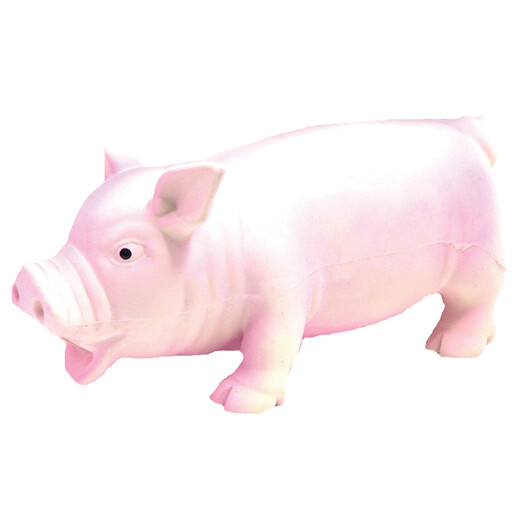
Why This Fits Their Persona: A latex squeaky option for owners looking for a distinctive sound during supervised indoor or garden play. It can be squeezed, fetched or used in owner-led interaction.
The product warning states that it is not suitable for aggressive chewers, so buyers can match it to gentler play rather than assuming latex is indestructible.
Produces a grunting sound when squeezed; latex construction is flexible for supervised play.
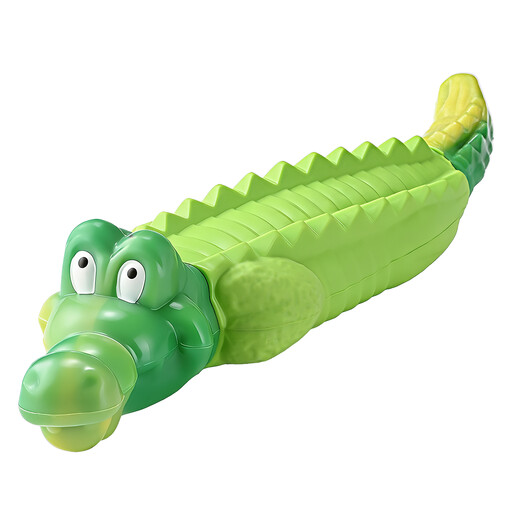
Why This Fits Their Persona: Designed for medium and large dogs, this 24 × 6 cm toy combines a nylon core with a natural rubber exterior for fetch, tugging and outdoor play.
Its stated size range helps prevent small dogs receiving an oversized toy, while the instructions still require inspection and supervised use.
Double-layer natural rubber and nylon construction; textured crocodile shape supports gripping during fetch and tug play.
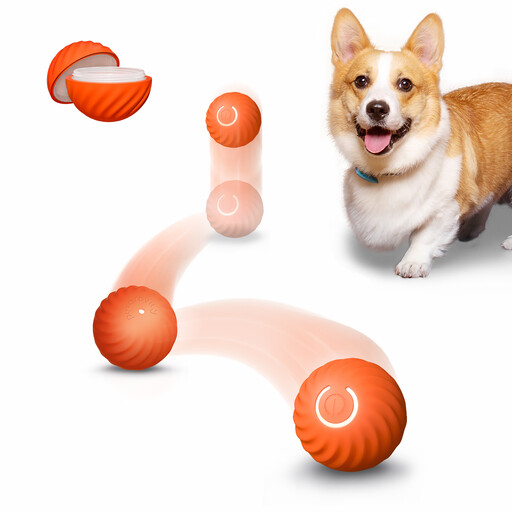
Why This Fits Their Persona: A 56 mm USB-C rechargeable bouncing toy for smaller dogs, suitable for indoor or supervised outdoor use where there is enough clear space.
The product is specifically described for smaller dogs and includes warnings against aggressive chewing, exposed cores and loose parts.
Two play modes; removable plush cover and USB-C rechargeable battery.
We have compiled a complete, real-time list of products that fully satisfy these strict selection criteria and UK safety regulations.
There is no universal replacement period. Check toys before every play session and replace them when they show cracks, torn fabric, loose stitching, exposed batteries, detached squeakers or small pieces. A heavy chewer may damage a toy quickly, while a soft toy used only for carrying may last longer.
They can be used under supervision if the size and construction are suitable. Puppies may try to remove and chew the squeaker, so discontinue use if the toy breaks or parts become accessible. For young dogs, rotate several appropriate toys rather than leaving one damaged toy available.
The toy itself may not require batteries, but you will need suitable treats or part of your dog’s normal daily food allowance. Use small portions and follow feeding guidance. Battery-powered or rechargeable toys may also have charging requirements, so check the product instructions before buying.