
24/7 Customer Support

Free returns

Same-day & Next-day Delivery

Quality Guaranteed

Unlock Your Welcome Offers: FREE Delivery | Up to 80% OFF | Free 30-day JoyPlus trial
Download the APP
A new toy can promise hours of entertainment, dental care or “aggressive-chewer” durability, yet still become unusable within days. Choosing suitable dog toys is less about the most colourful design and more about matching the material, size and play style to your dog.
This guide highlights common buying traps, explains the specifications worth checking and presents practical options for puppies, small dogs, medium and large breeds, gentle players and strong chewers.
Terms such as tough, bite-resistant and long-lasting are not guarantees that a toy will withstand every dog. A powerful chewer can damage nylon, rubber, latex or stitched fabric, particularly if left unattended.
Look for clear information about the intended dog size and chewing strength. A plush toy suitable for a quiet small dog may be unsuitable for a Labrador that immediately removes seams and squeakers.
A toy that looks appropriately sized in a photograph may be too small for a large dog or difficult for a puppy to grip. Small components, exposed squeakers and torn filling can present an ingestion or choking hazard.
Check the product measurements and compare them with your dog’s mouth, weight and normal play behaviour. Do not allow a dog to use a toy intended for a different size category simply because the design appears appealing.
Textured dental chew toys for dogs may provide friction against tooth surfaces and massage the gums during chewing. However, they should not be presented as a replacement for brushing, professional advice or routine veterinary care.
Stop using any toy if it cracks, splits, exposes internal parts or develops loose fragments. Claims about reducing plaque or improving oral health should be understood as product features or intended uses, not medical guarantees.
Under the UK’s general product safety framework, products supplied to consumers should be safe when used as intended. That does not make a toy suitable for every dog or remove the owner’s responsibility to supervise play.
Use product dimensions as a starting point, then consider your dog’s jaw strength and ability to carry the toy. For example, a 12.5 cm squeaky bone is described for small to medium-sized dogs, while the 17.7 × 7.3 × 3.3 cm branch-shaped toy is specified for medium-sized dogs.
For dog toys for small dogs, look for lightweight shapes that can be picked up without straining the jaw. Dog toys for medium dogs should be large enough to reduce swallowing risk while remaining easy to carry. Larger breeds generally need appropriately scaled chew shapes and thicker construction.
Decide whether you need a chew outlet, a fetch toy, a comfort item or a boredom-reduction activity.
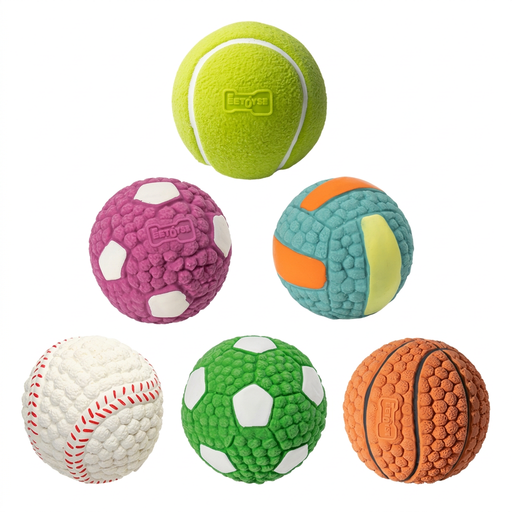
Why This Fits Their Persona: A washable ball set gives new dog owners several ways to play, including fetch, training and supervised solo activity.
The listing specifies small to medium dogs, puppies over 12 weeks and gentle to moderate chewers, rather than presenting it as suitable for every dog.
Soft latex, built-in squeakers, textured surfaces and a fully washable construction.

Why This Fits Their Persona: Owners wanting a more structured activity can fill the hollow toy with kibble or treats and use it for short indoor sessions.
The product information gives a small-to-medium dog recommendation, a maximum 20-minute session and replacement guidance for deep bite marks.
Natural rubber construction, a treat-dispensing hollow centre and textured grip.

Why This Fits Their Persona: The branch shape and firm cowhide-and-nylon construction are aimed at medium-sized dogs with a strong desire to chew.
Its dimensions and intended medium-dog use are stated clearly, helping buyers avoid selecting it for very small or very large dogs.
17.7 × 7.3 × 3.3 cm size, textured surface and cowhide-and-nylon materials.
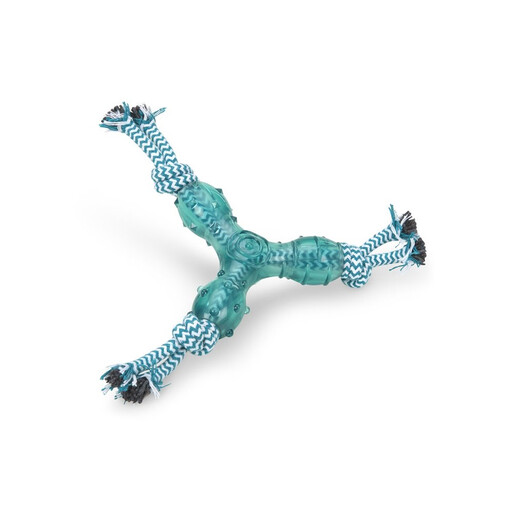
Why This Fits Their Persona: The stable shape and mixed textures are designed for puppies and smaller dogs learning appropriate chewing habits.
The listing states that it is not suitable for large dogs or aggressive chewers, setting a clearer expectation than a generic “all breeds” label.
Soft TPR rubber, a textured polyester rope and a tripod shape for easier gripping.
We have compiled a complete, real-time list of products that fully satisfy these strict selection criteria and UK safety regulations.
There is no reliable fixed lifespan. A gentle player may use a plush toy for months, while a strong chewer may damage it during the first session. Material, size, chewing intensity and frequency all matter. Regular inspection is more useful than relying on a stated number of months.
They can be suitable when the size and material match the puppy, but supervision is important. If the puppy punctures the toy or exposes the squeaker, remove it immediately. For teething puppies, choose a product that specifically states it is intended for puppies and avoid firm toys designed for larger, stronger dogs.
The toy itself does not require electricity, but you will need suitable treats or kibble. Using part of your dog’s normal food allowance can help control additional calories. Follow the product’s recommended session time and wash the toy after use where instructed.