
24/7 Customer Support

Free returns

Same-day & Next-day Delivery

Quality Guaranteed

Unlock Your Welcome Offers: FREE Delivery | Up to 80% OFF | Free 30-day JoyPlus trial
Download the APP
A toy can look durable in a product photo yet become unusable within days. For UK dog owners, the main challenge is not finding dog toys—it is matching the toy to a dog’s size, chewing strength, play style and environment.
Marketing language can also make selection harder. Terms such as “tough”, “interactive” or “dental” do not always explain how a toy should be used. Before buying, look beyond appearance and check the material, dimensions, intended activity and safety instructions.
No dog toy is indestructible. A durable rubber ball may withstand repeated fetching but still be unsuitable for prolonged chewing. Similarly, a reinforced fabric tug toy can be strong during interactive play but may be damaged if left with a dog that chews continuously.
Always match the toy with your dog’s bite strength. Dog toys for aggressive chewers need a different construction from soft puppy toys or plush toys intended for carrying.
A toy marked for a particular breed may not suit every dog of that breed. Jaw strength, age, enthusiasm and chewing habits vary considerably. A small dog may need a compact toy, but a particularly powerful chewer may damage a soft toy quickly.
Check the actual dimensions and ensure the toy cannot be swallowed. For puppies, also consider whether the material is suitable for teething and whether small components, squeakers or stitching could become loose.
A squeaky toy is not automatically a fetch toy, and a tug toy is not necessarily a chew toy. Some products specifically warn against throwing, while others are intended only for supervised interaction.
Use each toy for its stated purpose. Remove it when it becomes cracked, torn, heavily worn or loose in any area.
Materials help indicate how a toy should be used:
A product description should clearly state the material. If it does not, consider choosing another option with more transparent specifications.
A toy should be large enough that your dog cannot fit the whole item in its mouth, but manageable enough to carry and grip. Shapes with handles, curved sides or paw-friendly sections can make interactive play easier.
For example, the Bamboodles T Bone is described as a 4-inch chew toy for small dogs over 10 weeks, while the Blinkit branch-shaped toy measures 17.7 × 7.3 × 3.3 cm and is specified for medium-sized dogs. These details are more useful than a broad “all dogs” label.
Choose the main benefit you want:
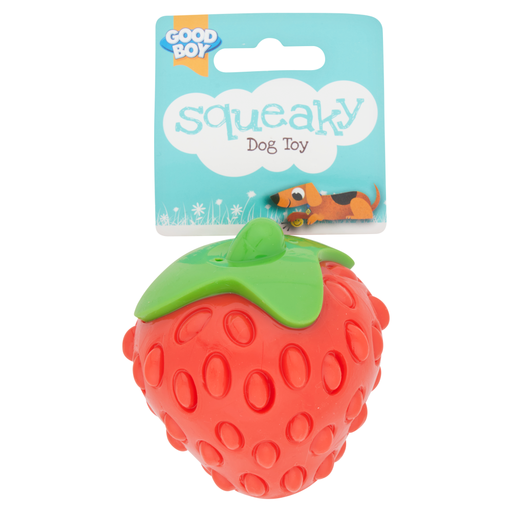
Why This Fits Their Persona: A straightforward option for owners wanting a lightweight toy for indoor play, carrying and supervised fetch without investing in specialist equipment.
Its intended uses are clear: squeaky play, exercise and fetch. Supervision is still required, particularly if your dog chews through fabric or rubber.
Lightweight design; built with rubber, fabric and a squeaker mechanism for varied play.
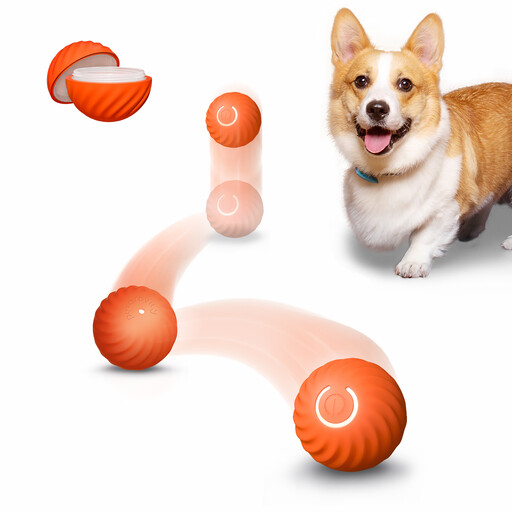
Why This Fits Their Persona: Suitable for small-dog owners who value rechargeable convenience and changing movement for supervised indoor or outdoor play.
The listing states that it is for smaller dogs and not intended for aggressive chewers, helping owners avoid a mismatch.
USB-C rechargeable battery; two play modes and a removable plush cover.
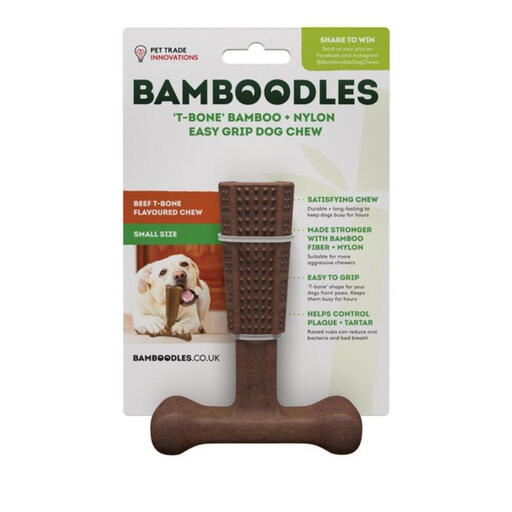
Why This Fits Their Persona: A focused choice for small dogs that spend considerable time chewing and need a firm, paw-friendly shape.
The material blend and stated size provide clearer selection guidance than a generic “strong” label. It is still not indestructible and requires supervision.
Bamboo fibre and nylon construction; raised nubs and a T-bone shape for gripping.
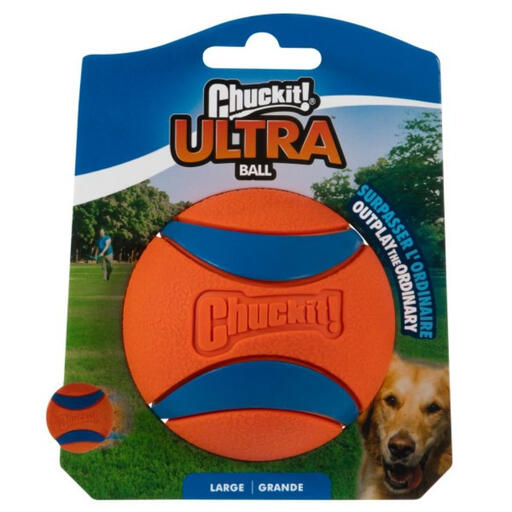
Why This Fits Their Persona: Designed for owners who use parks, gardens or beaches for regular, active fetch sessions.
Its purpose is clearly separated from chewing: it is a fetch toy, so owners are less likely to use a standard chew toy for repeated impact play.
7.3 cm large size; high bounce, buoyancy and bright orange-and-blue colouring for outdoor visibility.
We have compiled a complete, real-time list of products that fully satisfy these strict selection criteria and UK safety regulations.
There is no universal lifespan. Replacement depends on the material, frequency of use and your dog’s chewing behaviour. A toy should be removed as soon as it is damaged, has exposed filling, develops sharp edges or contains loose parts. Regular inspection matters more than a fixed replacement schedule.
They can be suitable when the size and construction match the puppy, but supervision is important. Puppies may quickly open seams or damage the squeaker. Choose puppy toys that are easy to inspect and remove them if any internal component becomes accessible.
No. Textured chew toys may provide mechanical contact during chewing, but they do not replace a suitable dental routine or professional veterinary guidance. Select an appropriately sized product and stop use if it splinters, cracks or becomes small enough to swallow.