
24/7 Customer Support

Free returns

Same-day & Next-day Delivery

Quality Guaranteed

Unlock Your Welcome Offers: FREE Delivery | Up to 80% OFF | Free 30-day JoyPlus trial
Download the APP
Choosing dog toys can seem straightforward until a ball is too small, a squeaker stops working or a supposedly tough toy is damaged within days. UK dog owners also need to account for indoor space, muddy parks, wet gardens and the differences between a puppy, a gentle player and a strong chewer.
The right choice depends less on colourful packaging and more on size, construction, intended use and your dog’s behaviour. This guide explains the common buying traps, the specifications worth checking and a selection of dog toys for different households.
Marketing language such as “tough”, “chew-proof” or “near indestructible” should not replace checking the product warning. Even durable dog toys can split when used by an aggressive chewer, and broken rubber, plastic or fabric may create an ingestion or choking risk.
Treat durability as suitability for a particular activity rather than a guarantee of unlimited use. A fetch ball may tolerate repeated throwing but still be unsuitable as an unsupervised chew toy.
A small ball may suit a toy breed but present a risk for a larger dog. Equally, an oversized toy can be difficult for a puppy or small dog to grip, carry or retrieve. Check the stated dimensions and compare them with your dog’s mouth, jaw strength and preferred play style.
For small dogs, options such as small dog toys and mini balls are easier to handle. Larger breeds may need full-sized dog balls with a diameter that cannot be easily swallowed.
Squeakers, lights, motors and batteries may increase engagement, but they also introduce additional components to inspect. Electronic toys require charging, while toys with sealed button-cell batteries need careful disposal when the light stops working.
An electronic toy should be removed immediately if its casing opens, the battery compartment becomes accessible or loose parts appear. Features are useful when they match your dog’s habits, not simply because they make a product appear more advanced.
Look for the material first:
There is no universally suitable material. A puppy comfort toy should feel soft, while a fetch ball needs to withstand repeated impact. Always follow the individual product’s warning rather than relying only on a material description.
For outdoor dog toys, bright colours can make retrieval easier in grass, sand or woodland. Buoyancy is useful for beach or water play, while glow or LED features can improve visibility in low light.
For indoor play, consider bounce height and available floor space. High-bounce balls can strike furniture or knock over household items, so use them only where there is sufficient room. A toy advertised for indoor and outdoor play may still need different supervision in each setting.
Match the toy to the activity:
Inspect toys before and after use. Replace any item that is cracked, punctured, torn, flattened or exposing an internal mechanism.
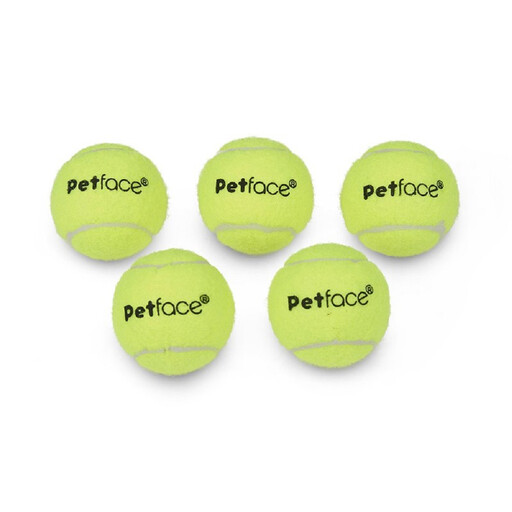
Why This Fits Their Persona: A five-ball pack gives new dog owners several options for short fetch sessions, training and indoor play, particularly with puppies and smaller breeds.
The 4.8 cm format is designed for smaller mouths, helping avoid the common mistake of choosing an oversized or difficult-to-carry ball. It is still not indestructible and requires inspection.
Five rubber balls, bright colours and a bouncy design support supervised fetch and training.
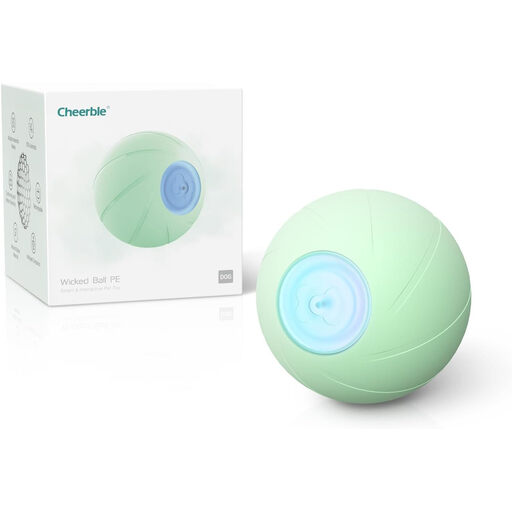
Why This Fits Their Persona: Owners wanting hands-free stimulation for a medium or large dog may value a self-moving toy for indoor play during wet UK weather, provided the dog is supervised.
Instead of relying only on an inflated “smart” label, its listed specification identifies three play modes, LED lights, obstacle sensors and rechargeable power.
The 95 mm PE ball offers three modes, LED lighting and up to 90 minutes of stated play time per charge.
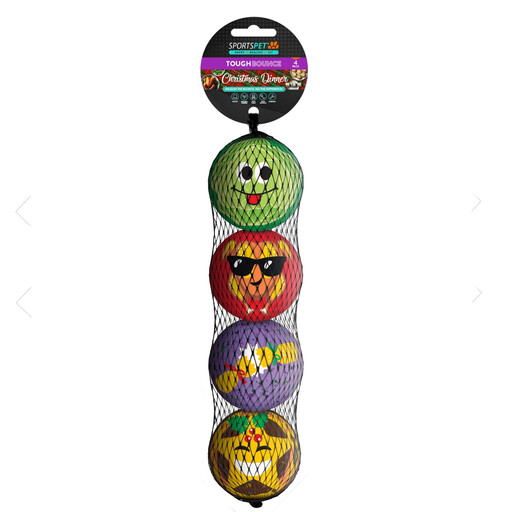
Why This Fits Their Persona: High-energy dogs that enjoy repeated chase and retrieve games may suit a multi-ball rubber set for the garden, park or living room.
The product is specifically described for strong chewers and high-energy dogs, but the warning still requires size matching, supervision and replacement if damaged.
Four durable rubber balls provide bounce-and-fetch variety and are listed for indoor and outdoor use.
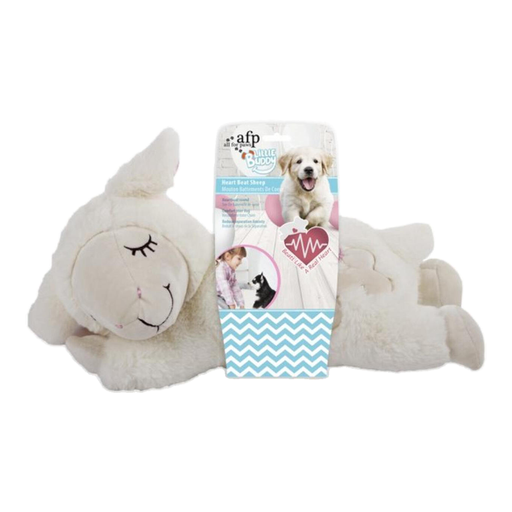
Why This Fits Their Persona: A soft comfort option may suit a puppy settling into a new home or resting at bedtime, rather than a dog seeking vigorous chewing.
Its purpose is clear: comfort and gentle cuddling. The removable heartbeat unit must be taken out before washing, and the plush toy is not for aggressive chewers.
Soft plush construction and a removable heartbeat mechanism allow the toy to be used for comfort or regular gentle play.
We have compiled a complete, real-time list of products that fully satisfy these strict selection criteria and UK safety regulations.
There is no fixed lifespan because it depends on chewing strength, frequency of use and material. Check toys before every session and replace them when cracked, torn, punctured, loose or exposing a squeaker, battery or internal core.
Rechargeable dog toys generally require access to a USB charger and occasional charging rather than disposable batteries. Running cost depends on electricity use and battery life, but buyers should also consider charging time, replacement arrangements and whether the toy is suitable for their dog’s chewing behaviour.
Puppies can use suitable squeaky toys during supervised play, provided the size and construction match their age and mouth. Remove the toy if the squeaker becomes exposed or the puppy starts tearing and swallowing pieces. For teething and chewing, select a product specifically intended for that purpose rather than relying on a soft plush toy.