
24/7 Customer Support

Free returns

Same-day & Next-day Delivery

Quality Guaranteed

Unlock Your Welcome Offers: FREE Delivery | Up to 80% OFF | Free 30-day JoyPlus trial
Download the APP
Choosing suitable dog toys is not simply a matter of picking the most colourful option on the shelf. A toy that works for a calm puppy may last minutes with a powerful chewer, while a large ball may be unsuitable for a small dog. The right choice depends on your dog’s size, age, chewing strength and preferred way to play.
As the Joybuy Product Recommendation Officer, I focus on practical product details rather than eye-catching claims. Here are the main traps to avoid before buying.
No dog toy is guaranteed to withstand every bite. Marketing descriptions may use terms such as “tough”, “chew-resistant” or “long-lasting”, but these do not remove the need for supervision. Soft toys, squeakers and rope toys are generally designed for play rather than unrestricted chewing.
Inspect toys regularly and replace them when they become cracked, torn, heavily worn or develop loose components.
A toy can be too small and create a swallowing risk, or too large for a dog to grip comfortably. Check the stated dimensions and compare them with your dog’s mouth and body size. This is particularly important when buying toys for small dogs, puppy teething toys or products aimed at large breeds.
Fetch, chewing, tugging and mental enrichment require different designs. A tennis ball may encourage exercise but is not necessarily a chew toy. A tug toy can support interactive play but may not be suitable for independent chewing. Selecting toys by their intended activity helps avoid disappointment and premature damage.
For dog chew toys, look for clearly stated materials such as nylon, natural rubber, TPR or reinforced fabric. Nylon and bamboo-fibre blends can provide a firmer chewing surface, while TPR and rubber may offer more flexibility. Soft polyester toys are usually better suited to carrying, fetching and supervised play than determined chewing.
Construction also matters. Reinforced stitching, a moulded one-piece design or a protected squeaker can reduce—but not eliminate—the chance of parts coming loose.
Pay attention to exact measurements, not just labels such as “medium” or “large”. For example, the Blinkit branch-shaped chew toy measures 17.7 × 7.3 × 3.3 cm and is specified for medium-sized dogs. The Bamboodles T Bone is a 4-inch chew toy intended for small dogs over 10 weeks of age.
For puppies, consider age guidance and chewing behaviour. A teething toy should be easy to hold and not so hard that it becomes unsuitable for developing teeth. If your dog tends to swallow fragments, choose a larger, simpler design and supervise closely.
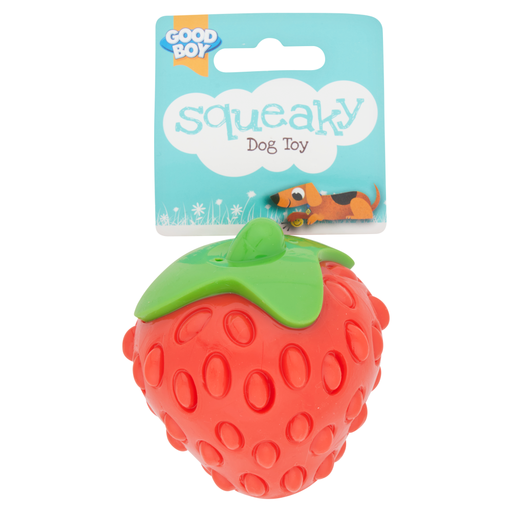
Why This Fits Their Persona: A straightforward option for introducing a dog to squeaky play, indoor games or gentle fetch without choosing a specialised electronic or treat-dispensing design.
Its intended uses are clear: fetch, carrying and supervised solo play. It should not be treated as an indestructible chew toy.
Lightweight and easy to throw; includes a squeaker to encourage active engagement.
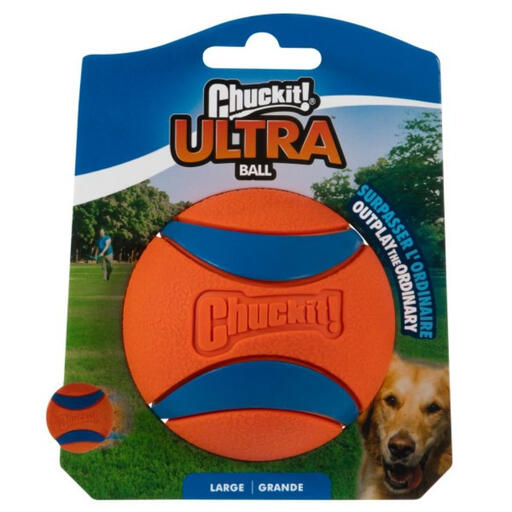
Why This Fits Their Persona: A practical choice for owners who regularly visit parks, beaches or open outdoor spaces and want a clearly specified fetch ball.
The product is explicitly described as a fetch ball rather than a chew toy, making its limitations easier to understand.
7.3 cm size; high bounce and buoyancy; bright orange and blue colours for outdoor visibility.
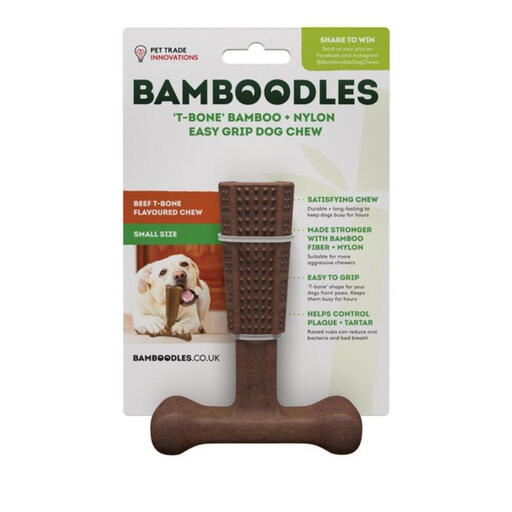
Why This Fits Their Persona: Designed for small dogs with a strong chewing instinct, particularly owners looking for a dedicated chew rather than a fetch or plush toy.
It states the material blend, small-dog suitability and supervision requirement rather than suggesting unlimited use.
Bamboo fibre and nylon construction; raised nubs and a T-bone shape for gripping.
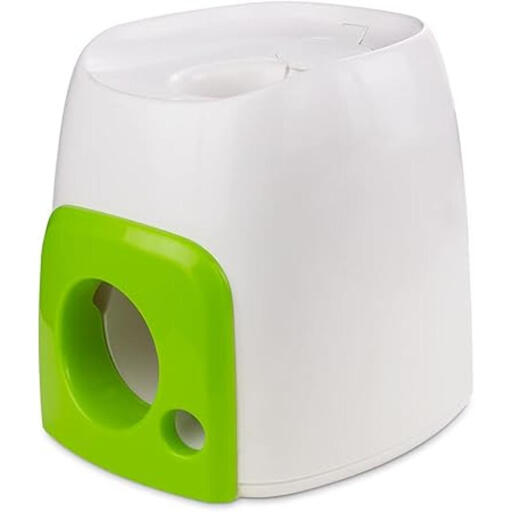
Why This Fits Their Persona: Suitable for owners seeking mental stimulation at home, especially when outdoor exercise is limited by rain or a busy routine.
It uses a clear ball-and-treat interaction, with no batteries or charging requirement to maintain.
Includes treat-hiding compartments; can encourage supervised independent play after introduction.
We have compiled a complete, real-time list of products that fully satisfy these strict selection criteria and UK safety regulations.
There is no universal lifespan. A soft toy may wear quickly with an enthusiastic chewer, while a rubber fetch ball may last longer under supervised use. Inspect toys before and after play rather than relying on a fixed replacement schedule.
They can be suitable when correctly sized and used under supervision. Choose a toy that your puppy can carry comfortably and remove it if the squeaker or internal material becomes accessible. For dedicated teething, compare the material and age guidance instead of choosing solely for sound.
The toy itself may not require batteries, but you will need suitable treats or measured portions of your dog’s normal food. Account for these calories in their daily intake and choose treats appropriate to their size and dietary needs.