
24/7 Customer Support

Free returns

Same-day & Next-day Delivery

Quality Guaranteed

Unlock Your Welcome Offers: FREE Delivery | Up to 80% OFF | Free 30-day JoyPlus trial
Download the APP
Choosing dog toys can seem straightforward until a squeaker stops working, a plush seam splits or a supposedly suitable chew toy proves too small. For UK dog owners, the right choice depends less on colourful packaging and more on your dog’s size, age, chewing strength and preferred way to play.
Whether you need interactive dog toys for rainy afternoons, puppy toys for teething or Christmas dog toys for a seasonal gift, these checks can help you avoid unnecessary purchases.
Terms such as durable, tough and chew-resistant describe intended use, not a guarantee that a toy will withstand every dog. A strong chewer may damage plush fabric, latex, rubber or synthetic stitching quickly.
Always check the product warning. Several toys in this guide are specifically not suitable for aggressive chewers, and every toy should be removed if it becomes cracked, torn or loose.
A toy that is too small may be difficult for your dog to grip and could become a swallowing hazard. One that is too large may frustrate smaller dogs or puppies.
Look for the stated measurements and recommended breed or weight range. For example, the Blinkit squeaky bone is approximately 20 cm long and is listed for small to medium dogs up to around 15 kg. The branch-shaped chew toy measures 17.7 × 7.3 × 3.3 cm and is intended for medium-sized dogs.
Squeaky dog toys can encourage chasing and carrying, but noise alone does not necessarily provide lasting engagement. Some dogs lose interest quickly, while others may focus on destroying the squeaker.
For longer-lasting variety, combine toy types: a fetch toy for outdoor exercise, a tug toy for supervised bonding, a plush toy for gentle play and a treat-dispensing dog toy for nose and problem-solving activities.
Material descriptions should be read alongside warnings. A toy made from rubber or nylon can still split, while a soft toy may be entirely appropriate for a gentle player.
Inspect seams, squeakers, handles, stitching, exposed plastic and detachable parts. Reinforced stitching may help a toy remain intact during gentle play, but it does not remove the need for supervision.
For UK purchases, also review the manufacturer, importer and product safety information supplied with the item. General consumer product safety requirements apply to products sold in Great Britain, but a pet toy is not automatically safe for every dog simply because it is commercially available.
Puppies may need softer, appropriately sized toys and close supervision while they learn how to play. Adult dogs often benefit from rotating fetch, tug and chew options. Senior dogs may prefer lightweight plush dog toys or treat-dispensing dog toys with easy-to-access compartments.
If your dog has dental, swallowing or dietary concerns, ask your vet for advice before introducing a chew or food-filled toy. Toys are for enrichment and play, not a substitute for veterinary care.
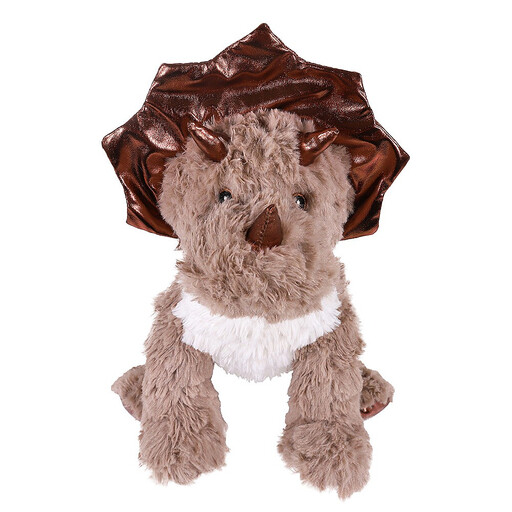
Why This Fits Their Persona: A soft festive option for owners seeking a simple Christmas dog toy for gentle indoor play, carrying and sofa cuddles.
The listing clearly states that it is not suitable for aggressive chewers, helping buyers avoid using a plush toy for the wrong play style.
Soft plush construction; festive bronze accents; suitable for gentle games and snuggling.
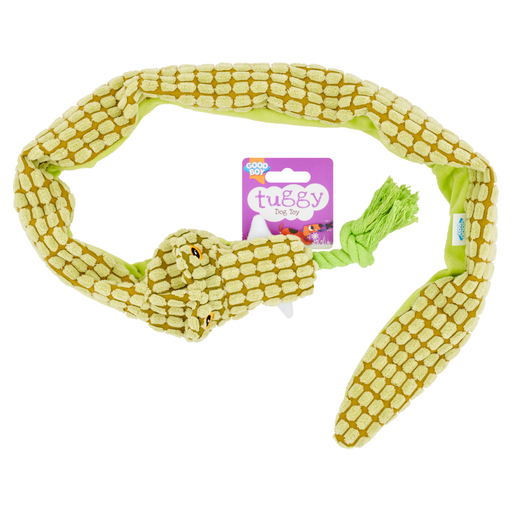
Why This Fits Their Persona: A practical choice for owners who value structured interaction, indoor exercise and a toy that is easy to grip during supervised tug sessions.
It is described as an interactive tug toy rather than an unsupervised chew toy, making its intended use clearer.
Synthetic fabric with reinforced stitching; lightweight design; suitable for owner-and-dog tugging.
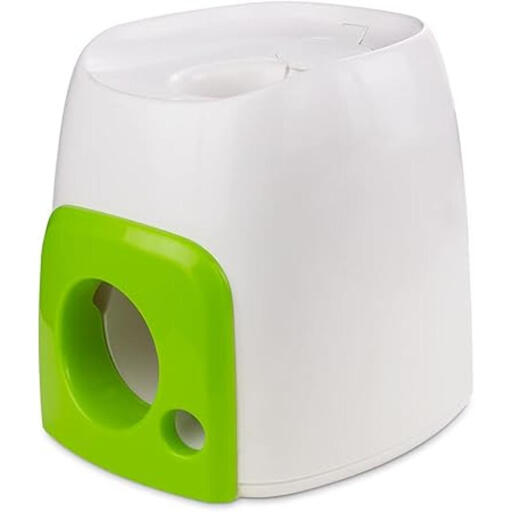
Why This Fits Their Persona: Suits dogs needing more than a quick throw-and-fetch game, particularly in UK homes where wet weather limits outdoor activity.
It combines ball play with treat compartments, offering a defined activity rather than relying only on sound or novelty.
Battery-free operation; included tennis ball; separate treat-hiding areas; can support gradual independent play training.
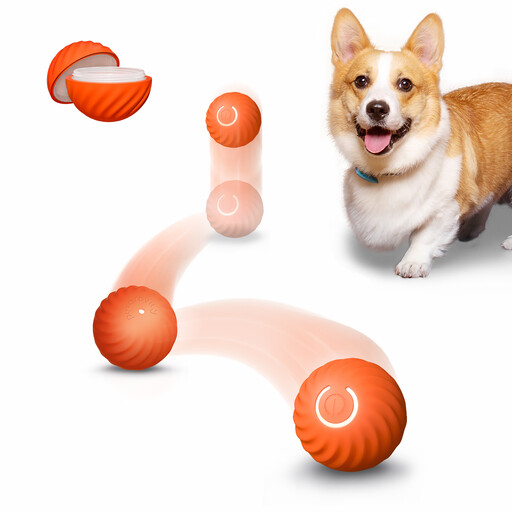
Why This Fits Their Persona: Designed for smaller dogs that enjoy chasing movement indoors or in a supervised outdoor space.
Its stated suitability for smaller dogs and 56 mm size provide more useful guidance than a generic “one size fits all” description.
USB-C rechargeable battery; two play modes; replaceable plush cover; intended for supervised use.
We have compiled a complete, real-time list of products that fully satisfy these strict selection criteria and UK safety regulations.
There is no fixed lifespan. Gentle-use plush dog toys may remain serviceable for months, while a strong chewer may damage one within a single session. Lifespan depends on material, construction, frequency of use and your dog’s behaviour. Inspect toys regularly rather than relying on an advertised durability description.
They can be suitable when correctly sized and used under supervision. Choose a toy your puppy cannot swallow, and remove it if the squeaker or filling becomes exposed. If the sound overstimulates your puppy, switch to a quiet rubber toy, soft fetch toy or supervised training activity.
The toy itself normally does not require ongoing power if it is battery-free, but treats are a continuing cost. Use small portions of your dog’s usual daily food where appropriate, and select fillings that suit their age, size and dietary needs. Clean the toy after use to prevent residue building up.