
24/7 Customer Support

Free returns

Same-day & Next-day Delivery

Quality Guaranteed

Unlock Your Welcome Offers: FREE Delivery | Up to 80% OFF | Free 30-day JoyPlus trial
Download the APP
Choosing dog toys can seem straightforward until a toy is too small, falls apart quickly or simply fails to interest your pet. UK dog owners also need to consider indoor space, rainy-day exercise, chewing habits and whether a puppy is still teething.
Marketing language can make selection harder. Terms such as “indestructible”, “dental care” and “anxiety relief” may sound reassuring, but the practical details matter more. The right choice depends on your dog’s age, size, bite strength and preferred type of play.
No dog toy is suitable for every chewing style. A plush toy may be appropriate for gentle carrying but unsuitable for an aggressive chewer. Even rubber, nylon and TPR products require regular inspection.
Look for clear information about the material, dimensions and intended dog size. A toy that is too small can become a swallowing risk, while a toy that is too hard may be unsuitable for puppies or dogs with sensitive gums.
Textured dog chew toys and teething toys for puppies may provide rubbing or chewing activity around the teeth and gums. However, they should not be treated as a replacement for brushing, routine checks or veterinary advice. Avoid products that make medical-sounding promises without explaining how the feature works.
Squeaky dog toys can encourage interaction, but the sound may become irritating in a flat or shared home. Electronic interactive dog toys also need charging, safe storage and supervision. Consider where the toy will be used, how easily it can be cleaned and whether loose parts could become accessible.
Compare the toy’s measurements with your dog’s mouth, jaw strength and body size rather than relying only on breed labels. For example, the Blinkit cheese bone measures approximately 10.7 × 4 cm and is listed for small dogs. Smaller options can be easier for puppies and compact breeds to carry, but they may not withstand powerful chewing.
For toys for small dogs, check that the toy is large enough not to be swallowed but light enough to carry. For medium and large dogs, choose a shape that can be gripped without forcing the jaw too wide.
Common materials include:
Seams, squeakers, filling, caps and removable inserts should all be checked. Stop using any toy that develops cracks, tears, deep bite marks or detached pieces.
Choose a toy based on what you want to encourage:
A rotation of two or three toy types can help maintain interest without leaving every toy available at once.
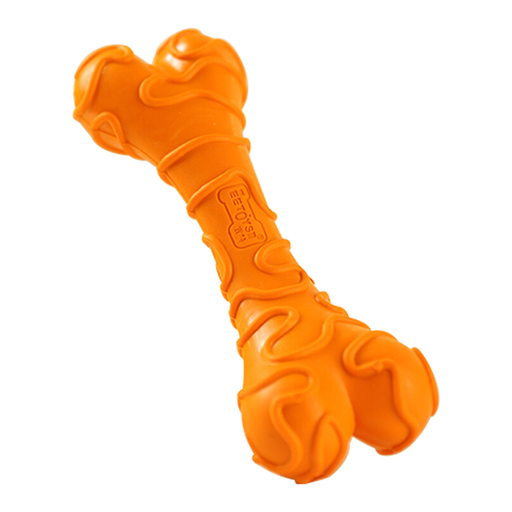
Why This Fits Their Persona: Its compact 10.7 × 4 cm rubber design suits small dogs and puppies needing a straightforward option for chewing and interactive play, including in smaller UK homes.
The listing clearly states the intended small-dog use and advises checking for cracks, tears and detached parts.
Lightweight rubber construction; bone shape is easy to carry and use for supervised play.
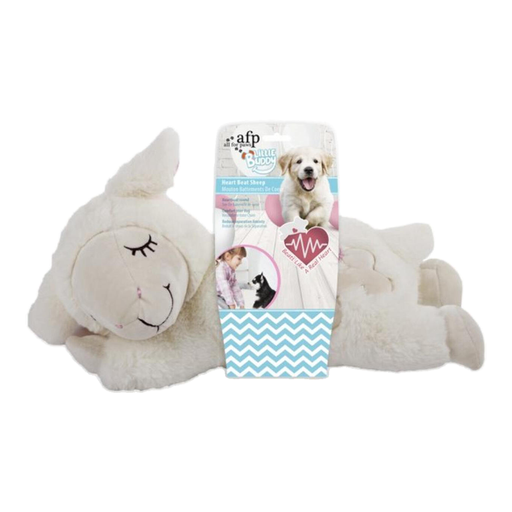
Why This Fits Their Persona: New puppy owners seeking a bedtime or settling companion may appreciate the extra-soft plush fabric and removable heartbeat unit during a transition to a new home.
The heartbeat unit is removable, allowing the plush toy to be used without it during ordinary play or washing.
Soft plush texture; removable battery-powered heartbeat unit. Not suitable for aggressive chewers.
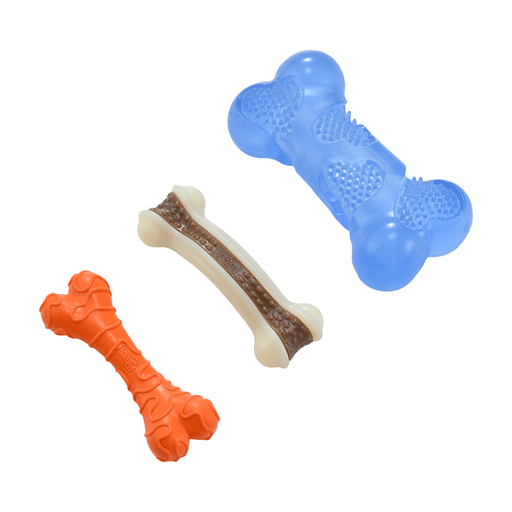
Why This Fits Their Persona: Owners managing frequent chewing or teething may prefer three shapes and materials for rotating supervised sessions.
The set provides stated dimensions and materials, while its guidance requires replacement when pieces become small or excessively worn.
Three-piece selection; combines nylon, TPR and an edible collagen snack portion.

Why This Fits Their Persona: Useful for rainy-day indoor enrichment, this hollow toy can be filled with kibble or treats and rolled across a suitable floor.
The product specifies a maximum 20-minute session, appropriate sizing and replacement when deep bite marks or damage appear.
Hollow treat-dispensing design; natural rubber construction with a textured surface.
We have compiled a complete, real-time list of products that fully satisfy these strict selection criteria and UK safety regulations.
Supervision is essential, particularly when introducing puppy toys, squeaky toys or products containing removable parts. Use the following routine:
For tug toys, let the dog release the toy on cue and avoid using a tug toy as an unsupervised chew item. For treat-dispensing dog toys, account for the food used in the dog’s daily allowance.
A practical starting selection is one chew or teething toy, one interactive option and one toy for fetch, tugging or comfort. Rotating them can keep play varied while making it easier to monitor wear. The right number depends on your dog’s activity level, chewing behaviour and whether you have more than one pet.
There is no fixed lifespan. A gentle dog may use a plush toy for considerably longer than a strong chewer uses a rubber or nylon toy. Inspect products regularly rather than relying on a time-based replacement schedule. Discard any item that is torn, cracked, shedding pieces or otherwise unsafe.
They can be suitable when the size and construction match the puppy, but supervision is important. Some puppies quickly remove the squeaker or tear the outer material. If the toy is damaged or internal parts become loose, remove it immediately and choose a simpler rubber or puppy chew toy instead.