
24/7 Customer Support

Free returns

Same-day & Next-day Delivery

Quality Guaranteed

Unlock Your Welcome Offers: FREE Delivery | Up to 80% OFF | Free 30-day JoyPlus trial
Download the APP
Choosing dog toys can seem straightforward until a squeaker stops working, a rope unravels or a supposedly durable chew toy is too hard for your dog’s mouth. UK owners also need to consider indoor space, wet-weather play, cleaning and whether a toy is suitable for a puppy, small dog or powerful chewer.
The right choice depends less on flashy packaging and more on size, construction, play purpose and supervision requirements.
No dog toy is indestructible. Terms such as “tough”, “bite-resistant” or “long-lasting” describe intended construction, not a guarantee that a determined chewer cannot damage it.
Inspect toys before and after use. Remove any item showing cracks, torn fabric, loose stitching, exposed squeakers or detached sections. A toy designed for tugging may not be suitable for extended chewing, while a soft toy may be better for carrying than biting.
A toy that is too small can present a swallowing or choking risk. One that is too large may be difficult for a small dog to carry, grip or enjoy. Check the product dimensions and the recommended dog size rather than relying only on breed names.
For puppies and toys for small dogs, look for manageable shapes and avoid detachable parts. Toys for medium and large dogs generally need a larger gripping area and stronger materials, but they should still match the individual dog’s bite strength.
Squeakers, lights, movement and sound effects can make play more interesting, but not every dog responds to them. A rechargeable dog toy may be useful for a dog that enjoys chasing moving objects, while a food-motivated dog may prefer an enrichment or puzzle design.
Consider your dog’s habits first. Does it chase, retrieve, tug, carry, chew or investigate new sounds? This helps prevent buying an expensive feature that remains unused.
For chew toys for dogs, inspect the material description carefully. Natural rubber, nylon, TPR, PVC, polyester and reinforced fabric all behave differently.
Descriptions such as “dental” or “teething” should not be treated as a substitute for veterinary dental care. Textured surfaces may provide a chewing surface, but owners should remove damaged pieces promptly.
A toy should be large enough that your dog cannot easily swallow it, while still being comfortable to hold. Rounded balls, textured bones and ring-shaped tug toys offer different gripping options.
For tug toys for dogs, reinforced stitching and a handle-friendly shape can make interactive play easier. For fetch toys for dogs, lightweight designs that are easy to throw and retrieve may be more practical for parks or gardens.
Choose washable surfaces where possible, particularly for toys used outdoors or by puppies. Rechargeable and electronic interactive dog toys should be used according to the product instructions, with charging cables kept away from pets.
Supervision is essential for squeaky dog toys, rope toys, soft toys and any product containing a sound module. If your dog tries to swallow fragments or becomes overly possessive during play, stop the session and choose a different format.
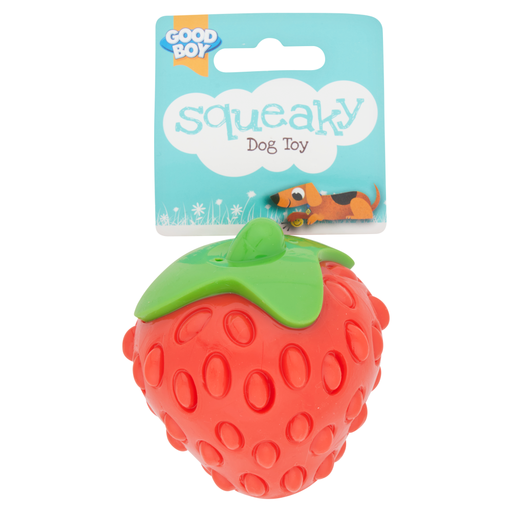
Why This Fits Their Persona: A lightweight option for owners introducing a new dog to squeaky play, fetch or short indoor activity sessions.
Its purpose is clearly centred on squeaking, carrying and throwing, rather than implying it is suitable for aggressive chewing.
Lightweight design; squeaker supports active and solo play. Supervision is required.
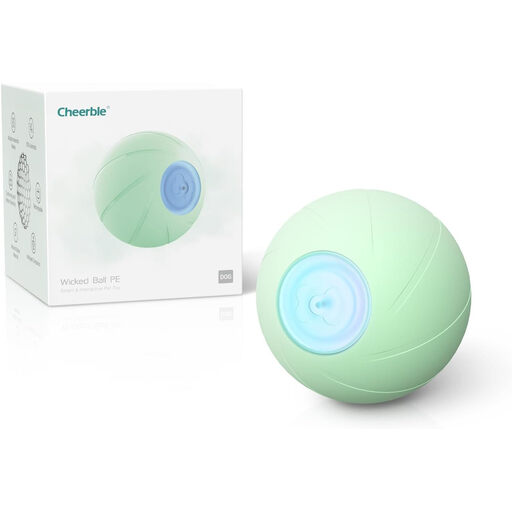
Why This Fits Their Persona: Suitable for owners seeking hands-free indoor activity for a medium or large dog, particularly when outdoor weather limits exercise.
The specifications identify three play modes, rechargeable power and a stated approximate play time, making the feature set easier to assess.
Three modes; LED lights; rechargeable battery; approximately 90 minutes’ play per charge.
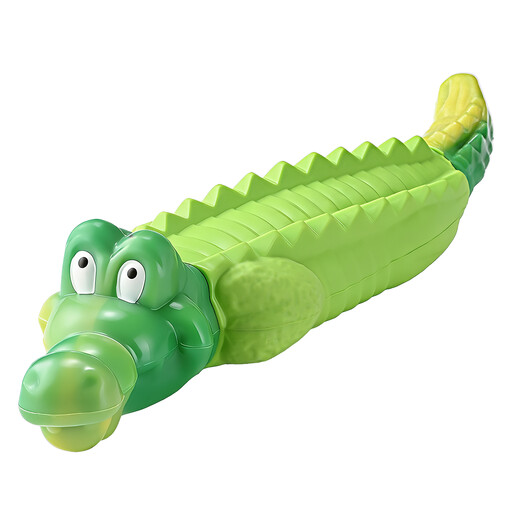
Why This Fits Their Persona: Designed for medium and large dogs that enjoy chewing, retrieving and outdoor play with their owner.
The listing specifies the 24 × 6 cm size, intended dog category and nylon-core, natural-rubber construction instead of relying only on vague durability wording.
Double-layer construction; textured crocodile shape; suitable for fetch and interactive outdoor play.
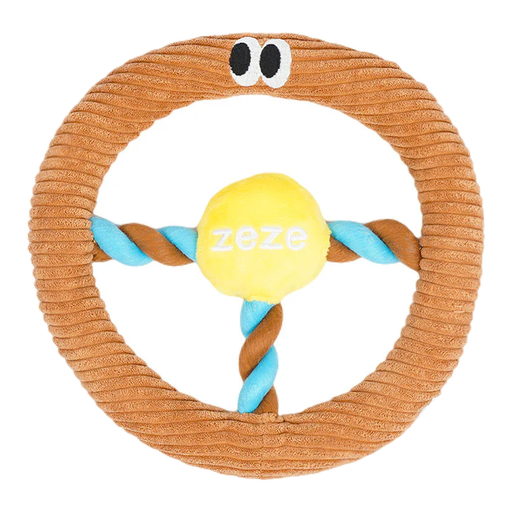
Why This Fits Their Persona: A 23 × 23 × 3.5 cm interactive design for dogs attracted to sound, textured surfaces and shared play.
Its listing clearly states the sound module, materials and inspection warning, so owners know this is not an unsupervised toy.
Built-in beep effect; rope and textured sections; supports chewing and interactive play.
We have compiled a complete, real-time list of products that fully satisfy these strict selection criteria and UK safety regulations.
Replace a toy as soon as it becomes cracked, torn, heavily frayed or develops loose parts. Lifespan varies according to the dog’s bite strength, play style and how often the toy is used. Rotating several toys can reduce constant wear on one item, but every toy still needs regular inspection.
Some puppy enrichment toys and soft interactive designs can be suitable, provided the size and materials match the puppy. Avoid products with detachable parts and supervise early sessions. Puppies may chew more intensely during teething, so a toy described for gentle play should not automatically be treated as a heavy-duty chew toy.
They require an initial purchase and periodic charging, but USB or DC rechargeable designs avoid repeated disposable batteries. Check the stated charging time, play duration and cleaning instructions. Keep cables and charging components away from your dog, and stop using the toy if the casing or battery compartment becomes damaged.