
24/7 Customer Support

Free returns

Same-day & Next-day Delivery

Quality Guaranteed

Unlock Your Welcome Offers: FREE Delivery | Up to 80% OFF | Free 30-day JoyPlus trial
Download the APP
A good toy can support exercise, enrichment and bonding, but choosing dog toys by appearance alone often leads to wasted money. A squeaker may stop working quickly, a soft toy may not suit a determined chewer and a ball that is too small can create a serious safety concern.
This guide explains the practical details to check before buying, then matches several options to different UK dog-owner needs.
No dog toy is suitable for every chewing style. Materials such as rubber, nylon and reinforced fabric may cope with regular play, but a strong chewer can still damage them. Product descriptions that use phrases such as “tough” or “long-lasting” should not replace checking the intended use and safety warnings.
A toy marked not a chew toy, such as some dog tug toys and soft dog toys, should be used for supervised interaction rather than left with your dog for extended chewing.
“Small”, “medium” and “large” can vary between manufacturers. Measure the toy and compare it with your dog’s mouth size, bite strength and play habits. A toy that can fit fully into the mouth may present a choking risk, while an oversized toy can be difficult for a smaller dog to carry or grip.
Textured surfaces may provide gum contact during chewing, but dental chew toys do not replace brushing or veterinary advice. Similarly, puppy teething toys should be inspected regularly, particularly when a puppy is actively losing its baby teeth. Remove any item that cracks, splits or sheds loose pieces.
Look for the product’s exact measurements where available. For example, the Blinkit branch-shaped chew toy measures 17.7 × 7.3 × 3.3 cm and is listed for medium-sized dogs. The Petgravity Smart Bouncy Ball has a 56 mm diameter and is intended for smaller dogs.
For dog fetch balls, choose a size that is easy to retrieve but cannot be swallowed. Bright colours can also make a ball easier to find in grass, sand or shallow water.
Squeakers and crinkle inserts can encourage interest, but they may not suit noise-sensitive households or dogs that quickly destroy sound modules. Interactive dog toys with movement can provide additional stimulation, but electronic products require extra checks:
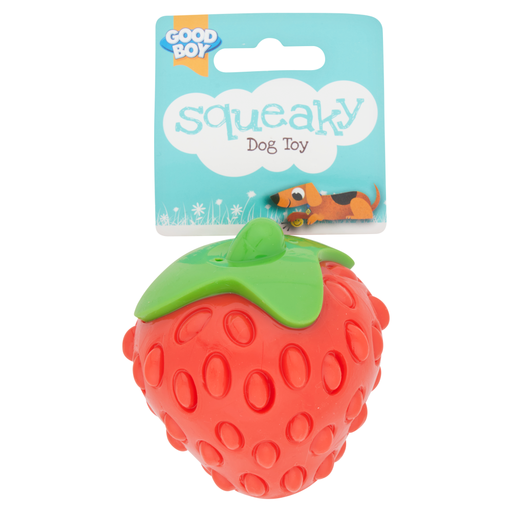
Why This Fits Their Persona: A lightweight option for owners introducing a dog to squeaky play, short games of fetch or indoor activity in a UK home.
Its description identifies the materials and instructs owners to remove the toy if it becomes damaged, rather than presenting it as indestructible.
Lightweight shape; squeaker supports active or solo play under supervision.
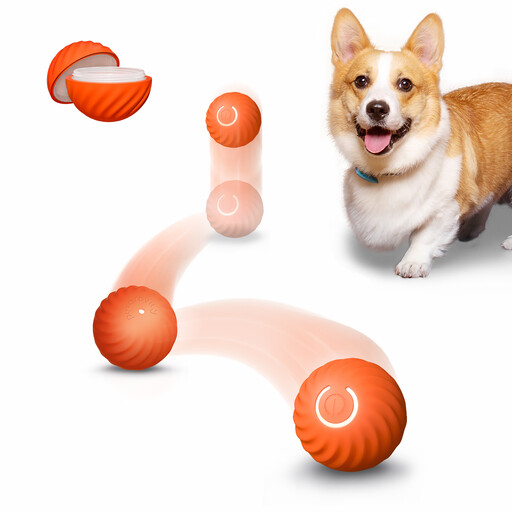
Why This Fits Their Persona: Suitable for small-dog owners seeking movement-based enrichment for supervised indoor play or secure outdoor areas.
The stated 56 mm size, rechargeable design and warnings against aggressive chewing make suitability clearer than a generic “smart toy” label.
USB-C rechargeable; two play modes and a removable plush cover.

Why This Fits Their Persona: Designed for owners looking for a dedicated chewing surface for a medium-sized dog, rather than using a fetch or fabric toy for gnawing.
The product gives exact dimensions, identifies a cowhide-and-nylon construction and states that it is not intended for ingestion or unsuitable sizes.
Tree-branch shape; textured cowhide and nylon construction for supervised chewing.
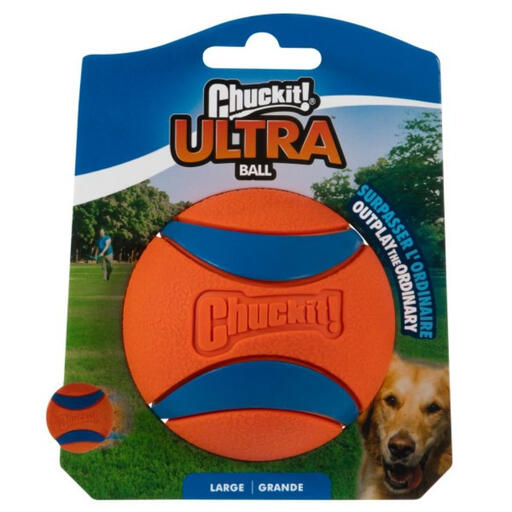
Why This Fits Their Persona: A practical choice for regular park, garden or beach fetch where visibility, bounce and buoyancy are useful.
Its 7.3 cm size and clear “not a chew toy” warning help separate fetch use from prolonged chewing.
Natural rubber construction; bright orange and blue colouring; buoyant for water play.
We have compiled a complete, real-time list of products that fully satisfy these strict selection criteria and UK safety regulations.
There is no fixed lifespan. A soft toy used occasionally may last longer than a rubber toy used daily by a powerful chewer. Treat condition, not time, as the guide: replace the item when damage, loose parts or sharp edges appear.
They can be suitable when the size and construction match the puppy, but supervision is important. Puppies may quickly locate and remove a squeaker. Choose puppy teething toys specifically for chewing and reserve squeaky designs for monitored play if your puppy is destructive.
Their running cost is generally linked to electricity used for charging, which is usually modest, but the purchase price and battery condition matter more. Follow the charging instructions, unplug the cable when not in use and stop using the toy if the battery housing becomes damaged.