
24/7 Customer Support

Free returns

Same-day & Next-day Delivery

Quality Guaranteed

Unlock Your Welcome Offers: FREE Delivery | Up to 80% OFF | Free 30-day JoyPlus trial
Download the APP
Buying dog toys can seem simple until a new toy is shredded within minutes, ignored after one play session or found to be the wrong size. UK dog owners also need to consider indoor space, wet-weather use, cleaning and the different chewing habits of puppies, adult dogs and stronger chewers.
A toy should suit your dog’s size, play style and chewing strength, rather than simply having an appealing colour or character design. The following guide explains the main buying traps, the specifications worth checking and a selection of products for different households.
Marketing descriptions may use terms such as “tough”, “long-lasting” or “bite-resistant”, but no dog toy is indestructible. Plush dog toys with stitching, filling and squeakers are generally intended for supervised play, carrying, fetching and gentle chewing—not continuous chewing by an aggressive chewer.
Look for clear warnings about supervision and replacement. A toy should be removed when it has loose seams, exposed filling, cracks, detached rope fibres or an accessible squeaker.
“Suitable for all breeds” does not automatically mean suitable for every dog. A small toy may present a swallowing risk for a large dog, while a large or rigid chew may be uncomfortable for a puppy or small breed.
Check the actual measurements and compare them with your dog’s mouth size and typical play behaviour. For example, a 15 × 8 × 3 cm chew toy is specifically listed for small and medium dogs, while a 17.7 × 7.3 × 3.3 cm branch-shaped toy is intended for medium-sized dogs.
Textured dog chew toys and dental chew toys for dogs can provide chewing enrichment, and their surfaces may help rub against teeth or massage gums. However, they should not be treated as a replacement for brushing, professional advice or a suitable diet.
Avoid toys that splinter, fracture into sharp pieces or become small enough to swallow. Supervise chewing and follow the manufacturer’s cleaning and replacement instructions.
Choose the material according to the intended activity:
A toy should be large enough not to be swallowed whole, but manageable for your dog to pick up, carry or grip. Dog toys for small and medium dogs often need a lighter construction, whereas larger dogs may benefit from a wider tug handle or a more substantial chew shape.
Puppy teething toys also need careful selection. Puppies may chew enthusiastically, but their age, teeth and chewing technique can vary. Introduce new toys under supervision and remove them if pieces begin to break away.
Different designs serve different purposes:
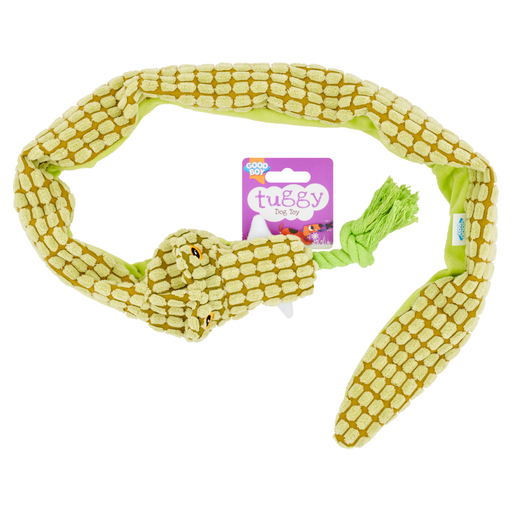
Why This Fits Their Persona: A straightforward choice for owners wanting an affordable toy for supervised indoor or outdoor tugging and bonding sessions.
The listing clearly states that it is not a chew toy, helping prevent buyers from treating a tug toy as a continuous chewing product.
Lightweight construction, reinforced stitching and a design intended for interactive tugging.
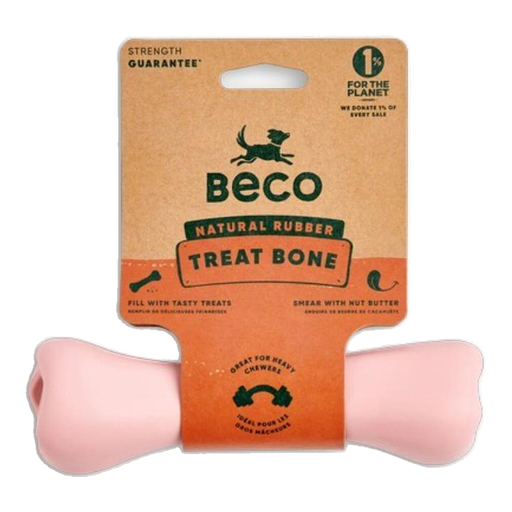
Why This Fits Their Persona: Suitable for owners seeking a quieter, reusable enrichment toy for treat-based play at home.
Its specified dimensions and fillable ends make the function clear, rather than relying only on general durability language.
Thick natural rubber, treat-fillable ends and a quieter design for indoor use.
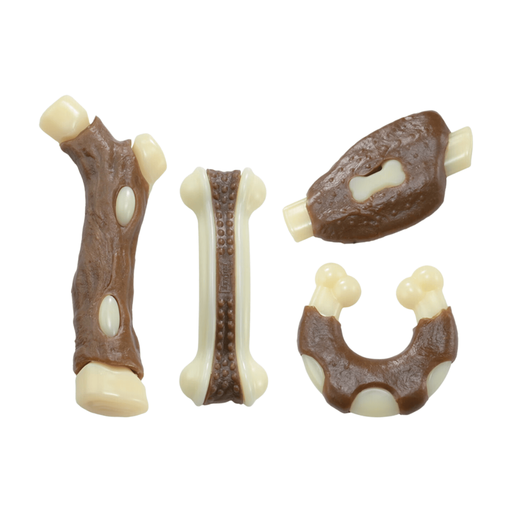
Why This Fits Their Persona: A practical option for owners who want to rotate several textures and shapes for a small or medium dog that quickly loses interest.
The listing identifies the intended dog size and moderate chewing level, while warning against use by aggressive chewers.
Four-piece variety, several stated sizes and textured surfaces designed for chewing enrichment.
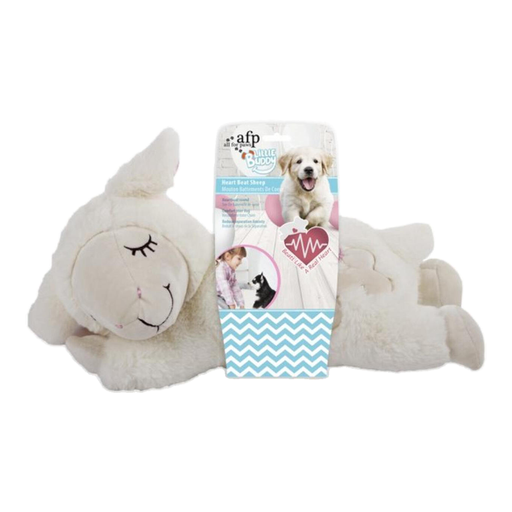
Why This Fits Their Persona: Designed for new puppies and households introducing a dog to bedtime, travel or a new home environment.
The heartbeat unit is removable, and the listing clearly states that the toy is not suitable for aggressive chewers.
Soft plush construction and a removable battery-powered heartbeat unit for flexible supervised use.
We have compiled a complete, real-time list of products that fully satisfy these strict selection criteria and UK safety regulations.
There is no fixed lifespan. A plush toy may last much longer with a gentle carrier than with a determined chewer. Inspect toys before each session and replace them when damage affects their structure or creates detachable parts.
They can be suitable for supervised play if the size is appropriate and the squeaker is securely enclosed. Puppies that dissect toys or swallow small parts should use simpler designs under close supervision.
No. Textured chew toys may complement a regular dental-care routine, but they do not replace brushing or veterinary guidance. Choose a toy that matches your dog’s size and chewing strength, and remove it once it becomes worn.